Google has officially begun rolling out the November 2026 Core Update, a global algorithm change designed to surface relevant, satisfying content for searchers. This Google Core Update is the third of the year, impacting all languages and regions. For website owners and SEO professionals, this event marks a critical moment for assessing site health. While Google hasn't provided a specific technical changelog or detailed list of adjusted ranking signals in the initial announcement, navigating this rollout requires patience, careful data analysis, and a focus on content quality over technical tweaks.
This guide explains the official timeline, highlights why the timing is particularly important for retail and e-commerce sites, and provides a practical checklist for navigating the post-update period. The goal is to help you distinguish between normal fluctuations and genuine algorithmic impact so you can make informed decisions about your SEO strategy.
Understanding the Rollout Scope and Timeline
According to the Google Search Status Dashboard, the November 2026 Core Update began rolling out on November 10, 2026. This update is global, applying to all languages and regions. Google stated that the rollout process may take up to two weeks to complete. This means the update isn't instantaneous; it propagates through Google’s infrastructure gradually. As of the initial announcement, Google did not provide specific objectives or technical details regarding adjusted ranking factors, nor did the Google Search Central blog publish a dedicated post with further insights.
The November 2026 update is the eighth ranking update listed on the Search Status Dashboard this year. It follows three spam updates in June, August, and September 2026. The previous core update, the May 2026 version, finished rolling out on June 2. This timeline positions the November update as the third major core shift in the 2026 calendar. Google describes this as a "regular update designed to better surface relevant, satisfying content for searchers from all types of sites." This language is standard and mirrors the description used for the March 2026 core update.
It's important to understand that core updates do not target specific sites or individual pages; they are not penalties. Instead, they are recalibrations of Google’s core systems designed to better understand content quality and relevance across the web. While some sites may experience rank changes, others might see no significant movement. This update also impacts Google Discover and other features, not just standard web search results.
Why the Timing Matters for Retail and E-commerce
The rollout of the November 2026 Core Update coincides with one of the most volatile periods for online traffic. The two-week rollout window is expected to finish around November 24. The week immediately following this date includes major shopping events like U.S. Thanksgiving, Black Friday, and Cyber Monday. For retail sites, this creates a unique analytical challenge.
When comparing post-update data to a pre-update baseline, you must account for these seasonal spikes. Google’s suggested baseline for comparison is the week prior to November 10. However, if you compare the week after the update completes (late November) to that baseline, you're comparing peak holiday traffic against a regular week. This can lead to misleading conclusions. For example, a drop in organic traffic during the holiday season might not be due to the algorithm but rather a shift in user behavior toward direct brand searches or paid advertising.
To navigate this, be aware that retail sites may see higher traffic volume but potentially different conversion rates during this period. If you operate in this sector, isolate your data carefully. Don't panic if your rankings fluctuate during this specific window. The noise from holiday shopping behavior can easily mask the true impact of the algorithm change. Wait for the dust to settle before making drastic strategic changes.
How to Measure the Impact of the Core Update
Google’s core updates document advises waiting at least a full week after the completion of a core update before analyzing your data. Since the rollout may take two weeks from November 10, you should wait until early December to begin your deep-dive analysis. Comparing data too early will yield incomplete results because the update is still propagating through Google's systems.
To measure the impact effectively, follow these steps:
- Identify Your Baseline: Use the week prior to the start of the rollout (the week before November 10) as your control period. This represents your "normal" performance before the algorithm change.
- Wait for Completion: Monitor the Google Search Status Dashboard for an entry indicating the rollout is complete. Don't rely on a fixed date, as rollouts can vary in speed.
- Compare Weekly Data: Once the update is complete, compare your Search Console data from the week following completion to your baseline week. Look for trends in clicks, impressions, and average position.
- Segment Your Data: Break down your data by page template, content type, or campaign. A drop in overall traffic might be driven by a specific category of pages, such as blog posts versus product pages, rather than affecting your entire site uniformly.
Avoid looking at daily fluctuations. Core updates affect rankings gradually. A single day’s drop is rarely significant. Instead, look for sustained changes over a 7-to-14-day period after the rollout concludes.
Actionable Checklist for SEOs and Site Owners
If you're preparing for or reacting to the November 2026 update, use this checklist to guide your actions. These steps focus on verifying the health of your site and adjusting your strategy based on data, not speculation.
Step 1: Verify Technical Health
Before blaming the algorithm, ensure your site is technically sound. Run a fresh crawl to check for:
- Index Coverage: Are pages unexpectedly removed from the index, or are there new indexing issues?
- Crawl Errors: Are there new 404s, server errors, or other crawl anomalies?
- Site Speed: Have Core Web Vitals scores degraded, indicating a poorer user experience?
If your site is technically broken, fixing those issues takes precedence over content strategy changes. Core updates often reflect user experience signals, but they don't fix underlying technical bugs.
Step 2: Audit Content Quality
Google’s updates prioritize "relevant, satisfying content." While this can be subjective, you can apply objective criteria:
- Relevance: Does the content genuinely match the user’s intent for the queries it targets?
- Depth: Does the page provide a comprehensive, authoritative answer, or is it thin, superficial, or repetitive?
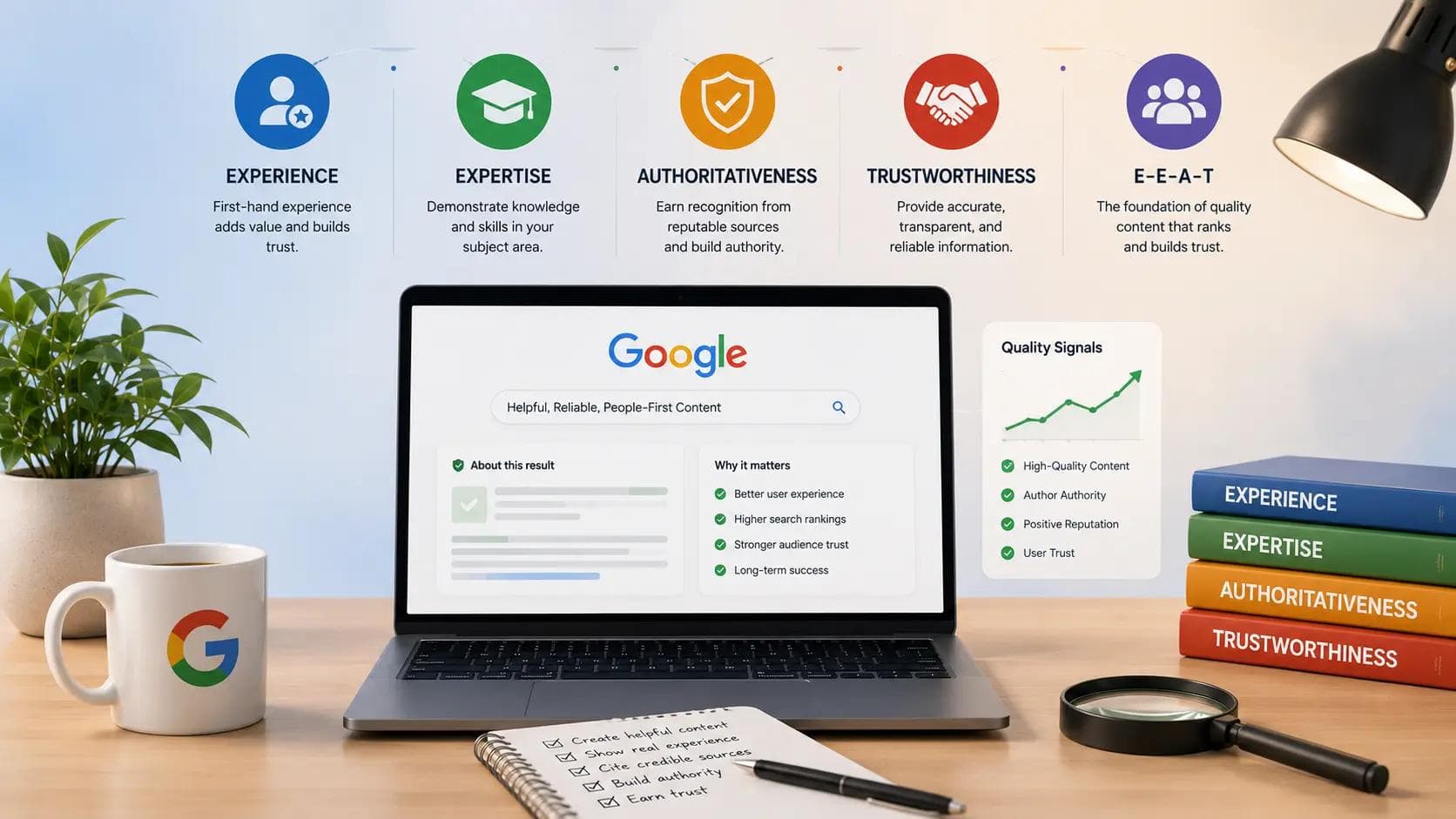
- E-E-A-T: Does the content demonstrate Experience, Expertise, Authoritativeness, and Trustworthiness? Is there clear authorship information or evidence of the content creator's credentials?
Identify pages that may have been negatively impacted by the update. Look for pages with high impressions but low clicks, or those that have seen a significant drop in average position for key terms. These are your primary candidates for improvement.
Step 3: Analyze Competitor Movements
Check who is ranking above you for your key terms. Are they new entrants, or have established competitors improved their content? If a competitor with similar content is now ranking higher, they may have updated their page to better meet user intent or demonstrate stronger E-E-A-T. This is a clear signal to refresh your own content to match or exceed that level of quality.
Step 4: Monitor Search Console for Anomalies
Keep a close eye on the "Pages" and "Performance" reports in Search Console. Look for:
- Sudden Drops: A sharp decline in impressions or clicks for specific queries or page groups.
- Position Changes: A noticeable shift in average position for high-volume keywords.
- Indexing Issues: Unexpected changes in the number of indexed pages or new crawl warnings.
If you see anomalies, document them thoroughly. This data will be crucial for your post-update analysis and for forming a targeted response.
Common Mistakes to Avoid
During core updates, many SEOs make common errors that lead to wasted effort or unnecessary stress. Here are the most frequent pitfalls:
Ignoring the Rollout Timeline A frequent mistake is jumping to conclusions before the update is complete. The algorithm is still changing during the rollout. Data from the first few days is not representative of the final state. Always wait for Google's completion notification on the Search Status Dashboard.
Focusing on Single Keywords Core updates affect broad systems and content quality signals across a site, not individual keywords in isolation. If one keyword drops, it might be due to other factors, such as a competitor’s campaign or a seasonal shift. Look at aggregate trends across your site, not isolated data points, to understand the true impact.
Making Drastic Technical Changes Avoid restructuring your site, changing your URL structure, or implementing major schema changes in direct response to a core update. These actions can introduce new issues and make it even harder to isolate the true cause of any performance changes. Keep technical changes minimal and focused on fixing clear, pre-existing errors.
Panic-Editing Content Rewriting every page on your site because of a ranking drop is counterproductive and often ineffective. Instead, use your data to identify high-impact pages that are underperforming. Prioritize improvements on pages that drive the most traffic and revenue, focusing on user intent and quality signals.
How to Verify the Result
Once you've completed your analysis, how do you know if the update genuinely affected your site? Look for consistent patterns across multiple metrics, rather than relying on a single data point.
- Sustained Ranking Changes: If a group of pages has dropped significantly in position and remained there for two weeks or more after the update's completion, it's highly likely related to the algorithm.
- Traffic Correlation: If your organic traffic drop aligns precisely with the update timeline, and the content types affected match your site’s perceived weaknesses, the correlation is stronger.
- Competitor Comparison: If your competitors with similar content are also seeing drops, it may indicate a broader industry shift or a change in how Google values that content type. If only your site is dropping, it points to a site-specific issue.
No single metric confirms the impact; it requires a holistic view of your site’s performance, cross-referenced with competitor activity and Google's stated goals for core updates.
Key Takeaways
- The November 2026 Core Update is global and applies to all languages. It began rolling out on November 10, 2026, and may take up to two weeks to complete.
- Do not analyze data until the rollout is finished. Wait at least a week after Google's completion announcement to compare your performance to a baseline from before the update.
- Core updates are not penalties. They are recalibrations of Google’s systems designed to surface higher-quality, more relevant content. Focus on improving content relevance and user satisfaction.
- Retail sites must account for holiday traffic. The timing of this update overlaps with Black Friday and Cyber Monday, which can significantly skew data. Compare holiday weeks to holiday weeks if possible, or isolate the algorithmic impact carefully.
- Prioritize content quality over technical tweaks. Ensure your content is relevant, deep, and demonstrates expertise, experience, authoritativeness, and trustworthiness (E-E-A-T). Fix technical errors, but avoid making major structural changes in direct response to the update.
FAQ
How long does the Google Core Update take to roll out? According to Google, the rollout may take up to two weeks. The exact duration can vary, so monitor the Google Search Status Dashboard for the official completion announcement.
Is the November 2026 update a penalty? No. Google explicitly states that core updates are not penalties. They are designed to improve the search experience by better understanding and surfacing relevant, satisfying content. If your site is affected, it's because the algorithm now prefers other content for certain queries.
Should I update my content immediately? Not necessarily. Wait for the rollout to complete and thoroughly analyze your data first. Identify which pages are underperforming and why. Then, make targeted improvements to those pages based on user intent, content quality, and E-E-A-T principles.
What if I see no changes in my rankings? This is normal. Core updates do not affect every site equally. If your content is already high-quality, relevant, and provides a good user experience, you may see no significant movement. Continue to monitor your performance, but don't assume a problem exists if your metrics remain stable.
About the Author

Suraj Kumar is a writer, entrepreneur, and the CEO and founder of this website, sharing simple and practical insights on business, creativity, and personal growth. With experience building digital projects, they enjoy helping others learn, grow, and succeed online.