Selecting the right AEO tools for your digital growth strategy requires distinguishing between monitoring capabilities and actual remediation actions. This guide explains the strategic difference between these functions, helping you avoid the common trap of buying expensive dashboards that only report problems without solving them. You will learn how to categorize your current visibility issues, build a low-cost detection system, and identify when it is time to invest in enterprise-level platforms.
The landscape of search has shifted significantly. Traditional SEO focuses on organic rankings, but AI-powered search engines and assistants like ChatGPT, Gemini, and Perplexity prioritize direct answers, citations, and recommendations. This shift creates a new layer of visibility known as Answer Engine Optimization (AEO) and Generative Engine Optimization (GEO). While the terminology varies, the core challenge remains consistent: ensuring your brand is named, cited, and accurately represented in AI-generated responses.
To navigate this evolving landscape, it helps to use a simple analogy: the smoke detector and the fire brigade. A smoke detector alerts you to a problem; it does not extinguish the flames. Most commercial AEO tools act as smoke detectors. They monitor your visibility, flag drops in citations, and report on brand mentions. However, if your brand is missing from AI answers or is being described inaccurately, a dashboard alone will not fix the underlying content or distribution issues. You need both detection and remediation to effectively manage your AI search presence.
Understanding the Four Layers of Visibility
Before selecting any tools, you must understand precisely what you are measuring. Industry frameworks often distinguish between four distinct layers of search visibility. These layers stack upon one another, meaning a failure in the foundational layers compromises the effectiveness of any optimization efforts higher up.
- SEO (Search Engine Optimization): This is the fundamental layer. The core question is, "Are we in the list?" Key signals include organic rankings, click-through rates, and indexation status. If your content is not indexed by search engines or ranks poorly for relevant queries, higher-layer AI visibility is largely inaccessible. It forms the bedrock upon which all other optimization efforts are built.
- AEO (Answer Engine Optimization): The next layer builds on SEO. The question here is, "Are we the lifted answer?" This focuses on owning prominent placements like featured snippets and "People Also Ask" boxes within traditional search results. Clear, concise answers to specific user questions are the primary signal for AEO success.
- AIO (AI Overview Optimization): This is a Google-specific layer, relevant as AI Overviews become more prevalent. The question is, "Are we in Google’s AI Overview?" This involves being cited directly within Google’s AI-generated summaries, often appearing at the top of search results.
- GEO (Generative Engine Optimization): This is the broadest and most encompassing layer. The question is, "Do AI assistants recommend us?" This involves being named, cited, and described accurately across third-party AI assistants like ChatGPT, Gemini, and Perplexity. It extends beyond traditional search results into conversational AI interfaces.
If your SEO foundation is cracked, alarms from AEO or GEO tools are often noise. You cannot effectively optimize for AI recommendations if the underlying pages are not indexed, are ranking poorly, or lack the authority required for AI models to consider them. Addressing issues in order, from SEO upwards, is crucial for a coherent strategy.
Building a DIY Smoke Detector
For startups and small teams, investing in an enterprise AEO platform is often premature and unnecessary. You can build a functional smoke detector in an afternoon using basic tools, providing immediate insights into your AI visibility without significant financial outlay.
The first step is defining a small, focused prompt set. Create ten to twenty prompts that mix category, brand, and comparison questions. These prompts should closely mirror how real users ask questions about your product or service.
1prompts:
2  - id: cat-01
3    text: "best rostering software for Australian hospitality"
4  - id: brand-01
5    text: "what is Example Roster?"
6  - id: comp-01
7    text: "Example Roster vs Competitor X"
Next, log the results in a flat table. A simple spreadsheet is perfectly sufficient for this purpose. Track the date of the check, the AI engine used, the prompt ID, and specific boolean outcomes indicating whether your brand was named, cited, and accurately represented.
| Date | Engine | Prompt ID | Named | Cited | Accurate | Notes |
|---|---|---|---|---|---|---|
| YYYY-MM-DD | ChatGPT | cat-01 | 0 | 0 | Competitors A and B named | |
| YYYY-MM-DD | Perplexity | brand-01 | 1 | 1 | 0 | Old pricing quoted |
To automate the scoring logic for your collected answers, you can use a simple script. This example illustrates how to check if a brand is named or cited in a given AI response. Remember that this is an illustrative example; you must adapt it to your specific data structure and the nuances of various API responses.
1def score(answer: str, aliases: list[str], domain: str) -> dict:
2    """
3    Checks if the brand is named or cited in the AI answer.
4
5    Args:
6        answer: The raw text response from the AI engine.
7        aliases: List of brand name variations (e.g., "Example Roster", "ER").
8        domain: The primary domain of the business (e.g., "exampleroster.com").
9
10    Returns:
11        A dictionary with boolean flags for 'named' and 'cited'.
12    """
13    text = answer.lower()
14    return {
15        "named": any(a.lower() in text for a in aliases),
16        "cited": domain.lower() in text
17    }
Collect answers through official APIs where available, always respecting each provider’s terms of service and rate limits. For AI models without accessible APIs, or for a very small prompt set, manual entry by copying and pasting responses is an acceptable and cost-effective method. Be aware that API answers can sometimes differ from those provided in consumer-facing applications.
For the SEO and AEO layers, leverage existing tools like Google Search Console. Track indexation and organic positions for your key queries. For snippets and AI Overviews, a monthly manual check of approximately twenty queries is a cost-effective and honest method for a seed-stage team. This combination forms a robust, working smoke detector.
When to Buy Enterprise AEO Tools
Paid platforms earn their value when the scale and complexity of your operation exceed the capabilities of a spreadsheet-based system. Consider upgrading to an enterprise AEO tool when you face one or more of the following challenges:
- Multiple Markets or Languages: Manually tracking prompts across numerous geographic regions (e.g., Australia, New Zealand, the UK, and the US) or different languages becomes unmanageable quickly. Enterprise tools offer localized tracking and reporting.
- Multiple Products or Business Units: If you need granular reporting per product line, brand, or distinct business unit, a centralized platform simplifies data aggregation and analysis, providing a unified view.
- Stakeholder Reporting: Leadership teams often expect sophisticated trend charts, visual dashboards, and executive summaries rather than raw CSV files. Enterprise tools provide these advanced reporting capabilities.
- Historical Depth and Trend Analysis: AI answers are dynamic and change over time. You need months or even years of stored answers to identify true, long-term trends versus transient fluctuations. Enterprise platforms offer robust data retention and historical comparison features.
- High Volume of Queries: If you need to monitor hundreds or thousands of prompts regularly, manual collection becomes impractical due to time constraints and API rate limits.
When evaluating vendors, always ask one critical question: Does it show me the raw answer text? A score without the underlying words is a smoke detector with no indication of which room is burning. You need to see exactly what the AI said to understand why the score is low and what specific actions are required.
The Fire Brigade Problem
The most common and costly mistake in AI search strategy is confusing detection with resolution. When the smoke detector goes off, the next step is not to buy a better detector; it is to put out the fire.
GEO, in particular, resists tool-only fixes. Unlike traditional SEO, where you might fix a ranking by improving internal links or on-page content, GEO involves significant off-site influence. AI engines combine information from a multitude of sources to form their recommendations and answers. To be cited and recommended, you need to be one of the authoritative voices in that chorus.
GEO goes further than AEO in three specific ways, each requiring human intervention:
- Many Sources, One Answer: AI engines aggregate data from diverse sources including your website, industry directories, review platforms, news articles, and blogs. To be consistently cited, you must ensure your brand is present and consistent across multiple authoritative sources, not just your own domain.
- Recommendations, Not Definitions: AI assistants often answer questions like "Who should I use for X?" or "What's the best Y?" These are critical buying decision moments. Being recommended requires not just factual accuracy but also positive sentiment, clear differentiation, and strong social proof, which comes from reviews and testimonials.
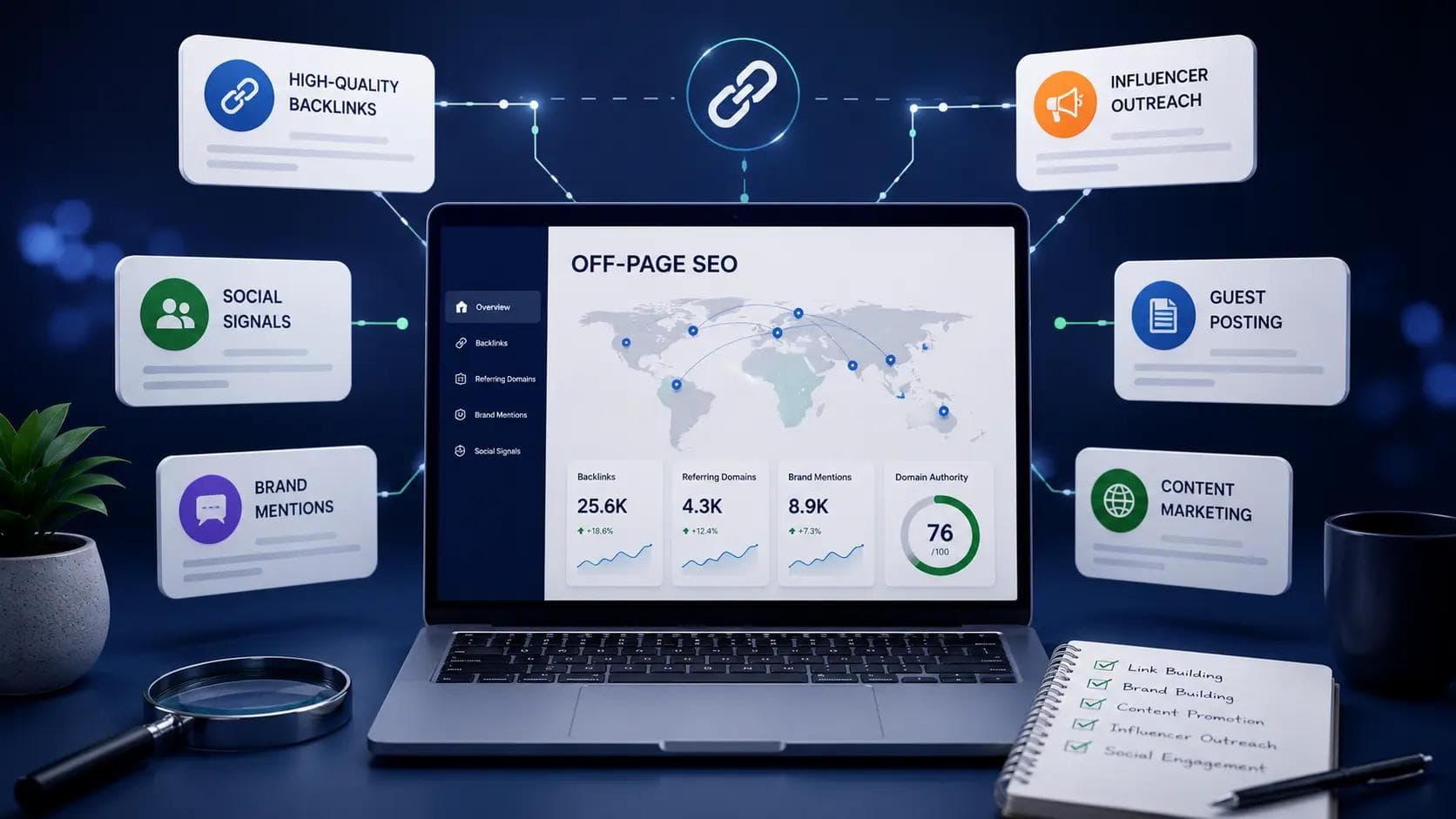
- Off-Site Influence: The final AI response is heavily shaped by external factors. This includes accurate and positive profiles on directories (e.g., Google Business Profile, industry-specific listings), strong review platform presence (e.g., G2, Capterra), positive press mentions, and consistent partner listings.
None of these issues are fixed by a dashboard. They are fixed by people rewriting pages, aligning listings, earning coverage, and actively managing online reputation. Whether through an in-house team or an external agency, someone must act as the fire brigade. A tool can tell you that your pricing is outdated in an AI’s answer, but only a human can update the pricing page, notify relevant review platforms, and ensure consistency across all digital touchpoints.
A Decision Rule for Tool Selection
To avoid overspending and ensure your resources are directed effectively, use this diagnostic workflow to determine your tooling needs. Crucially, do not let the tool budget eat into the budget required for actual fixes.
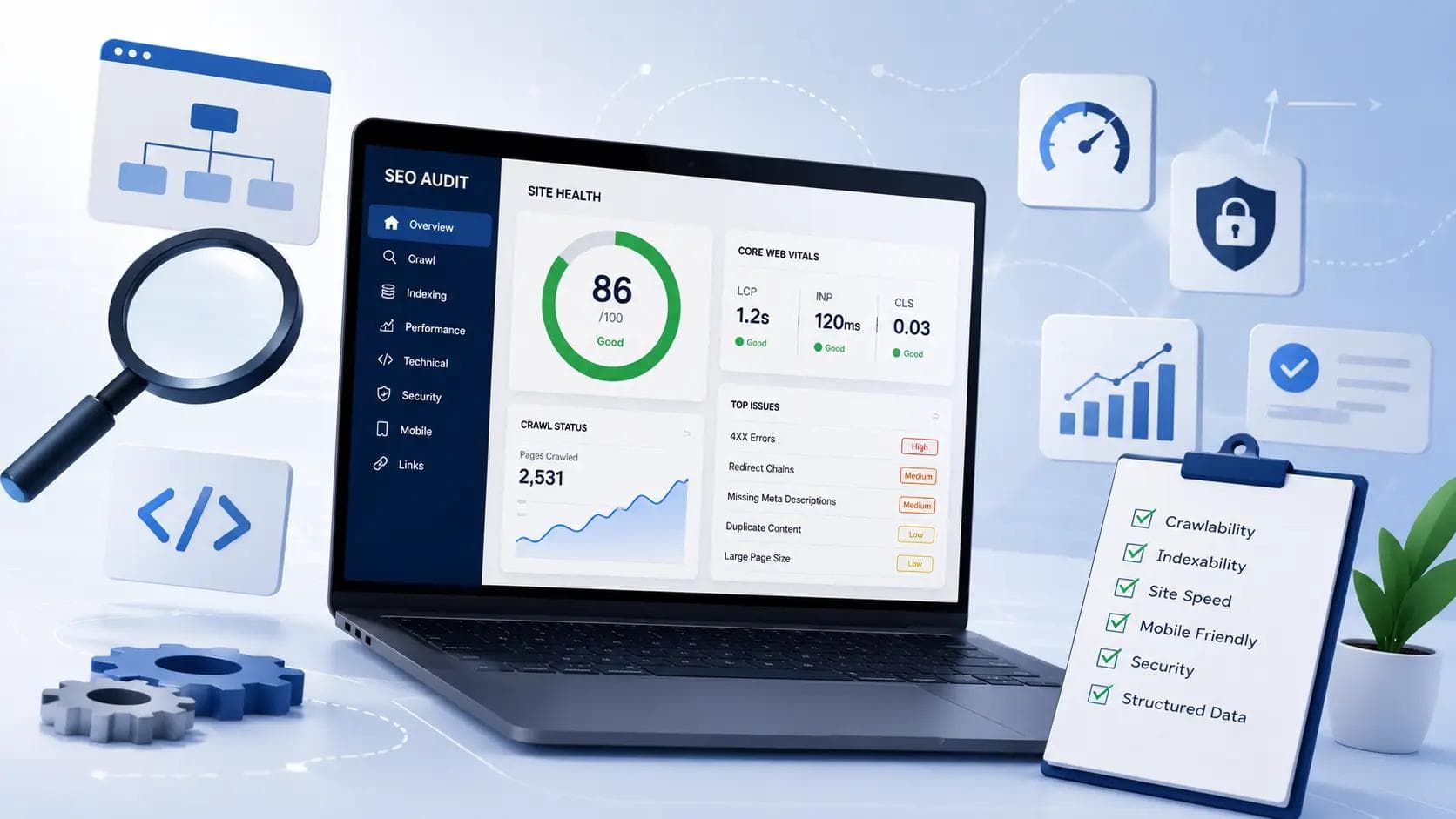
- Pages Not Indexed or Past Page Two: You do not need a specialized AEO or GEO tool yet. Your primary focus should be on foundational SEO. Use Google Search Console and basic SEO auditing tools to fix crawlability issues, improve technical health, and enhance content relevance. Until your site is discoverable, AI visibility is a moot point.
- Ranking, but Missing from Snippets/AI Overviews: Your SEO foundation is solid, but you're not capturing the prime AI answer spots. Use a lightweight tracker (like the DIY spreadsheet) alongside dedicated content work. Optimize your content for question-style headings, provide clear and concise answers to common queries, and structure your data for easy extraction by AI models. While specific word counts are often cited, treat them as flexible guidelines rather than rigid rules.
- Competitors Named, You Are Not (in Generative AI): This is a strong signal to invest in a dedicated GEO tracker. However, the tool must be paired with aggressive off-site work. This includes updating all directory listings, actively engaging with review platforms to generate positive feedback, securing press mentions, and ensuring your brand narrative is consistent across all third-party sites.
- All Three Issues Exist: Address them in the order listed above. Fix SEO first to establish discoverability, then optimize for AEO to capture direct answers, and finally, tackle GEO to influence generative AI recommendations. Attempting to jump straight to GEO tools while your site is unindexed or your content is weak will result in monitoring a problem that cannot be solved by the tool alone.
Making Alarms Specific
A vague alarm is useless; it provides no actionable intelligence. A report stating "AI visibility down 4%" tells no one what specific action to take. In contrast, an alarm stating "Perplexity quotes our 2024 pricing for prompt 'brand-01'" tells the documentation team exactly which page and listing to fix.
When logging results or configuring enterprise tools, always record which layer failed and, critically, what the AI engine specifically said. This specificity transforms raw data into clear, actionable items. For example:
- Bad Alarm: "Low brand mention rate." (Vague, no clear action)
- Good Alarm: "ChatGPT describes our product as 'enterprise-only' in response to 'best tools for small teams.' Source: outdated blog post from 2023." (Specific, clear path to remediation: update the blog post and request a re-crawl.)
The second example provides a clear path to remediation: update the blog post and request a re-crawl.
Common Mistakes in AI Search Strategy
Teams often fall into predictable traps when navigating the complexities of AEO and GEO. Avoiding these errors can save significant time, budget, and frustration.
- Tool-Only Thinking: The assumption that simply purchasing a software platform will automatically improve AI visibility. Tools monitor and report; human effort is required for content creation, optimization, and outreach.
- Ignoring Off-Site Signals: Focusing exclusively on on-page content while neglecting the crucial role of directories, review platforms, and press mentions. AI engines heavily rely on this third-party consensus for their recommendations.
- Vague Reporting: Providing high-level metrics without the raw text or specific context of AI responses. Without the exact wording, stakeholders cannot understand the root cause of visibility drops or formulate effective solutions.
- Skipping the SEO Foundation: Investing in advanced GEO tracking while basic indexation issues, poor site performance, or weak content remain unresolved. This is akin to decorating a house with a cracked foundation.
- Lack of Remediation Ownership: Having a tool that flags issues but no clear team or individual assigned to investigate and fix those issues. Data without accountability becomes noise.
Startup vs. Enterprise Approaches
The optimal strategy for managing AI search visibility depends heavily on your organization's stage, resources, and specific needs.
Startups: For lean teams, the most effective approach is to build a cheap, functional detector. Utilize spreadsheets and basic scripts to monitor a focused set of key prompts. The money saved on expensive platforms should be reinvested directly into content fixes, off-site profile optimization, and reputation management. The primary goal at this stage is to validate that your fixes work and to gain initial insights, not to generate elaborate reports for investors.
Enterprise: Larger organizations require a more sophisticated detector. You need the scale, historical depth, multi-market support, and advanced reporting capabilities that only paid platforms can offer. However, the critical success factor remains the same: you must ensure that a named team or specific individuals own every alarm. Assign clear responsibilities for investigating visibility drops, coordinating content updates, and managing off-site signals. Without this accountability, even the most advanced data becomes mere noise.
Key Takeaways
- Distinguish Detection from Action: AEO and GEO tools are smoke detectors. They alert you to issues but do not fix them. Always pair monitoring tools with a dedicated remediation team or strategy.
- Start with SEO: Ensure your site is indexed, crawlable, and ranking well in traditional search before attempting to optimize for AI answers. A cracked foundation makes higher-layer visibility impossible.
- Build DIY First: For small teams, a spreadsheet and basic script are sufficient to track initial AI visibility. Upgrade to paid tools only when scale, complexity, or advanced reporting needs genuinely demand it.
- Demand Raw Text: Choose tools that show the exact AI response. Scores or metrics without the underlying context of the AI's actual words are largely useless for diagnosis and effective remediation.
- Prioritize Off-Site Work: GEO relies heavily on third-party sources. Accurate and positive profiles on directories, strong review platform presence, and positive press mentions are critical inputs for AI recommendations.
FAQ
Do I need an AEO tool if my site is not ranking on Google? No. If your site is not indexed or is ranking poorly in traditional search, you have a fundamental SEO problem, not primarily an AEO problem. Focus on fixing your technical SEO, improving content relevance, and building authority first. AI engines often rely on the same underlying web data that powers traditional search results.
How often should I check my AI visibility? For startups and small teams, a monthly check is often sufficient to identify significant trends and changes. For enterprises or in fast-moving, competitive markets, weekly or bi-weekly checks may be necessary to react quickly. The key is consistency in your monitoring efforts rather than simply high frequency.
Can I automate the collection of AI answers? Yes, but with caution and adherence to guidelines. Use official APIs where available and always respect rate limits and terms of service. For small prompt sets, manual entry is an acceptable and often safer alternative. Be aware that API responses may sometimes differ from those provided in consumer-facing applications.
What is the difference between AEO and GEO? AEO (Answer Engine Optimization) primarily focuses on optimizing for specific answer formats within traditional search results, such as featured snippets and "People Also Ask" boxes. GEO (Generative Engine Optimization) is broader, focusing on how generative AI assistants like ChatGPT or Perplexity recommend, describe, and cite your brand across multiple, diverse sources, often in conversational contexts.
About the Author

Suraj Kumar is a writer, entrepreneur, and the CEO and founder of this website, sharing simple and practical insights on business, creativity, and personal growth. With experience building digital projects, they enjoy helping others learn, grow, and succeed online.