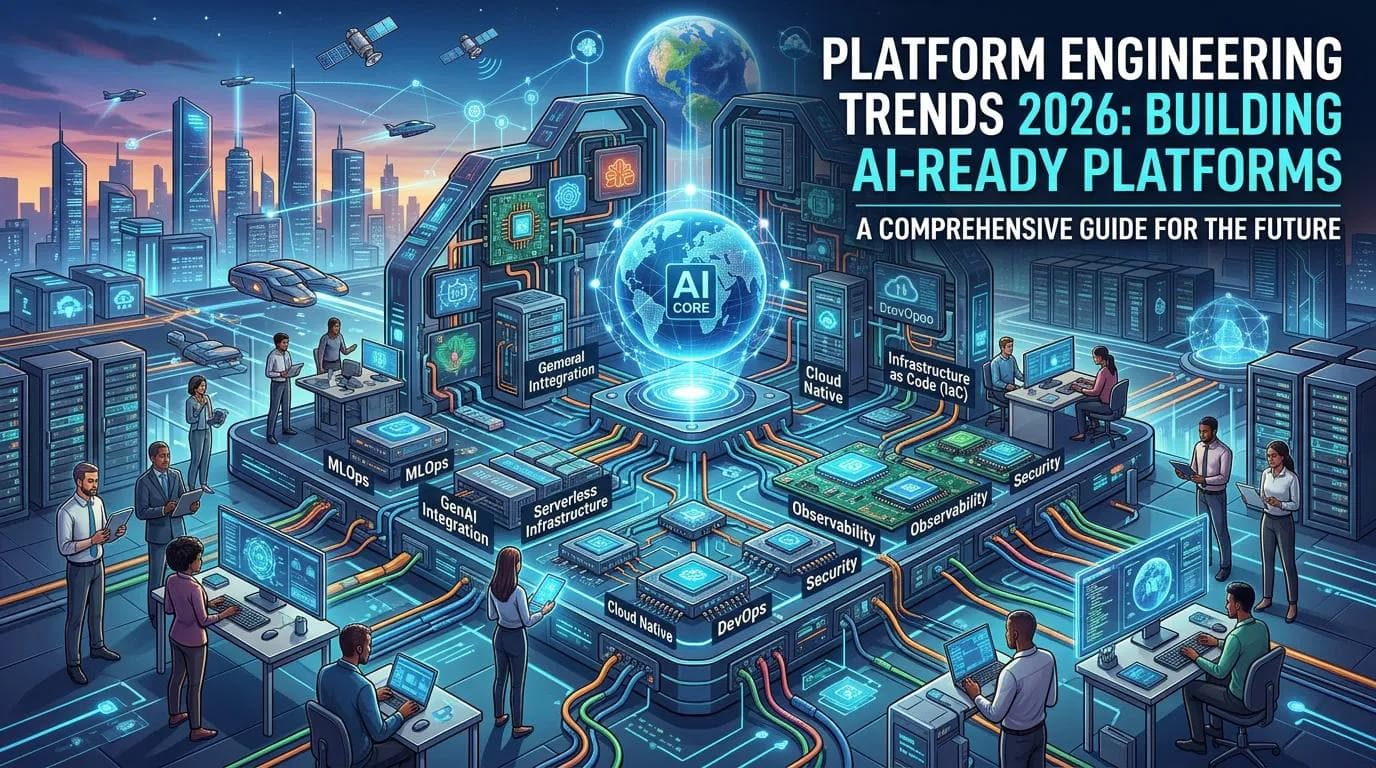
Platform engineering trends 2026 are fundamentally shifting how organizations scale software delivery by integrating AI directly into the backbone of internal operations. As engineering teams struggle with the complexity of modern cloud-native environments and the specific demands of machine learning workflows, the move toward automated, self-service infrastructure has become essential. This article explores how the evolution of Internal Developer Platforms (IDPs) is creating a new standard for productivity, security, and innovation, ensuring that development teams can focus on shipping features rather than managing configuration drift or infrastructure overhead.
What is Platform Engineering Trends 2026?
Platform engineering trends 2026 refer to the strategic adoption of AI-infused, self-service infrastructure frameworks designed to reduce cognitive load on developers. It involves the creation of product-like internal platforms that provide 'paved paths' for application deployment, security, and AI model lifecycle management, effectively bridging the gap between DevOps and MLOps to drive superior developer experience AI.
Platform engineering is the discipline of designing and building self-service capabilities that empower software engineers to deliver value autonomously. By 2026, this discipline has evolved to focus on three core pillars:
- Intelligent abstraction layers that hide infrastructure complexity.
- AI-powered platforms that proactively manage resource allocation and cost.
- Unified environments that support both traditional software services and specialized AI/ML workloads.
How Platform Engineering Trends 2026 Works (Step-by-Step)
The process of modernizing your internal platform involves a structured approach to automation and cognitive load reduction:
- Assessment of Developer Friction: Identify the specific bottlenecks in the current deployment pipeline, such as manual ticketing for infrastructure or inconsistent environment configurations.
- Designing the Paved Path: Create standardized templates using Infrastructure-as-Code (IaC) that allow developers to provision environments with single-click functionality.
- Integrating AI-Driven Guardrails: Implement policy-as-code and AI-powered observability to automatically validate configurations, detect performance anomalies, and optimize resource usage in real-time.
- Providing Specialized AI/ML Infrastructure: Architect platforms for AI/ML workloads by offering pre-configured GPU clusters, vector database connectivity, and streamlined model registry pipelines.
- Continuous Feedback Loop: Utilize telemetry data from the platform to refine the developer experience, ensuring the tools provided actually decrease the time-to-market.
Benefits of Platform Engineering Trends 2026
Adopting these advanced engineering practices offers measurable improvements for enterprises looking to scale their software output:
- Accelerated Time-to-Value: By reducing the manual overhead involved in setting up infrastructure, developers can focus exclusively on application code and business logic.
- Enhanced Developer Experience AI: By utilizing AI tools within the platform, developers receive real-time assistance for debugging and infrastructure configuration, drastically lowering the learning curve.
- Standardization and Governance: Centralized platforms ensure that security, compliance, and architectural standards are baked into the infrastructure, rather than added as an afterthought.
- Efficient DevOps MLOps Convergence: The synergy between these two domains allows for a unified approach to managing the entire application lifecycle, from standard code to complex model training pipelines.
- Cost Optimization: AI-powered platforms can dynamically scale resources based on actual demand, preventing the wasteful provisioning often seen in traditional cloud management.
Real-World Examples of Platform Engineering Trends 2026
Consider a large-scale enterprise that manages hundreds of microservices alongside a growing fleet of internal AI models. By implementing a modern internal developer platform, they transform their delivery process:
- Infrastructure Architecture: They implement a unified control plane that treats infrastructure as a product, allowing a data scientist to request a GPU-backed sandbox for experimentation without filing a ticket with the IT department.
- Anomaly Detection: The platform uses internal telemetry to monitor for cost spikes or performance degradation in real-time, automatically suggesting configuration adjustments to the owning team.
- Self-Service Portals: Teams use a portal that abstracts Kubernetes complexity, allowing junior developers to deploy services in a secure, compliant environment that automatically integrates monitoring, logging, and security scans.
Platform Engineering vs Traditional Systems
Unlike traditional DevOps models where teams might rely on ad-hoc scripts or scattered manual tasks, platform engineering treats the internal platform as a product with its own lifecycle and roadmap. Traditional systems often lead to 'shadow IT' or fragmented tooling that varies from team to team, whereas an Internal Developer Platform (IDP) enforces consistency through well-defined service catalogs.
Traditional systems are usually reactive, triggered by ticket-based requests that slow down momentum. In contrast, platforms built according to 2026 standards are proactive and self-service. They emphasize developer autonomy, allowing engineers to self-provision what they need within guardrails that prevent security vulnerabilities or unnecessary costs.
Challenges or Risks
While the shift towards platform-centric development is powerful, organizations must navigate several risks:
- Over-Engineering: Building a platform that is too complex can be counter-productive. It is vital to start small and iterate based on the specific needs of the internal customers.
- Cultural Resistance: Shifting from a traditional 'do it yourself' infrastructure culture to a 'platform consumption' model requires significant change management.
- Security and Data Governance: Integrating AI infrastructure architecture requires robust security measures to prevent unauthorized data access or model drift in production environments.
- Maintenance Burden: A platform is a product that must be maintained, updated, and supported. It requires a dedicated team that views developers as their primary users.
Future of Platform Engineering Trends 2026
The future lies in the deeper integration of predictive analytics and automated remediation. We expect to see more platforms that self-heal, identifying potential failures before they manifest as outages. Furthermore, the convergence of developer experience and AI will lead to natural language interfaces for infrastructure management, where developers can simply describe their requirements in plain text to generate complex environment deployments.
As AI infrastructure architecture becomes more standardized, the barriers to entry for deploying sophisticated models will decrease, allowing smaller organizations to compete at the same level as enterprise giants. The platform will serve as the great equalizer, democratizing access to high-performance computing and advanced software engineering practices.
Key Takeaways
- Prioritize developer productivity by creating self-service 'paved paths' that reduce cognitive load.
- Treat your internal platform as a product with a clear roadmap and user feedback loop.
- Implement AI-powered observability to manage resources and maintain infrastructure health automatically.
- Bridge the gap between DevOps and MLOps to support both traditional application delivery and modern AI-centric workloads.
- Focus on security and compliance by design, embedding governance into the automated deployment process.
Frequently Asked Questions
What are the main drivers of platform engineering trends 2026?
The main drivers include the need for faster software delivery, the increasing complexity of cloud-native infrastructure, and the necessity to manage both traditional and AI-specific workloads effectively.
How do AI-powered platforms improve productivity?
They improve productivity by automating routine tasks, offering real-time debugging assistance, and proactively managing resource allocation, allowing developers to focus on writing code.
Is an Internal Developer Platform suitable for small teams?
Yes, by simplifying infrastructure management and providing standardized templates, IDPs can help smaller teams ship features faster and maintain high quality without needing dedicated infrastructure experts.
How does platform engineering support AI infrastructure architecture?
It supports AI architecture by providing self-service access to GPU resources, managed vector databases, and automated pipelines, ensuring developers can deploy models efficiently.
What is the biggest hurdle when starting platform engineering?
The biggest hurdle is usually cultural, as teams must shift from manual infrastructure management to adopting a platform-centric mindset that prioritizes long-term consistency over short-term speed.
Conclusion
Platform engineering trends 2026 represent a vital evolution in the software development lifecycle. By focusing on building intelligent, self-service platforms, organizations can empower their teams to navigate the complexities of modern infrastructure while fostering a culture of innovation. As we move further into an era defined by AI, the ability to build robust, scalable, and developer-centric systems will be the primary differentiator for companies that thrive. By investing in the right platform engineering strategy today, you are laying the foundation for a more productive and agile future.
About the Author

Suraj - Writer Dock
Suraj Kumar is a writer, entrepreneur, and the CEO and founder of this website, sharing simple and practical insights on business, creativity, and personal growth. With experience building digital projects, they enjoy helping others learn, grow, and succeed online.