I still remember the day I realized my "perfectly designed" monolithic application was actually a ticking time bomb. I was working on an e-commerce platform, and we had just launched a big holiday sale.
Every time a user placed an order, our system tried to do five things synchronously: charge the credit card, update the inventory, send a confirmation email, notify the warehouse, and update the loyalty points balance.
It worked fine for 100 users. But when 10,000 users hit the "Buy" button at once, the email server choked. Because the code was written as a strict sequence ("Do A, then B, then C"), the failure of the email service caused the entire checkout process to fail. We lost thousands of dollars in sales because a third-party email provider was slow.
That was my painful introduction to the need for Event-Driven Architecture (EDA).
If you have ever felt the pain of tight coupling—where changing one part of your code breaks three other parts—then this guide is for you. I’m going to walk you through EDA just like I would if we were standing at a whiteboard together. We’ll cover what it is, why it works, and real-world use cases where it shines.
What Is Event-Driven Architecture?
In traditional software development (often called Request/Response), systems talk to each other like a boss giving orders. Service A tells Service B: "Do this now and tell me when you're done."
Event-Driven Architecture flips this script. Instead of commands, we use events.
An event is simply a notification that something has happened. It’s a state change.
- Command: "Create a new user." (Expects a response)
- Event: "UserCreated." (A statement of fact)
In EDA, Service A doesn't tell Service B what to do. Service A simply shouts, "Hey, a user just signed up!" and then goes back to work. It doesn't care who is listening. Service B, Service C, and Service D might all be listening, and they react however they want.
This simple shift—from "requesting" to "announcing"—changes everything. It decouples your services. The sender (Producer) doesn't need to know anything about the receiver (Consumer).
The Core Components of EDA
To understand how this works under the hood, we need to break down the three main players in an event-driven system. I like to think of them as the Speaker, the Messenger, and the Listener.
The Event Producer (The Speaker)
This is the part of the system where the action happens. It could be a user clicking a button, a sensor detecting a temperature change, or a scheduled job finishing. The Producer’s only job is to create the event and send it out. It does not wait for a reply. It is strictly "fire and forget."
The Event Router / Broker (The Messenger)
This is the middleware. In a small app, this might just be an internal bus. In a large enterprise system, this is usually a message broker like Apache Kafka, RabbitMQ, or AWS SNS/SQS. The Broker receives the event from the Producer, filters it (if necessary), and ensures it gets to the right queues or channels. It handles the reliability—making sure the message isn't lost if the internet blinks.
The Event Consumer (The Listener)
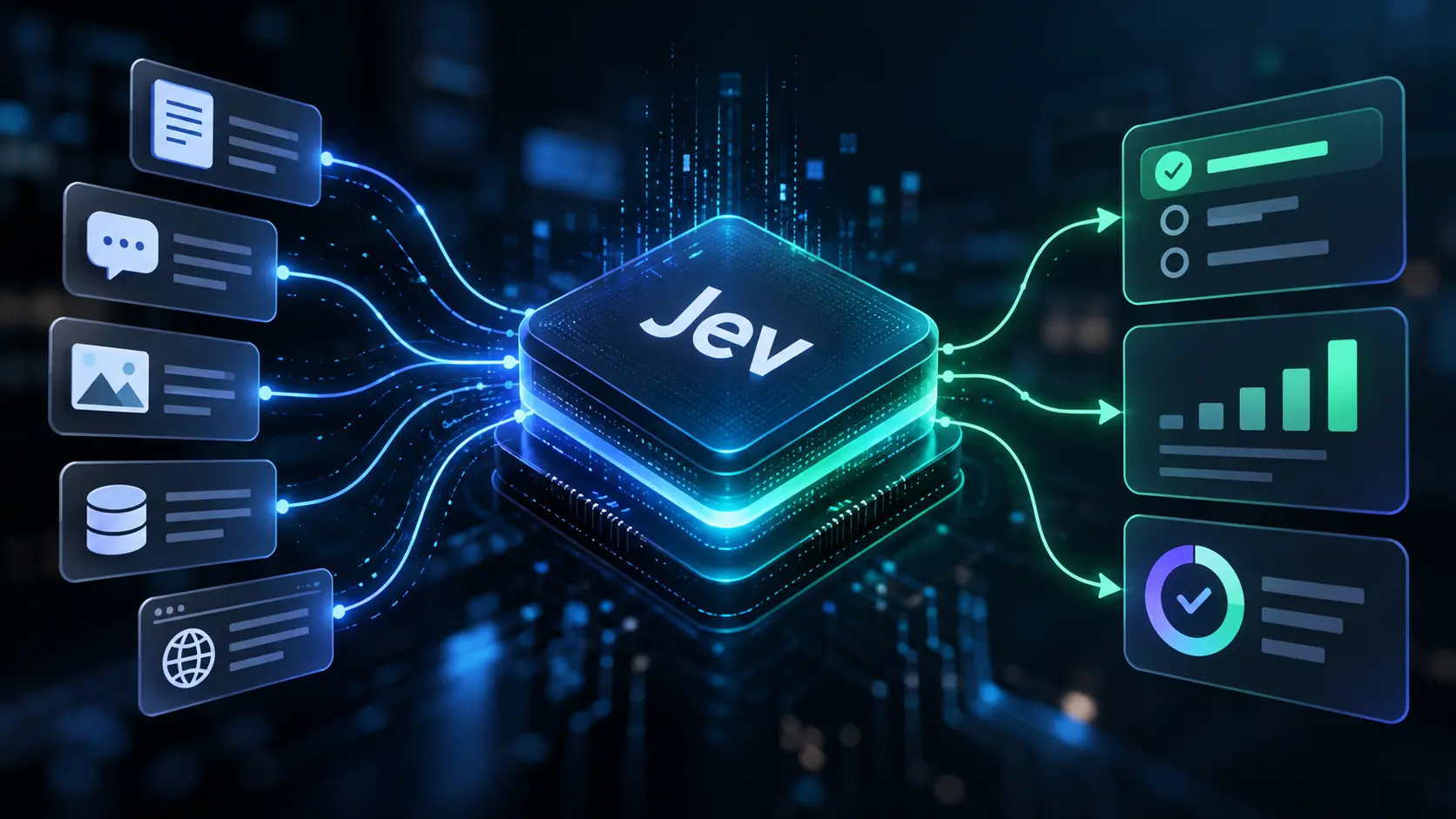
These are the services waiting for news. A Consumer subscribes to specific events. When an event arrives, the Consumer wakes up, processes the data, and does its job. Crucially, a single event can trigger multiple consumers. One "OrderPlaced" event might trigger the "Shipping Service," the "Email Service," and the "Analytics Service" all at once.
How It Works: A Practical Walkthrough
Let’s go back to my e-commerce nightmare. If I had built that system using Event-Driven Architecture, here is how the flow would have looked:
- The Trigger: The user clicks "Buy."
- The Producer: The Checkout Service charges the credit card. If successful, it publishes an event: OrderPlaced.
- Payload: { orderId: 123, userId: 456, items: [...] }
- The Response: The Checkout Service immediately tells the user, "Order received!" The user is happy and moves on. The page load time is instant.
- The Broker: The OrderPlaced event sits in a queue (like Kafka).
- The Consumers:
- Inventory Service: Hears OrderPlaced. It reserves the items.
- Email Service: Hears OrderPlaced. It sends the confirmation.
- Shipping Service: Hears OrderPlaced. It prints the shipping label.
Now, imagine the Email Service is down. Does the checkout fail? No. The event just sits in the queue. When the Email Service comes back online five minutes later, it picks up the event and sends the email. The user never knew there was a glitch. This is the power of fault tolerance.
Key Patterns in Event-Driven Architecture
Not all event-driven systems look the same. Over the years, I’ve implemented several different patterns depending on the complexity of the project. Here are the two most common ones you will encounter.
Publish-Subscribe (Pub/Sub)
This is the most popular pattern and the one we just described.
- How it works: Producers "publish" messages to a topic. Consumers "subscribe" to that topic.
- The benefit: It is highly scalable. You can add new consumers without changing the producer. If the marketing team suddenly wants to track every sale, you just add a "Marketing Service" listener. You don't have to touch the Checkout Service code.
Event Sourcing
This is a more advanced pattern, often used in banking or complex ledgers.
- How it works: Instead of storing just the current state of data (e.g., "Balance: $50"), you store the sequence of events that led there (e.g., "AccountOpened", "Deposited $100", "Withdrew $50").
- The benefit: You have a perfect audit trail. You can reconstruct the state of the system at any point in time by replaying the events. It allows for "time travel" debugging.
Real-World Use Cases
Theory is great, but let’s talk about where I actually see this used in the industry. EDA isn't for every website, but for certain problems, it is the only viable solution.
Use Case 1: Real-Time Data Processing (IoT)
I once consulted for a logistics company tracking thousands of trucks. Each truck sent GPS updates every few seconds.
- The Problem: Trying to write millions of updates directly to a traditional SQL database locked the tables and crashed the server.
- The EDA Solution: We used a stream (Kafka) to ingest the raw GPS events. Consumers processed these events to calculate ETA, check for speeding, and update the dashboard map in real-time. The database was only updated with the results, not every raw ping.
Use Case 2: Decoupling Microservices (E-commerce)
As mentioned earlier, e-commerce is the classic example. When you have disparate teams—one managing Inventory, one managing Pricing, one managing Recommendations—you cannot have them all calling each other’s APIs directly. It creates a "spaghetti" mess of dependencies. EDA allows these teams to work independently.
Use Case 3: User Activity Tracking (Analytics)
Think about Netflix or YouTube. Every time you pause, rewind, or click a thumbnail, an event is fired.
- The Event: VideoPaused, ThumbnailClicked.
- The Consumer: The recommendation engine consumes these events to figure out what to show you next. This happens asynchronously; it doesn't slow down your video player.
The Benefits: Why We Do This
Why go through the trouble of setting up message brokers and queues? In my experience, the benefits usually outweigh the initial setup cost.
1. Loose Coupling
This is the holy grail of software engineering. Because services don't know about each other, you can change one without breaking the others. You can rewrite the "Shipping Service" in Python while the "Checkout Service" is in Node.js, and they will still communicate perfectly via JSON events.
2. Asynchronous Processing
Things that are slow (generating PDFs, sending emails, resizing images) shouldn't block the user. EDA lets you offload this heavy lifting to background processes. The user interface remains snappy and responsive.
3. Scalability
This is where EDA shines. If your "Image Resizing" service is getting overwhelmed, you can just spin up five more instances of that consumer. They will all pull from the same queue, naturally load-balancing the work. You don't need to configure complex load balancers; the queue handles the distribution.
4. Resilience (Fault Tolerance)
As we saw with the email example, if a consumer dies, the data isn't lost. The broker holds the message until the consumer is healthy again. This creates systems that "self-heal."
The Challenges: It’s Not All Sunshine
I would be lying if I told you EDA is perfect. It introduces a new set of problems that you need to be ready for. I’ve spent many late nights debugging these exact issues.
1. Complexity
It is much harder to see "the big picture." In a monolithic app, you can click "Go to Definition" in your IDE and see exactly what happens next. In EDA, the flow is disconnected. You trigger an event and... something happens somewhere else. You need good documentation and diagrams to keep track of it all.
2. Eventual Consistency
This is the hardest concept for stakeholders to grasp. In a traditional database, when you save data, it is saved. In EDA, there might be a delay. The user might place an order, but the "Orders" screen might not show it for 500 milliseconds because the event hasn't been processed yet. You have to design your UI to handle this "lag."
3. Debugging is Hard
Tracing a bug across five different services that communicate via invisible messages is difficult. You need robust logging and "Distributed Tracing" tools (like Jaeger or Zipkin) to see the path a request took.
When NOT to Use Event-Driven Architecture
I see a lot of junior architects try to force EDA into every project because it’s trendy. Don't do that.
Do not use EDA if:
- The project is small: If you are building a simple CRUD (Create, Read, Update, Delete) app for a small team, EDA is overkill. Stick to a simple monolith.
- You need strict consistency: If you are building a stock trading engine where data must be accurate to the microsecond across all systems immediately, the lag of "eventual consistency" might be unacceptable.
- The team is inexperienced: EDA requires a shift in mindset. If your team has never worked with queues or async flows, the learning curve can slow down development significantly.
Tools of the Trade
If you are ready to start building, here are the tools I encounter most often in the wild.
RabbitMQ
A solid, traditional message broker. It’s great for "smart routing"—sending messages to specific places based on complex rules. It is easy to set up and very reliable.
Apache Kafka
The heavy hitter. Kafka is designed for massive scale (think LinkedIn or Uber). It stores events as a log, meaning you can replay them later. It’s complex to manage but unbeatable for high throughput.
AWS SNS / SQS
If you are on AWS, these are your best friends.
- SNS (Simple Notification Service): Broadcasting messages (Pub/Sub).
- SQS (Simple Queue Service): Queueing messages for processing. They are fully managed, so you don't have to worry about server maintenance.
Google Cloud Pub/Sub
Similar to the AWS offering, this is a fully managed service that handles both the "streaming" and "messaging" aspects in one tool.
Best Practices for Implementation
If you decide to go down this route, here are three tips from my experience to save you some headaches:
- Idempotency: This is a fancy word that means "handling duplicates safely." Sometimes, a network glitch might cause an event to be delivered twice. Your consumer code must be smart enough to know, "I've already processed Order #123, ignore this duplicate."
- Schema Management: Define what your events look like. If the Producer changes the event format (e.g., renames userId to user_id), it will break the Consumer. Use a Schema Registry to enforce rules.
- Keep Payloads Small: Don't send the entire database row in the event. Send the ID and maybe a few key details. If the Consumer needs more info, it can fetch it. Large messages clog up the broker.
FAQ: Common Questions
Is Event-Driven the same as Microservices?
No, but they are best friends. You can have a monolith that is event-driven internally. However, EDA is the most common way to make Microservices talk to each other efficiently.
How do I handle errors in EDA?
We usually use something called a "Dead Letter Queue" (DLQ). If a consumer tries to process a message and fails 3 times, the message is moved to the DLQ. A developer can then inspect it manually to see why it failed.
Can I use EDA with a REST API?
Absolutely. A common pattern is: The user sends a REST request (e.g., POST /order). The server accepts it, fires an event internally to process it, and immediately returns a "202 Accepted" status to the user.
Conclusion: The Shift in Mindset
Adopting Event-Driven Architecture is more than just swapping out a database for a message queue. It is a fundamental shift in how you view software. You stop thinking about "steps" and start thinking about "reactions."
It requires discipline. It requires better monitoring. And yes, it requires a bit more upfront work.
But the payoff is a system that can grow with your business. It allows you to build software that is resilient, flexible, and capable of handling the messy, unpredictable nature of the real world.
My advice? Start small. You don't need to rewrite your whole system overnight. Identify one process that is slow or brittle—maybe your email notifications or your reporting dashboard—and try moving just that part to an event-driven flow. Once you see the power of decoupling, you’ll never want to go back to tight coupling again.
About the Author

Suraj - Writer Dock
Suraj Kumar is a writer, entrepreneur, and the CEO and founder of this website, sharing simple and practical insights on business, creativity, and personal growth. With experience building digital projects, they enjoy helping others learn, grow, and succeed online.