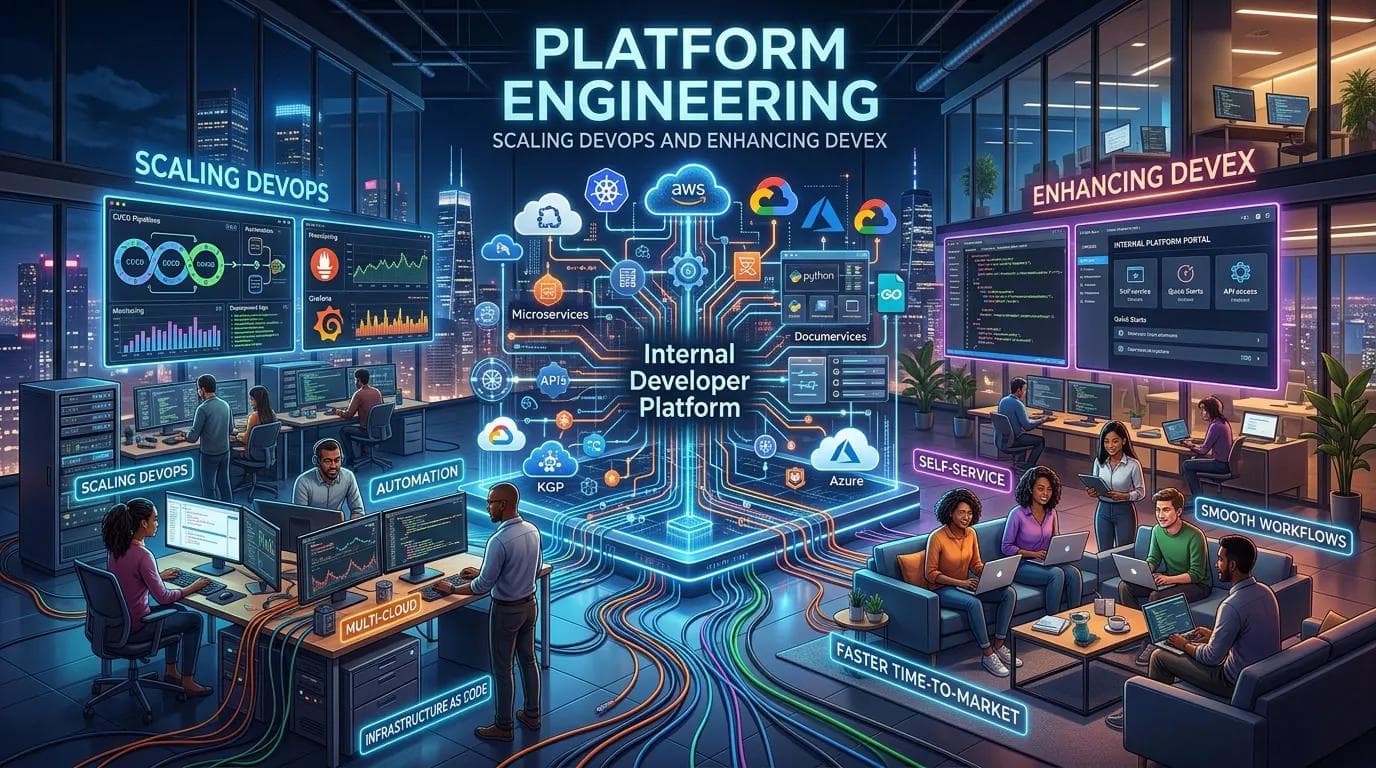
Platform Engineering is the strategic discipline of designing and building toolchains and workflows that enable self-service capabilities for software engineering organizations. As businesses struggle with the mounting complexity of cloud-native ecosystems, this approach addresses the urgent need to bridge the gap between infrastructure operations and software development by providing an Internal Developer Platform (IDP). In this article, we will explore how this framework transforms the DevOps evolution, enhances developer experience, and provides the architecture necessary to scale high-performing engineering teams.
What is Platform Engineering?
Platform Engineering is the practice of building and maintaining an Internal Developer Platform (IDP) that provides automated, self-service infrastructure and delivery capabilities to development teams. By treating the platform as a product, platform engineers aim to reduce the cognitive load on developers, allowing them to focus on feature development rather than managing complex infrastructure configurations or manual deployment pipelines.
The Core Definition
Platform Engineering acts as the layer between the underlying cloud-native infrastructure and the developers who build applications. It simplifies the developer workflow by offering a curated, consistent, and standardized environment that abstracts away the complexities of Kubernetes, cloud networking, and security compliance.
Why the Industry is Shifting
- Reduced Cognitive Load: Developers no longer need to become experts in every layer of the tech stack.
- Standardization: It ensures that every team follows security and compliance best practices by design.
- Faster Time-to-Market: Self-service capabilities remove bottlenecks caused by manual infrastructure ticketing systems.
How Platform Engineering Works (Step-by-Step)
Building an IDP is not merely about choosing the right tools; it is about creating a platform product that serves the specific needs of your developers. Here is the operational workflow for implementing a platform engineering model:
- Analyze Developer Needs: Conduct interviews with developers to identify repetitive tasks, pain points in the deployment process, and areas where they feel "blocked" by infrastructure requirements.
- Identify Abstractions: Determine which aspects of the infrastructure are too complex. Instead of exposing raw Kubernetes YAML files, create simplified templates that handle the heavy lifting while exposing only necessary parameters.
- Build the Portal: Develop a centralized user interface or CLI that serves as the entry point for developers. This portal should provide access to environments, databases, and CI/CD triggers.
- Implement Golden Paths: Define "golden paths"—standardized, pre-approved pathways for common tasks like spinning up a new service, which come with built-in security and monitoring.
- Continuous Feedback Loops: Treat the platform like a SaaS product. Regularly solicit feedback from internal users to iterate on the features, ensuring the platform evolves alongside developer requirements.
Benefits of Platform Engineering
Adopting this methodology provides significant advantages that extend beyond mere technical efficiency, impacting the bottom line and team retention.
1. Scaling DevOps Efforts
Traditional DevOps often faces a scaling issue where a small SRE team becomes a bottleneck for an increasing number of developers. Platform Engineering solves this by delegating infrastructure tasks to the platform itself, allowing teams to scale horizontally without adding linear headcount to the operations department.
2. Enhanced Developer Experience (DevEx)
When developers spend less time waiting for manual approvals or debugging infra-related issues, their job satisfaction increases. A well-designed IDP fosters a "flow state," enabling engineers to deliver value more consistently.
3. Improved Security and Compliance
By baking compliance and security into the platform's templates, organizations move from manual security reviews to "security as code." This ensures that every deployment is compliant by default, significantly reducing the risk of human error.
Real-World Examples of Platform Engineering
Major tech companies have been refining these patterns for years to manage massive scale. Consider the following scenarios:
- The Service Catalog Model: A large organization creates an internal developer portal where engineers can "click to deploy" a new microservice. Behind the scenes, the IDP automatically provisions the CI/CD pipeline, monitoring alerts, and cloud resources, following company standards.
- The Self-Service Environment Provisioner: Instead of waiting two days for a testing environment, developers use a command-line tool to request a ephemeral, production-like namespace in Kubernetes. This namespace is automatically destroyed after use, saving costs and freeing up cluster resources.
Platform Engineering vs Traditional Systems
Understanding the shift requires a comparison between legacy approaches and the modern platform-centric model.
Feature Traditional DevOps Platform Engineering Focus Process and Silo Breakdown Product and User Experience Workflow Tickets/Ad-hoc requests Self-Service IDP Infrastructure Manual/Custom Scripts Standardized "Golden Paths" Developer Role "You build it, you run it" "You build it, the platform runs it"
Challenges and Risks
While the benefits are clear, organizations must navigate specific hurdles to avoid failure.
The Product Mindset Gap
One of the biggest risks is failing to treat the platform as a product. If platform engineers build tools in a vacuum without consulting developers, they often end up with a complex, unusable system that no one wants to adopt.
The "Over-Abstraction" Trap
If you abstract too much, you may prevent experienced developers from troubleshooting their applications effectively. The goal is to provide a sensible default path, while still allowing experts to "break the glass" and customize when necessary.
Future of Platform Engineering
As we look ahead, the integration of AI and machine learning into platforms will play a significant role. Future IDPs will likely include intelligent agents that suggest configuration optimizations, predict potential deployment failures, and automatically remediate security vulnerabilities before they reach production. Furthermore, the rise of cloud-agnostic platform layers will make it easier for companies to switch providers without refactoring their entire development lifecycle.
Key Takeaways
- Platform Engineering treats internal infrastructure as a product to enhance productivity.
- The primary goal is reducing cognitive load via Internal Developer Platforms (IDPs).
- "Golden Paths" provide standardized, secure workflows that accelerate delivery.
- Scaling DevOps requires shifting from manual intervention to self-service automation.
- Success depends on adopting a user-centric product management mindset.
Frequently Asked Questions
Is Platform Engineering just the new name for DevOps?
No. While they share common goals, Platform Engineering is the practical implementation of DevOps principles at scale. It focuses on productizing infrastructure as a service for developers, whereas DevOps is more of a cultural and process-oriented philosophy.
What is the most important component of an IDP?
An Internal Developer Platform (IDP) needs a developer portal as its face, but its most important component is the set of standardized workflows (or Golden Paths) that allow developers to complete tasks autonomously.
Do I need to be a large enterprise to benefit from this?
No. Even smaller teams benefit from early adoption of platform engineering principles. Setting up standardized deployment templates early prevents technical debt and makes scaling easier as the team grows.
Does Platform Engineering replace SRE teams?
It does not replace them. Instead, it changes their focus. SREs often become the core platform engineers, focusing on the stability and reliability of the platform itself rather than handling individual deployment tickets.
How do I start building a platform for my team?
Start by mapping out the current developer journey and identifying the biggest bottlenecks. Choose one high-impact, low-complexity task to automate first, and iterate based on developer feedback to ensure adoption.
Conclusion
Platform Engineering is no longer a luxury; it is a necessity for organizations competing in a cloud-native, high-velocity landscape. By focusing on the developer experience and creating robust, self-service Internal Developer Platforms, companies can unlock new levels of agility. As you look to evolve your own infrastructure, remember that the most successful platforms are those that prioritize the needs of the developers they serve, turning complex engineering hurdles into simple, automated workflows.
About the Author

Suraj - Writer Dock
Suraj Kumar is a writer, entrepreneur, and the CEO and founder of this website, sharing simple and practical insights on business, creativity, and personal growth. With experience building digital projects, they enjoy helping others learn, grow, and succeed online.