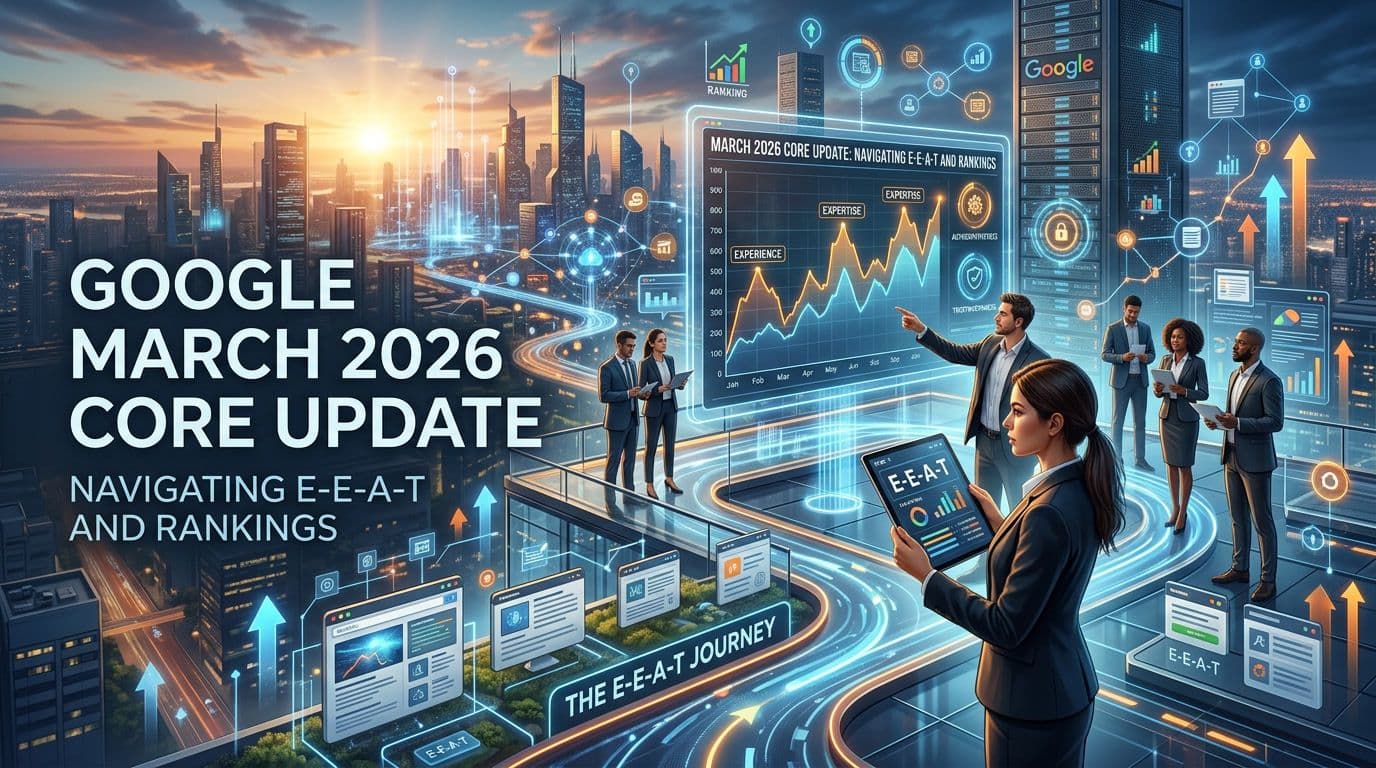
The Google March 2026 Core Update has fundamentally altered the digital landscape, forcing content creators and businesses to reevaluate their approach to search engine visibility. If you have noticed sudden fluctuations in your site traffic or keyword positions, you are likely witnessing the impact of this algorithm shift, which prioritizes refined user intent and rigorous quality standards over superficial optimization tactics.
This article provides an in-depth analysis of these changes, equipping you with the strategies needed to recover rankings and build long-term authority in an increasingly complex search environment.
What is Google March 2026 Core Update?
The Google March 2026 Core Update is a major algorithmic adjustment designed to promote content that demonstrates significant depth, firsthand experience, and clear topical authority. It functions as a recalibration of how Google assesses page quality, moving beyond surface-level keyword relevance to analyze the nuanced relationship between a user's query and the trustworthiness of the source providing the answer.
Essentially, the update serves as a filter that prioritizes content answering specific user needs with precision, while penalizing thin, repetitive, or derivative information. By emphasizing Experience, Expertise, Authoritativeness, and Trustworthiness (E-E-A-T), Google aims to reward creators who provide genuine value, whether in technical documentation, consumer reviews, or research-based analysis.
How Google March 2026 Core Update Works (Step-by-Step)
Understanding the mechanism behind these search engine modifications is vital for maintaining a competitive edge. The update operates through a multi-stage evaluation process that assesses content at the page and site level simultaneously:
- Intent Interpretation: The system decodes the search query to determine if the user seeks transactional, navigational, or informational results. The update adjusts the weighting of these categories in real-time.
- Quality Scoring (E-E-A-T): Google examines the author's background and the site's overall topical authority. Content without verifiable expertise or clear provenance is deprioritized.
- Content Uniqueness Analysis: The algorithm compares your information against existing web data. If your content merely restates well-known facts without unique perspective, it faces lower visibility.
- Contextual Relevance Check: The update evaluates whether the site's overall content ecosystem supports the specific page's claims. Sites with mixed, unrelated topics often lose rankings compared to niche-focused experts.
- Dynamic Ranking Adjustments: Based on the scores above, the system reorders search results to ensure the most helpful, reliable, and relevant pages surface at the top.
Benefits of Google March 2026 Core Update
While ranking volatility can be stressful, the long-term benefits of the Google March 2026 Core Update are significant for high-quality creators. By cleansing the SERPs of low-value, mass-produced, and thin content, Google creates a more sustainable ecosystem where quality wins.
- Reduced Noise: Users find answers faster, leading to higher satisfaction and lower bounce rates for websites that offer genuine insights.
- Increased Authority Reward: Experts in specific fields now see their hard-earned knowledge rewarded with higher visibility, rather than losing traffic to generic aggregators.
- Clearer Strategic Direction: The update provides a roadmap for SEO professionals; by focusing on E-E-A-T, you no longer have to guess which "hacks" might work—the path to growth is built on content quality.
- Higher Conversion Rates: When your content perfectly matches the user's intent, the traffic you receive is much more qualified and likely to engage or convert.
Real-World Examples of Google March 2026 Core Update Impact
To understand the practical implications, consider two common scenarios observed following the rollout.
Scenario A: The Niche Expertise Win
A specialized medical supply website previously struggled to rank for broad informational queries. Following the update, the site implemented detailed author biographies linked to medical certifications and updated all "how-to" guides with clinician-verified advice. By aligning with E-E-A-T principles, the site saw a 40% increase in organic traffic because the algorithm identified the site as a trusted, expert-driven source.
Scenario B: The Generic Blog Decline
A lifestyle blog that relied heavily on generic, high-volume keyword targeting across dozens of unrelated categories experienced a ranking drop. The content lacked depth and relied on superficial descriptions that matched many other sites. The algorithm penalized the site for failing to show expertise in any specific area, proving that broad, unauthoritative content is no longer a viable strategy.
E-E-A-T SEO and AI Content Quality Google
One of the most defining features of the Google March 2026 Core Update is its heightened scrutiny of AI-assisted content quality. Google is not necessarily against non-human-written content, but it is heavily biased against content that lacks human insight, factual accuracy, and original analysis.
If your content is simply a repackaging of top-ranking results, the update will flag it as redundant. The key to maintaining rankings is to infuse every piece of content with "first-person" elements: case studies, unique data, practitioner interviews, or proprietary research that the algorithm cannot find elsewhere.
Search Intent Optimization: The New Standard
Search intent optimization is no longer optional; it is the foundation of modern SEO. With the latest update, Google is better at understanding the difference between a user who wants to "learn" versus one who wants to "buy."
To satisfy this, conduct a manual search for your target keywords. Observe the top five results: Are they videos? Are they product pages? Are they deep-dive tutorials? If your content does not match the format that Google is currently displaying, it is unlikely to rank regardless of how well it is written. Optimize your structure to mirror the intent the user has already demonstrated through their query.
Challenges or Risks of Google March 2026 Core Update
The primary risk for site owners is the potential for significant ranking drops due to outdated content strategies. Sites that prioritize volume over value are the most vulnerable. Furthermore, the volatility introduced by these updates means that site owners must stay diligent, monitoring performance metrics to ensure that their content remains aligned with evolving user needs.
Another challenge is the "authority threshold." For competitive sectors, simply having good content may not be enough. Sites must prove they have the topical authority to speak on the subject, which may require a long-term investment in building backlinks, original research, and consistent subject-matter focus.
Future of Google March 2026 Core Update and SEO
The future of SEO is firmly rooted in the human element. As search engines become more efficient at identifying "content-as-a-commodity," the value of human intuition, unique experiences, and deep industry knowledge will continue to rise. We expect future updates to further refine the assessment of "trust"—specifically looking for signs of transparent ownership, clear editorial standards, and regular content audits.
Success in the coming years will belong to those who build brands rather than just websites. By fostering a community of trust and delivering consistent, high-value information, you insulate your business from the volatility of algorithm updates.
Key Takeaways
- The Google March 2026 Core Update emphasizes that content quality and topical authority are the most important ranking factors.
- E-E-A-T is not a checklist but a standard of excellence; focus on demonstrating real-world experience.
- Align your content format strictly with user search intent to ensure visibility.
- Avoid repetitive, generic content; prioritize original research and unique perspectives.
- Regularly audit your site to ensure all information is accurate, up-to-date, and authoritative.
Frequently Asked Questions (FAQ)
Does the Google March 2026 Core Update penalize all non-human content?
Not explicitly. The update penalizes content that is low-quality, derivative, or provides no new information. If your content is accurate, helpful, and shows expertise, it can rank regardless of how it was produced.
How can I improve my E-E-A-T score after the update?
Update author bios to highlight credentials, link to external proof of expertise, and ensure your site has a clear "About" page that establishes your credibility in your specific niche.
Why did my traffic drop despite high-quality content?
It is possible your content does not align with the current search intent for your primary keywords. Check the top-ranking pages to see if your content type (e.g., listicle vs. guide) matches the SERP expectations.
How often should I audit my content for SEO ranking shifts?
With the ongoing nature of modern updates, a quarterly content audit is recommended to identify underperforming pages and refresh them with current data and improved insights.
Is backlink building still important after this update?
Yes, but the quality of the backlink matters more than ever. The update favors links from authoritative, relevant sites that provide context for your content, rather than bulk link-building efforts.
In conclusion, the Google March 2026 Core Update reinforces that the most effective SEO strategy is to be the best resource for your audience. By prioritizing E-E-A-T, refining your search intent alignment, and ensuring your content offers value that cannot be replicated, you will not only weather the ranking shifts but emerge as a leader in your industry.
About the Author

Suraj - Writer Dock
Suraj Kumar is a writer, entrepreneur, and the CEO and founder of this website, sharing simple and practical insights on business, creativity, and personal growth. With experience building digital projects, they enjoy helping others learn, grow, and succeed online.