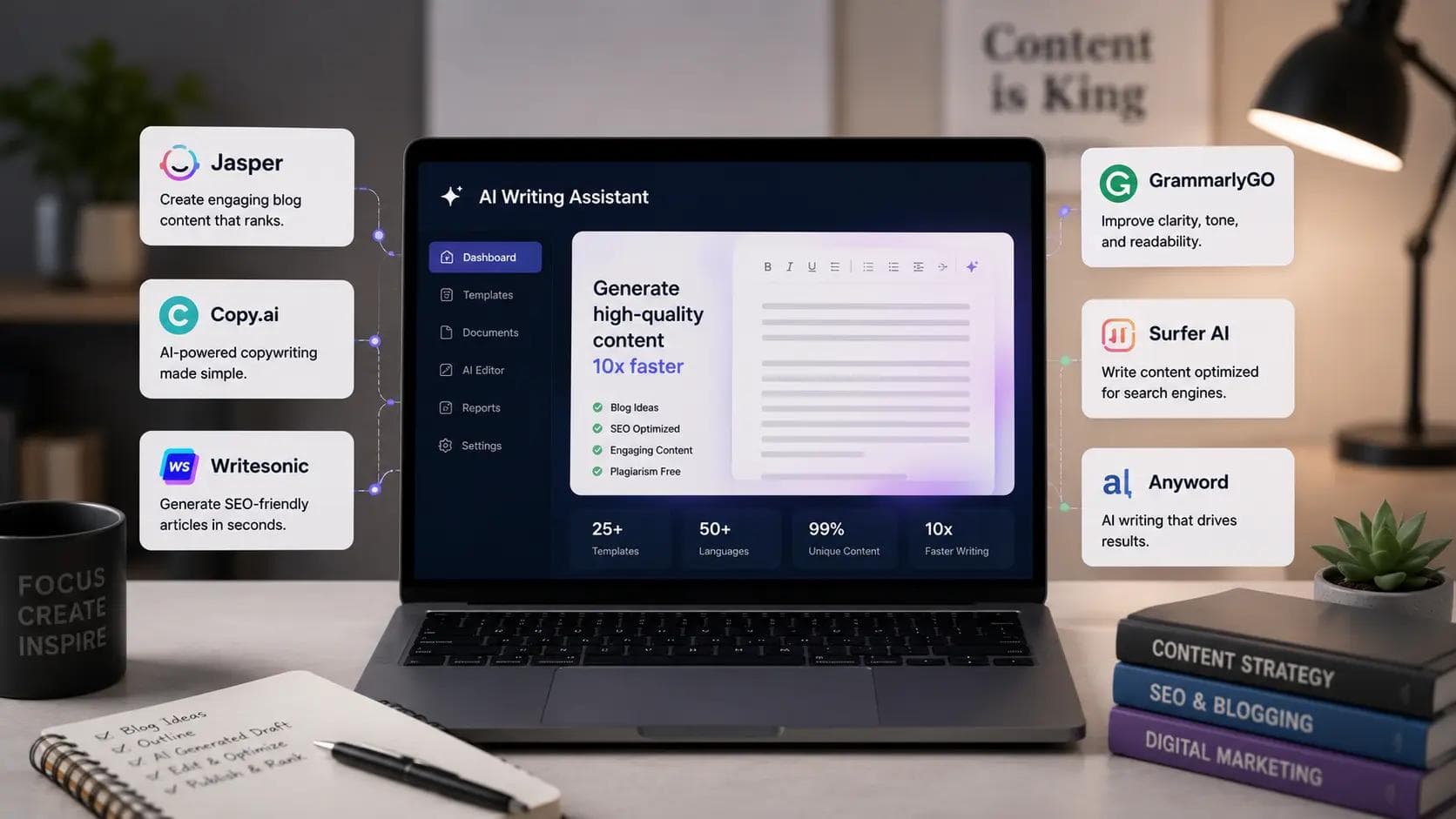
Publishing three blog posts a week used to mean choosing between sleeping, maintaining a personal life, or burning out by month six. When I launched WriterDock, I spent endless nights staring at a blinking cursor, desperately trying to draft long-form content that didn't sound like a generic textbook. Most bloggers reach a point where manual drafting simply cannot keep up with current search demands and output expectations.
Finding the best AI writing tools for bloggers in 2026 isn't about automating your entire site or flooding Google with low-quality fluff. It's about building an efficient workflow that amplifies your personal voice while drastically cutting down on research and structural drafting time.
Here is an honest, hands-on look at the leading writing platforms today, how to use them without getting penalized, and where most creators make critical mistakes.
Why Your AI Content Strategy Strategy Needs to Change in 2026
If you are using AI tools the exact same way you did two years ago, your organic traffic is likely dropping. Search engines have evolved past detecting basic AI patterns; they now prioritize original perspectives, firsthand user testing, and unique media.
According to recent publishing benchmark data, over 70% of professional content teams rely on generative tools for assistance, yet the blogs that rank consistently are those using human editor oversight. The goal is no longer finding a button that generates a 2,000-word post in ten seconds. That approach creates robotic content that fails search engine quality standards and alienates readers.
Instead, modern AI blogging workflows treat software as an ultra-capable research assistant and outline strategist. You provide the personal experiences, real-world examples, and final voice polish. The machine handles structural drafting, semantic keyword suggestions, and data organizing.
1+-------------------------------------------------------+
2|              Modern AI Blogging Workflow              |
3+-------------------------------------------------------+
4|  1. Human Strategy   --> Topic & Experience Angle    |
5|  2. AI Assistance    --> Research & First Draft       |
6|  3. Human Synthesis  --> Editing, Examples & Voice    |
7+-------------------------------------------------------+
1. Claude 3.5 Sonnet: The Uncontested Winner for Natural Writing Voice
When I first tested Anthropic's Claude 3.5 Sonnet for long-form drafting, I immediately noticed a massive difference in tone compared to other models. It naturally avoids annoying filler phrases and writes with an engaging, human rhythm right out of the box.
For bloggers who care about natural prose and nuanced argument structures, Claude is currently unmatched. It excels at taking a rough bulleted outline of your thoughts and expanding it into coherent, conversational paragraphs without sounding overly formal.
Key Strengths for Bloggers
- Superior Prose Quality: Generates writing that requires far less editing to sound human and persuasive.
- Large Context Window: You can paste five of your existing blog posts into the prompt to help it match your exact personal tone.
- Complex Reasoning: Handles detailed technical explanations and nuanced comparisons better than most competitors.
The Catch
Claude lacks direct, built-in access to real-time search engine optimization (SEO) data. You will need to bring your own keyword research to the prompt or pair it with specialized SEO platforms like Ahrefs vs Semrush vs Ubersuggest.
The biggest mistake you can make with Claude is asking it to write a full post at once. Prompt it section by section to keep the prose sharp and focused.
2. Jasper AI: Built Specifically for Content Marketing Workflows
Jasper remains a heavy hitter for marketing teams and full-time publishers who need structured campaign workflows rather than a simple chat interface. It combines multiple underlying language models with brand voice profiles and structured templates.
If you run a multi-author publication or manage blog content across social channels, Jasper's integrated ecosystem saves significant administrative time.
1+-------------------------------------------------------+
2|                   Jasper AI Features                  |
3+-------------------------------------------------------+
4|  - Custom Brand Style Guides                          |
5|  - One-Click Social Repurposing                       |
6|  - Integrated Plagiarism & SEO Checks                 |
7+-------------------------------------------------------+
Key Strengths for Bloggers
- Brand Voice Engine: Scans your style guide and website to enforce consistent terminology and tone across multiple writers.
- Multi-Channel Campaigns: Turns a single completed blog post into a newsletter, Twitter thread, and LinkedIn update in seconds.
- SEO Integrations: Connects directly with Surfer SEO to analyze target content density as you draft.
The Catch
It comes with a higher price tag than standalone model subscriptions. Solo bloggers on a tight budget might find the monthly fee hard to justify when raw chat models offer similar output quality with slightly more manual prompting.
3. ChatGPT Plus (GPT-4o & O1): The Best All-Rounder for Research and Technical Blogging
OpenAI's flagship tool remains an essential part of my daily stack, particularly for initial topic research, code generation, and complex data analysis. Its ability to browse the web live and execute custom Python scripts makes it an incredible research tool before you write a single word.
When I was outlining a technical tutorial last month, I made the mistake of trying to write all the code snippets manually while drafting prose. I wasted three hours debugging basic synthax. Now, I use ChatGPT to generate and verify code blocks first, freeing up my energy to write the actual analysis.
If you are choosing between the top models, evaluating ChatGPT vs Claude comes down to whether you prioritize live web research (ChatGPT) or fluid long-form writing style (Claude).
Key Strengths for Bloggers
- Advanced Web Browsing: Pulls real-time information, quotes, and technical specs directly from live sources.
- Custom GPTs: Allows you to build micro-tools tailored to your specific content structure, like an automatic outline generator or FAQ creator.
- Multimodal Capabilities: Analyzes screenshots, diagrams, and charts to generate descriptive text or alt text for images.
The Catch
Default outputs can lean heavily on predictable transitional phrases and repetitive paragraph structures. You must actively prompt it to break away from standard essay formats.
4. Surfer SEO: Essential for Content Structuring and Keyword Density
Surfer SEO isn't a pure text generator; it is an intelligence layer that tells you exactly what content elements top-ranking pages share. Its AI writer uses real-time SERP data to construct outlines based on current top results.
If your primary traffic driver is organic search, using a data-backed editor prevents you from missing crucial subtopics that readers expect to find.
How to Integrate Surfer into Your Drafting Process
- Run a query audit for your primary target keyword.
- Review the suggested structural headings and recommended semantic term list.
- Use the integrated draft editor to generate a baseline outline.
- Manually write or edit each section to ensure original examples and personal viewpoints are included.
For a deeper look into modern search optimization strategies beyond basic keyword insertion, check out our guide on Generative Engine Optimization.
5. Copy.ai: Ideal for Short-Form Repurposing and Outreach
Copy.ai has shifted from a basic copywriting helper into a powerful platform for automated content workflows. For bloggers, its greatest value lies in post-writing tasks: crafting click-worthy meta descriptions, writing email newsletters, and drafting backlink outreach emails.
Building authority requires manual effort, but automating your promotion phase frees up hours every week. If you want to increase your site's domain rating, combining automated outreach drafting with strategic link tactics is a proven approach, as detailed in our guide on how to build backlinks without spending money.
1+-------------------------------------------------------+
2|                 Copy.ai Post-Draft Stack              |
3+-------------------------------------------------------+
4|  Blog Post --> Automated Workflow --> Email Pitch     |
5|                                    --> Social Post    |
6|                                    --> Meta Tags      |
7+-------------------------------------------------------+
Common Mistakes Bloggers Make with AI Writing Tools
Using these platforms effectively requires avoiding predictable traps that ruin content quality. Here are the three biggest errors I see creators make regularly:
- Publishing Raw First Drafts: Generated text often lacks opinion, edge, and emotional depth. Always review every paragraph, add your own stories, and remove mechanical language.
- Fabricating Experience: Readers can spot fake anecdotes immediately. Never prompt an AI to invent a personal story for you. Share genuine wins, failures, and observations.
- Ignoring Fact Verification: AI models still state incorrect statistics or outdated facts with complete confidence. Always double-check claims against original primary sources before hitting publish.
To protect your site's search visibility, stay informed on how quality guidelines treat automated content by reading about the Google March 2026 Core Update and E-E-A-T.
Step-by-Step Action Plan to Build Your 2026 AI Drafting Stack
You don't need to subscribe to five different platforms to see results. Follow this practical four-step process to build a streamlined system today:
- Pick One Core Drafter: Choose either Claude 3.5 Sonnet (for natural prose) or ChatGPT Plus (for research and technical accuracy) as your primary writing workspace.
- Create a Style Prompt File: Save a text document containing your blog's tone rules, preferred paragraph length, banned words, and common structural formats. Paste this at the start of every session.
- Draft Section-by-Section: Build your outline first. Feed the model one H2 heading at a time, injecting your own rough notes and specific examples into each prompt.
- Run a Manual Edit Pass: Cut out filler phrases, check every link, add original media, and ensure your personal viewpoint shines through.
Key Takeaways
- Modern blogging success requires using AI tools as research and drafting assistants rather than fully automated article generators.
- Claude 3.5 Sonnet offers the most human-like writing tone for long-form blog posts.
- ChatGPT Plus leads in live web research, technical explanations, and data analysis.
- SEO platforms like Surfer ensure your content covers essential subtopics required by search engines.
- Always edit generated drafts manually to include personal experience, verified facts, and an authentic voice.
Frequently Asked Questions
Will using AI tools for blogging hurt my Google search rankings?
Google does not penalize content simply because it was created using automation. Search guidelines prioritize helpful, high-quality information that demonstrates experience, expertise, authoritativeness, and trustworthiness (E-E-A-T). However, publishing unedited, low-value generic drafts will hurt your visibility. Always add unique insights, original research, and manual editorial oversight to ensure your articles provide real value to readers.
Which AI writing tool is best for beginner bloggers on a budget?
For beginners, ChatGPT's free tier or Claude's free access offer the best starting point. Both allow you to generate outlines, brainstorm topic ideas, and draft content without upfront costs. As your blog grows and generates revenue, investing in a premium subscription like ChatGPT Plus or Claude Pro provides access to faster processing times, advanced reasoning models, and higher usage limits.
How do I stop AI from sounding robotic and repetitive?
To eliminate mechanical phrasing, avoid asking tools to write full articles in a single prompt. Instead, generate content section by section using detailed instructions. Specify your preferred writing style, request short paragraphs, and explicitly ban overused buzzwords like "game-changer" or "delve." Most importantly, manually rewrite introductory sentences and weave in your personal experiences and voice during editing.
Can AI writing tools do complete keyword research for my blog?
While AI models can suggest broad topic clusters and semantic phrases, they lack real-time search volume database accuracy on their own. Dedicated SEO platforms like Semrush or Ahrefs are still required to analyze competition levels, precise monthly search volumes, and search intent. The most effective strategy is performing keyword research in a dedicated SEO tool first, then feeding those target terms into your drafting assistant.
What is the difference between a general AI model and a specialized writing tool?
General AI models like ChatGPT or Claude operate through a open-ended chat interface suitable for various tasks. Specialized tools like Jasper or Surfer SEO build custom software interfaces around those underlying models, offering built-in brand style guides, content scoring dashboards, direct CMS integrations, and structured marketing templates. Choose specialized platforms if you manage a team or require automated optimization workflows.
Final Thought
Tools won't make a bad strategy work, but the best AI writing tools for bloggers in 2026 can give a solo creator the output capacity of a full editorial team. Focus on sharing original insights, testing real products, and serving your audience directly. Let the software handle the heavy structural lift, but keep your hands firmly on the editorial wheel.
About the Author

Madhu - WriterDock
Madhu is a writer and SEO Executive who is passionate about creating informative, engaging, and search-optimized content that helps readers find practical solutions. With expertise in content strategy and SEO, she transforms complex topics into easy-to-understand, valuable blog posts. She loves sharing knowledge through helpful blogs that educate, inspire, and empower audiences.