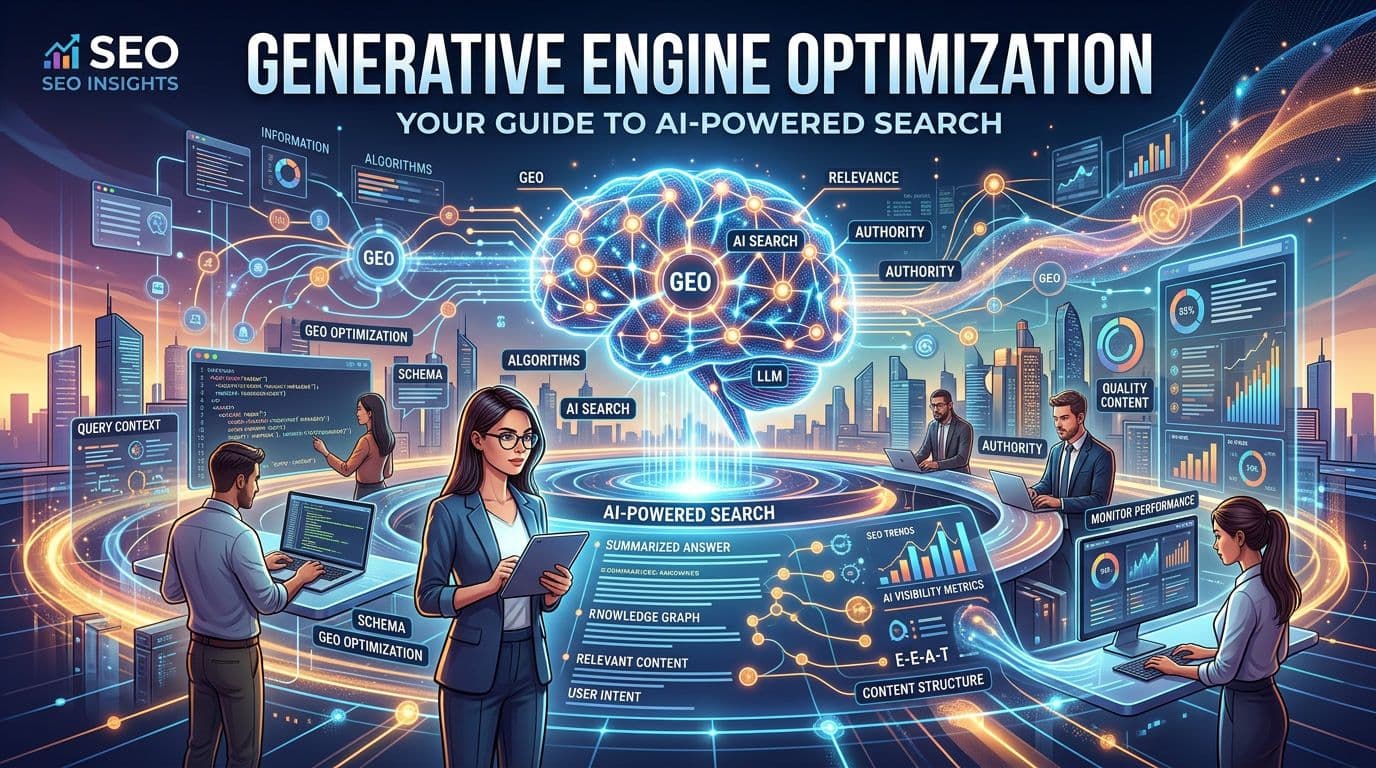
Generative Engine Optimization (GEO) is the critical evolution of search strategy required to maintain visibility in a world dominated by AI-powered search experiences. As search interfaces transition from providing lists of blue links to delivering synthesized, direct answers, businesses must pivot their approach to remain discoverable, relevant, and authoritative. This article explores how to navigate this shift, optimize for machine-synthesized results, and secure your place in the future of search.
What is Generative Engine Optimization?
Generative Engine Optimization is the practice of refining digital content to be easily indexed, retrieved, and synthesized by large language models and answer engines. Unlike traditional strategies focused on keyword density and link profiles, this approach prioritizes information architecture, topical authority, and technical signals that inform AI models about the accuracy and utility of a specific source.
At its core, it is about positioning your content as the foundational data source that machines cite to answer complex user queries. By focusing on clarity, structure, and depth, you ensure your content serves as a high-quality reference point in zero-click search scenarios.
The Fundamental Components
To succeed in this landscape, organizations must focus on three primary pillars:
- Information Density: Providing concise, high-value answers to specific questions.
- Technical Transparency: Using schema and structured data to help machines parse meaning.
- Brand Authority: Building a reputation as an expert source that models trust.
How Generative Engine Optimization Works (Step-by-Step)
Adapting to AI-driven search requires a methodical transition from legacy tactics to machine-centric strategies. Follow these steps to optimize your presence effectively:
- Query Intent Analysis: Identify the specific questions users ask that result in synthetic responses. Use tools to look for queries where search results prioritize summary boxes.
- Structural Optimization: Implement schema markup that clearly labels your content as "fact-based," "expert opinion," or "product comparison" to help machines categorize your data.
- Conciseness and Clarity: Write answers that are direct. Place the core response in the first 50 words of a section to increase the likelihood of being selected as the primary source.
- Topical Authority Building: Create comprehensive content clusters that cover every aspect of a topic. Machines favor sources that demonstrate exhaustive knowledge rather than single-page performance.
- Source Attribution Strategy: Emphasize branding within your content. When a model synthesizes information, it often looks for specific brand names or expert authors to attribute the data to, boosting your signal-to-noise ratio.
Benefits of Generative Engine Optimization
Implementing this strategy offers a significant competitive advantage as search behavior shifts. While many panic about the rise of zero-click search, those who master it view it as a distribution opportunity.
- Increased Brand Awareness: Being the cited source in a prominent AI summary provides immense brand equity and visibility, even if the user does not immediately click.
- Higher Quality Traffic: Users who do click through from an AI summary are often further along in the buying journey and possess higher intent.
- Future-Proofing: As search engines continue to integrate machine synthesis, aligning your content with these standards ensures you remain a part of the ecosystem rather than becoming obsolete.
- Enhanced Information Architecture: The process of refining content for machines often makes it significantly more readable and valuable for human users as well.
Real-World Examples of Generative Engine Optimization
To understand how this looks in practice, consider the following industry-specific applications:
The E-commerce Pivot
Instead of just targeting long-tail keywords, a retailer might structure their product descriptions to directly answer comparison queries like "Which running shoe is best for flat feet?" By providing a technical, feature-by-feature comparison in a structured format, the brand increases its chances of being cited by an AI engine summarizing the differences.
The B2B Knowledge Hub
A software company might develop a "State of the Industry" report designed with machine-friendly data tables and executive summaries. Because the data is presented clearly and logically, it becomes an easy reference for AI models to pull statistics from, effectively making the company the default "source of truth" for that industry data.
Generative Engine Optimization vs Traditional Systems
Traditional systems rely heavily on backlinks, domain authority, and keyword placement. While these factors still matter, Generative Engine Optimization elevates the focus toward "Semantic Understanding."
- Keyword Targeting: Traditional SEO focuses on matching strings. GEO focuses on matching concepts and intent.
- Link Profiles: Traditional SEO emphasizes quantity and quality of backlinks. GEO emphasizes internal data structure and the ability of a machine to parse that data without needing external validation.
- User Interaction: Traditional SEO measures success by clicks. GEO measures success by citation and mentions within AI-generated summaries.
Challenges or Risks
While the shift is necessary, it comes with inherent risks. Relying too heavily on machine synthesis can lead to a decrease in raw click-through rates. Furthermore, if a model misinterprets your content, your brand may be associated with incorrect data. To mitigate these risks, ensure your content is backed by verifiable data, original research, and clear citations of your own, which builds trust with both the machine and the end-user.
Future of Generative Engine Optimization
The future of search will not be a binary choice between clicks and summaries. It will be a hybrid ecosystem where brands must play on both fields. We expect to see the rise of "Trust Scoring" for domains, where machines prioritize sources that have historically provided accurate, verifiable, and non-biased information. Businesses should prepare for a landscape where authority is quantified in real-time, making continuous content updates and factual auditing a standard part of the marketing department’s responsibilities.
Key Takeaways
- Shift focus from raw keyword ranking to being the preferred data source for machine-synthesized answers.
- Implement structured data and schema to ensure machines can accurately parse your content.
- Prioritize direct, concise answers to user questions to capture AI Overview positions.
- Build topical authority through content clusters rather than isolated, disconnected articles.
- Accept that zero-click search is not a loss of traffic, but an opportunity for brand dominance and authority.
Frequently Asked Questions
Is Generative Engine Optimization a replacement for traditional SEO?
No, it is an extension. Traditional SEO is still required for site navigation, crawlability, and ranking in standard search results, while this new strategy manages how your content appears in synthetic environments.
How do I track success if the user never clicks?
Success is tracked through brand mentions, share-of-voice within AI summaries, and the resulting increase in direct or branded search traffic, which often indicates that a user was introduced to your brand via a summary.
What is the most important element for AI visibility?
Topical authority and data structure are paramount. If a machine cannot verify your content’s accuracy or parse its meaning, it will not cite it as an authoritative source.
Can small businesses compete in this landscape?
Yes. Because this approach values data quality and expert insights over massive backlink profiles, smaller, niche-focused brands can effectively outrank larger competitors by becoming the specific answer to a user's question.
Conclusion The transition to Generative Engine Optimization marks the most significant change in search since the inception of the industry. By moving away from a mindset of manipulating search results and toward a philosophy of becoming an indispensable knowledge source, brands can thrive in the era of AI. The winners will be those who adapt their content to serve both the machine’s need for structure and the user’s need for immediate, accurate, and insightful answers.
About the Author

Suraj - Writer Dock
Suraj Kumar is a writer, entrepreneur, and the CEO and founder of this website, sharing simple and practical insights on business, creativity, and personal growth. With experience building digital projects, they enjoy helping others learn, grow, and succeed online.