Let’s be real for a second. If you’ve been following the tech space for the last few years, you’ve probably felt the whiplash. First, it was "AI will take everyone's job next Tuesday." Then it was "AI is just a fancy autocomplete."
I’ve been in the trenches building software and leading teams for over 15 years, and I’ve seen my share of hype cycles. But what we are seeing right now—specifically looking at the landscape in late 2025 and heading into 2026—is different. We aren't just talking about cool chatbots anymore. We are watching the entire operating system of work get a rewrite.
In my experience, the best way to understand this isn’t through buzzwords or high-level consulting slides. It’s by looking at the practical shifts happening on the ground. Imagine we’re standing at a whiteboard together. I’m going to map out exactly how AI is shifting from a shiny toy to a core structural component of how we work, and what that actually means for you.
Grab a marker. Let’s walk through this.
1. The Shift from "Copilots" to "Autonomous Agents"
If 2023 and 2024 were the years of the "Copilot"—the helpful assistant that drafted your emails or suggested a line of code—2026 is the year of the Autonomous Agent.
Here is the simplest way I can explain the difference:
- Copilot: You are the pilot. You hold the controls. You ask the AI, "Hey, write a function to calculate tax." It writes it. You check it. You paste it.
- Agent: You are the manager. You tell the AI, "Update the tax logic across the entire billing module to reflect the new 2026 regulations, run the test suite, and deploy to staging if it passes." The AI goes off, plans the steps, executes them, fixes its own errors along the way, and reports back when it's done.
This is a massive mental shift. We are moving from Human-in-the-Loop (where you are constantly clicking "approve") to Human-on-the-Loop (where you are monitoring a dashboard of agents doing the work).
Why This Matters for You
I’ve seen teams start to deploy these agents for complex, multi-step workflows. We aren't just automating tasks; we are automating processes.
- Supply Chain: Agents that don't just alert you to low stock but actively negotiate with suppliers via API and place orders within a budget you set.
- QA Testing: Agents that don't just run tests but write them, find bugs, and even attempt to patch the code themselves.
Takeaway: Stop thinking about how AI can help you write a sentence. Start thinking about what entire workflows you can delegate.
2. "Vibe Coding" and the Death of Syntax
I know, "Vibe Coding" sounds like something a teenager would say on social media. But in the developer community, this is becoming a very real concept.
For decades, learning to code meant memorizing syntax. You had to know where the semicolon went, how to structure a for loop in Python vs. Java, and how to debug a missing bracket.
Today, I’m seeing senior engineers who write less code than ever before. Instead, they are becoming System Orchestrators.
With the rise of advanced coding models, the barrier to building software has dropped significantly. You don't need to know the syntax perfectly; you need to know the logic and the system design. You describe the "vibe"—or the intent—of the application, and the AI handles the implementation details.
The New "Senior Developer" Skill Set
If the AI handles the syntax, what do humans do? In my experience, the value of a human developer is shifting to:
- Architecture: Deciding how the system should be built, not just typing the characters.
- Security: ensuring the AI isn't introducing vulnerabilities.
- Integration: Making sure the billing agent talks to the shipping agent correctly.
I recently watched a junior dev build a full-stack dashboard in an afternoon that would have taken a senior team a week just three years ago. The differentiator wasn't their typing speed; it was their ability to clearly articulate what they wanted the system to do.
3. The Transformation of Middle Management
This is the uncomfortable part of the conversation, but we need to have it. For a long time, a lot of middle management work was "information routing." Taking a report from Team A, summarizing it, and giving it to the VP. Or taking a strategy from the VP, breaking it down, and assigning tasks to Team A.
AI is getting really, really good at information routing.
Does this mean middle managers are doomed? No. But the lazy version of middle management is dead.
From Supervisor to Strategy Lead
I’ve observed that the most successful managers right now are those who treat AI as their "operations team."
- Scheduling & Reporting: Instead of spending 4 hours a week on status reports, an AI agent pulls updates from Jira/Asana, summarizes progress, flags risks, and drafts the email.
- Performance Reviews: AI can synthesize a year’s worth of commit logs, completed tickets, and peer feedback to draft a performance review (which the human manager then refines with empathy and context).
This frees up the manager to do the things AI is terrible at: Mentorship, Conflict Resolution, and Strategic Vision. If your job was just moving data from one spreadsheet to another, you’re in trouble. If your job is building culture and unblocking your team, you just got a superpower.
4. The Rise of "Just-in-Time" Learning
Remember when we used to go to university for 4 years, learn a skill, and then use that skill for the next 20? That model is officially broken.
The half-life of a technical skill is now measured in months, not years. By the time you finish a traditional course on a specific JavaScript framework, an AI might be able to build that framework better than you.
What I’m seeing take over is Just-in-Time (JIT) Learning.
Because AI tools can act as infinite, patient tutors, workers are learning skills in the moment they need them.
- Need to query a database but don't know SQL? You don't take a course; you ask the AI to explain the query as it writes it for you.
- Need to understand a complex legal contract? You have the AI break it down into plain English.
The "AI Literacy" Core
While you don't need to memorize everything, you do need a new foundational skill set. We call this AI Literacy. It includes:
- Prompt Engineering (Advanced): Knowing how to structure a request to get a high-quality, complex output.
- Output Evaluation: The ability to look at an AI's work and say, "That looks plausible, but it's actually hallucinating." This requires critical thinking, which is becoming more valuable than rote memorization.
5. Multi-Agent Systems (The "Digital Workforce")
Let’s go back to the whiteboard. Imagine drawing a circle for "Marketing AI" and a circle for "Sales AI."
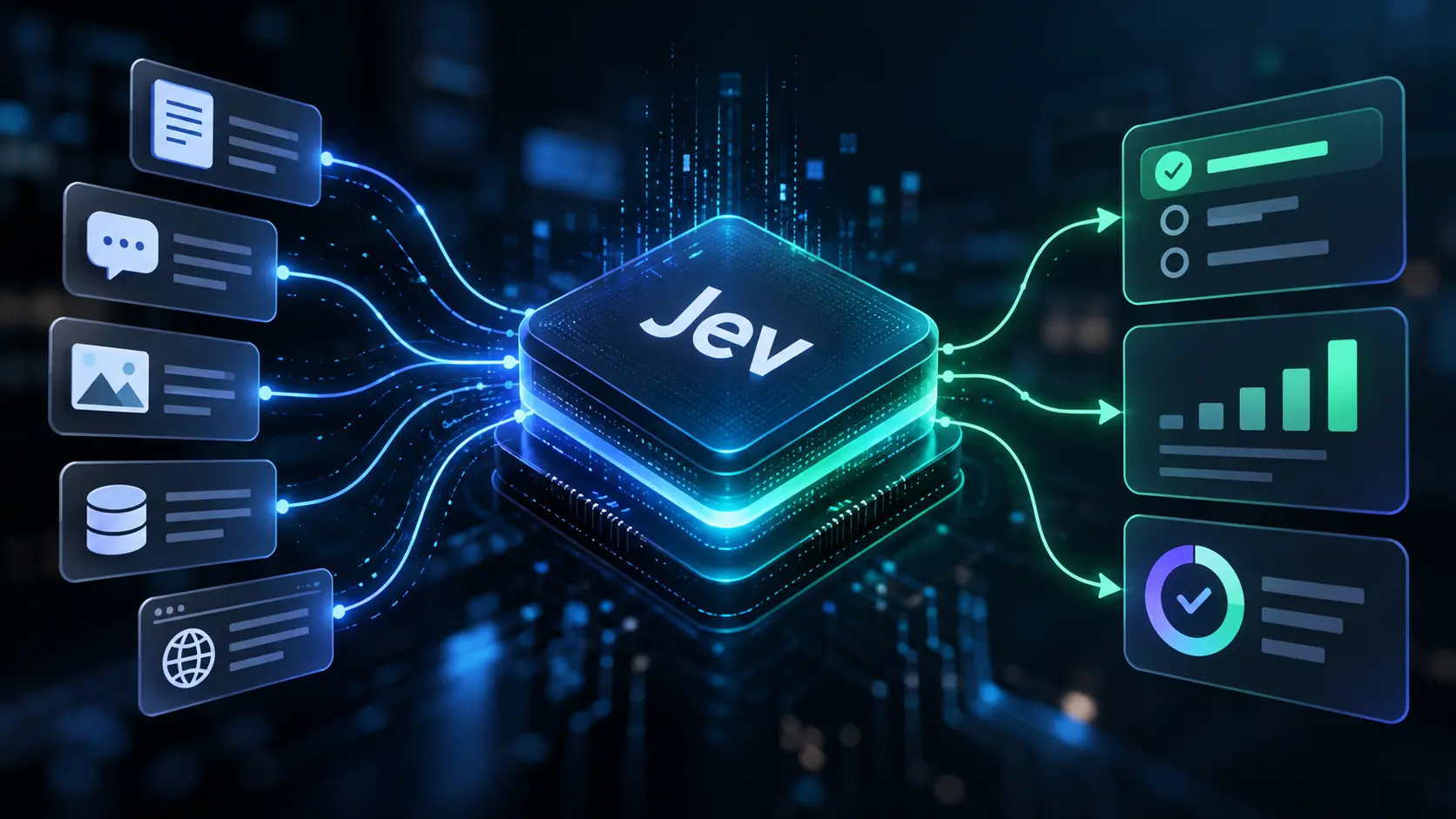
In the past, you (the human) had to copy-paste data between them. The trend for 2026 is Multi-Agent Systems. This is where different AI agents, configured with different personalities and goals, talk to each other.
A Real-World Example
I recently saw a demo of this in a content creation workflow:
- Agent A (Researcher): Scours the web for trending topics in renewable energy.
- Agent B (Writer): Takes those topics and drafts a blog post.
- Agent C (Editor): This agent is explicitly instructed to be critical. It reads Agent B’s draft and says, "This section is boring. Rewrite it."
- Agent B: Rewrites it.
- Agent C: Approves it.
The human only steps in at the very end to give the final "thumbs up." This internal dialogue between agents produces much higher quality work than a single prompt ever could.
6. The "Black Box" Problem and Observability
Here is the boring but critical engineering reality: If you have an autonomous agent negotiating prices with suppliers, how do you know it didn't just accidentally agree to pay $1 million for paperclips?
As we give AI more autonomy, Observability becomes the biggest trend in enterprise tech. We need "dashboards for decisions."
I’m seeing a massive spike in demand for tools that record why an AI made a decision.
- "Why did you reject this loan application?"
- "Why did you prioritize this support ticket?"
Trust is good, but in the corporate world, an audit trail is better. Companies are scrambling to build governance layers that ensure these agents stay within "guardrails." If you are in IT or compliance, this is your next decade of work.
7. Hyper-Personalization of the Employee Experience
Finally, let’s talk about HR and the employee experience.
One-size-fits-all training/onboarding is disappearing. I’ve worked with companies that are building custom AI onboarding buddies for every new hire.
- You join the company.
- You get access to a private AI instance that has indexed every PDF, Slack message, and code repository in the company’s history.
- You ask: "How do I request time off?" "Who handles database migrations?" "What is the history of this project?"
- It answers instantly, referencing specific internal docs.
This drastically reduces "ramp-up time." A new hire can act like a two-year veteran because they have instant access to the organization's collective brain.
FAQ: Common Questions About AI in the Workplace
Q: Will AI actually replace my job? A: It depends on what you do. If your job is strictly repetitive and follows a strict rulebook without deviation, yes, it is at risk. However, for most knowledge workers, AI won't replace you; it will replace the tasks you hate, forcing you to focus on high-value strategy and creative problem-solving. The person who replaces you won't be an AI; it will be a human who uses AI better than you do.
Q: Do I need to learn how to code to survive this shift? A: Surprisingly, no. As I mentioned with "Vibe Coding," natural language is becoming the new programming language. However, you do need to learn system thinking. You need to understand how data flows, how logic works, and how to spot errors, even if you aren't writing the syntax yourself.
Q: How do I start preparing for an "Agentic" future? A: Start small. Don't try to automate your whole job. Pick one multi-step workflow—like organizing your weekly meeting agenda—and see if you can build a workflow where an AI does 90% of it. Get comfortable with the feeling of managing an AI rather than just using it.
Conclusion: The "Manager" Mindset
If I could leave you with one thought to take away from our "whiteboard session" today, it’s this:
The future of work isn't about Man vs. Machine. It’s about Man Managing Machine.
We are all becoming managers now. Whether you are a junior developer, a copywriter, or a customer support agent, your role is evolving into one of orchestration. You are the conductor; the AI agents are the orchestra.
The people who will thrive in 2026 and beyond are not the ones who can type the fastest or memorize the most facts. They are the ones who can look at a complex problem, break it down into component parts, and assign those parts to the right digital agents, while maintaining the taste and judgment to ensure the final quality is human.
So, put down the fear, pick up the reins, and start directing. The future is waiting for you to tell it what to do.
About the Author

Suraj - Writer Dock
Suraj Kumar is a writer, entrepreneur, and the CEO and founder of this website, sharing simple and practical insights on business, creativity, and personal growth. With experience building digital projects, they enjoy helping others learn, grow, and succeed online.