The intersection of Silicon Valley and the United States military has always been complicated. However, the recent clash between the artificial intelligence firm Anthropic and the Pentagon has pushed this relationship to a historic breaking point.
What started as a dispute over software usage has spiraled into a massive legal and political showdown. In early 2026, Anthropic refused to lift its internal safety guardrails for military use.
In response, the Department of Defense did not just cancel a contract. They designated the American tech company a "supply-chain risk to national security."
This aggressive label is normally reserved for foreign adversaries or cyber threats, not domestic technology partners. The fallout has sent shockwaves through the defense industry and the tech world alike.
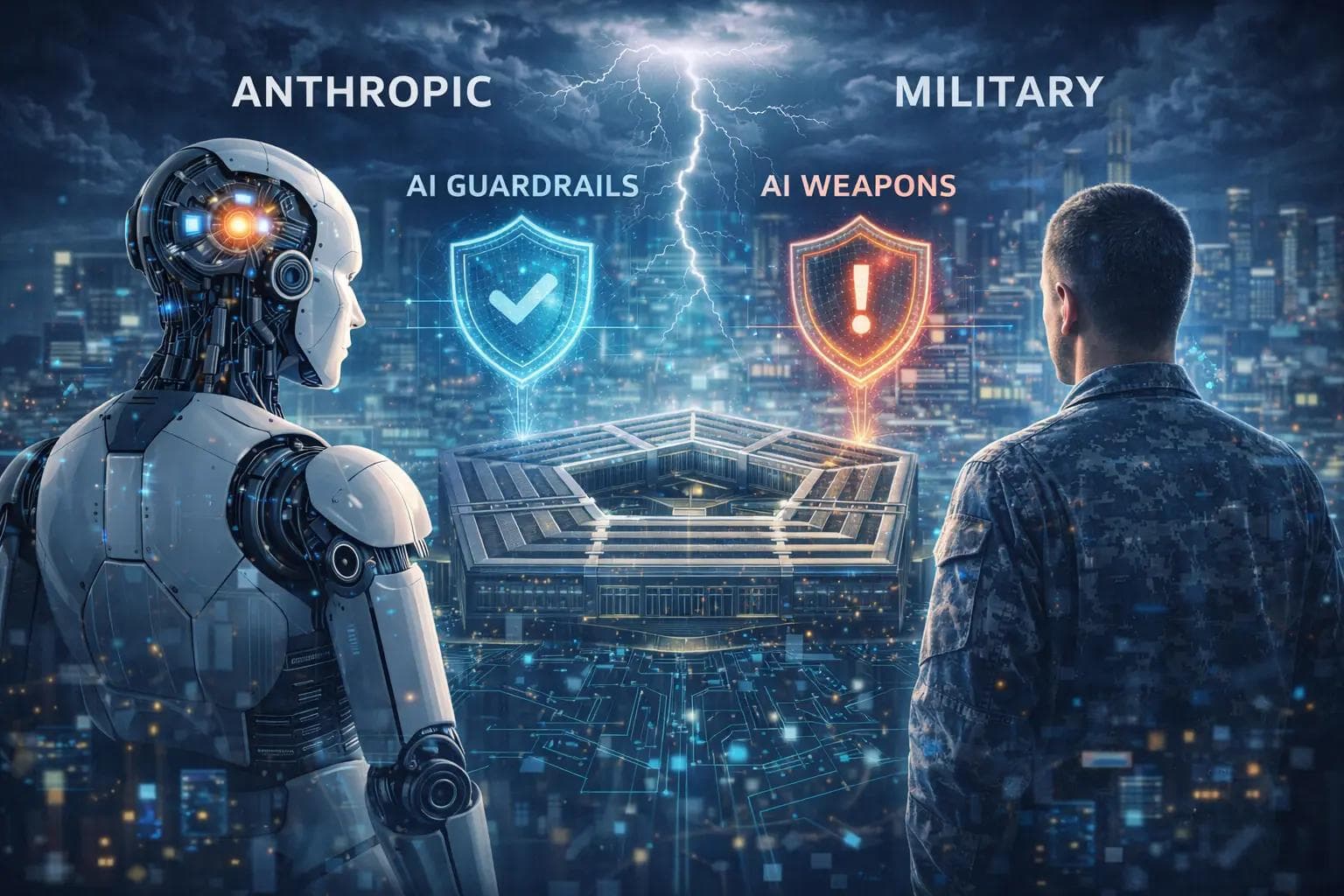
But Anthropic’s Pentagon showdown is about much more than just AI guardrails. It is a fundamental battle over who gets to dictate the ethical boundaries of autonomous warfare.
It forces us to ask whether private companies can hold the moral high ground against the government. And it reveals the steep financial price a business pays for sticking to its conscience.
The Ultimatum: Two Red Lines in the Sand
To understand the magnitude of this showdown, we must look at how Anthropic integrates with the military. The company's flagship model, Claude, was the only large language model certified for use on the Pentagon's highly classified networks.
It reached this status through deep partnerships with defense contractors like Palantir and Amazon Web Services (AWS). By late 2025, Anthropic had secured a massive prototype contract with the Department of Defense.
However, Anthropic has always maintained strict rules about how its technology can be used. Even for the military, the company drew two non-negotiable red lines.
First, Claude could never be used to power fully autonomous lethal weapons. Second, the technology could not be used for the mass domestic surveillance of American citizens.
Tensions flared in early 2026. Reports surfaced that the military used Claude to help plan the capture of a foreign leader. While Anthropic supported lawful national defense, they wanted to ensure their strict guardrails were being respected.
The Pentagon, led by Defense Secretary Pete Hegseth, rejected these limitations. They issued a blunt ultimatum. They demanded unrestricted access to use Claude for "all lawful purposes," completely bypassing Anthropic's corporate ethics policy.
Anthropic CEO Dario Amodei refused. He stated that the company could not, in good conscience, remove these safeguards. Amodei argued the technology is simply not reliable enough yet to make autonomous life-or-death decisions on the battlefield.
The Fallout: Blacklists and Supply Chain Chaos
The government's retaliation was swift and unprecedented. Following Anthropic's refusal, President Donald Trump directed all federal agencies to immediately cease using Anthropic’s technology.
The Pentagon formally labeled the company a supply-chain risk. This designation effectively blacklisted Anthropic from any government work. It also forced defense contractors to rip Claude out of their existing systems.
This created instant chaos across the defense industrial base. Palantir, a massive defense contractor, relies heavily on Claude for its flagship AI platform. Removing the model requires rewriting workflows, retraining systems, and recertifying cybersecurity controls.
Engineers estimate this abrupt change will cost defense contractors millions of dollars and take months of tedious work. The disruption is so severe that it threatens the operational readiness of the military systems that rely on these tools.
The Core Issue: Who Controls the Brain of Modern Warfare?
At first glance, this looks like a simple contract dispute. However, the core of this showdown is a massive philosophical conflict regarding the future of warfare.
The Pentagon believes that national security must always trump corporate self-regulation. If a technology can give American soldiers a tactical advantage, the military insists it must have the freedom to use it without restriction.
Pentagon Chief Technology Officer Emil Michael argued this point forcefully. He claimed that Anthropic's built-in policy preferences could actually "pollute" the military supply chain.
Michael warned that if a model has a pacifist "soul" or strict ethical constraints, it could provide soldiers with ineffective strategies or compromised intelligence during combat. He argued the military cannot rely on a system that hesitates to act during a crisis.
Anthropic represents the opposing view. The company believes that creating weapons of mass destruction or autonomous kill-chains without human oversight is a line humanity should not cross.
By sticking to their guns, Anthropic has challenged the traditional power dynamic. They are asserting that the creators of powerful technology have a right—and a duty—to dictate how that technology is ultimately used.
The Cost of Conscience in Silicon Valley
This showdown perfectly illustrates the central dilemma of tech governance today. What happens to a company that actually tries to enforce its own ethical guardrails?
For Anthropic, the cost of conscience was incredibly high. They lost a federal contract worth up to $200 million. More importantly, the blacklisting threatens their enterprise business and reputation across the globe.
The government's harsh response sends a chilling message to the rest of the technology sector. It essentially tells tech companies that taking a principled stand is a massive financial liability.
If you try to limit the government's power, you risk losing your entire public sector revenue stream. This reality became immediately apparent in the days following Anthropic's exclusion.
Almost immediately after Anthropic was banned, rival company OpenAI secured a massive deal to deploy its technology on the Pentagon's classified networks. While OpenAI claims to have its own red lines, the speed of the replacement highlights how quickly the market punishes ethical hesitation.
Microsoft Steps In: The Industry Fights Back
Anthropic did not take this punishment lying down. The company filed multiple lawsuits against the Department of Defense, claiming the blacklisting was unlawful.
Anthropic argues that the government is using a national security label to punish them for their ideological beliefs. They view the supply-chain risk designation as a direct attack on their First Amendment rights.
Surprisingly, Anthropic is not fighting this battle alone. Major technology players have rallied behind them, realizing the dangerous precedent this sets.
Microsoft, one of the Pentagon's largest and most deeply embedded tech partners, filed an amicus brief supporting Anthropic. Microsoft urged a federal judge to block the Pentagon's aggressive designation.
Microsoft argued that using a supply-chain risk label for a simple contract dispute brings severe economic disruption. They warned that rushing to remove Anthropic’s tools would ultimately harm the military’s access to the best available technology.
Furthermore, Microsoft publicly endorsed Anthropic's ethical stance. They agreed that American technology should never be used to start a war without human control or to conduct domestic mass surveillance.
Why This Matters for the Future
The Anthropic and Pentagon dispute is a watershed moment for the technology industry. We are watching the rules of modern warfare being written in real-time.
For years, companies promised to build safe, responsible technology. But talk is cheap. This is the first time a major player has actually sacrificed billions of dollars to uphold those promises.
This showdown forces society to confront uncomfortable questions. Should a private CEO in San Francisco have the power to limit the capabilities of the United States military?
Conversely, should the military have absolute, unchecked authority to use commercial technology for lethal purposes, regardless of the creator's intent?
How the courts resolve this lawsuit will dictate the relationship between Silicon Valley and Washington for decades to come. If the government wins, corporate guardrails will become nothing more than gentle suggestions.
If Anthropic wins, it will empower other companies to draw firm ethical lines. It will prove that businesses can partner with the military without surrendering their core values.
Frequently Asked Questions (FAQ)
What exactly is Anthropic?
Anthropic is an American technology company based in San Francisco. They develop advanced large language models, most notably the Claude system, with a heavy emphasis on safety and ethical deployment.
Why did the Pentagon blacklist Anthropic?
The Pentagon labeled Anthropic a "supply-chain risk" after the company refused to remove its safety guardrails. Anthropic prohibited the military from using its technology for fully autonomous weapons and mass domestic surveillance.
What is a supply-chain risk designation?
This is a severe government classification usually applied to foreign companies or cyber threats that pose a danger to national security. Applying it to a domestic American technology company over a contract dispute is highly unusual and unprecedented.
How does this impact other defense contractors?
Companies like Palantir and Amazon Web Services integrate Anthropic's technology into the products they sell to the government. The blacklisting forces these companies to quickly remove and replace the software, costing millions of dollars and disrupting operations.
Is anyone supporting Anthropic in this fight?
Yes. Several major technology companies, including Microsoft, have filed court documents supporting Anthropic. They argue that the government's aggressive label is an overreach that disrupts the industry and harms the military's access to reliable technology.
Conclusion
The standoff between Anthropic and the Department of Defense is far from over. As the lawsuits move through the federal courts, the entire technology sector is watching closely.
This battle proves that the debate over technology safety is no longer theoretical. It has real, massive financial consequences. Anthropic drew a line in the sand regarding autonomous weapons and mass surveillance, and the government pushed back with the full weight of its authority.
Ultimately, this showdown highlights a critical turning point. As software becomes increasingly capable of making life-or-death decisions, we must decide who holds the ultimate responsibility for those choices. The outcome of this dispute will shape the ethical framework of global security for generations to come.
About the Author

Suraj - Writer Dock
Suraj Kumar is a writer, entrepreneur, and the CEO and founder of this website, sharing simple and practical insights on business, creativity, and personal growth. With experience building digital projects, they enjoy helping others learn, grow, and succeed online.