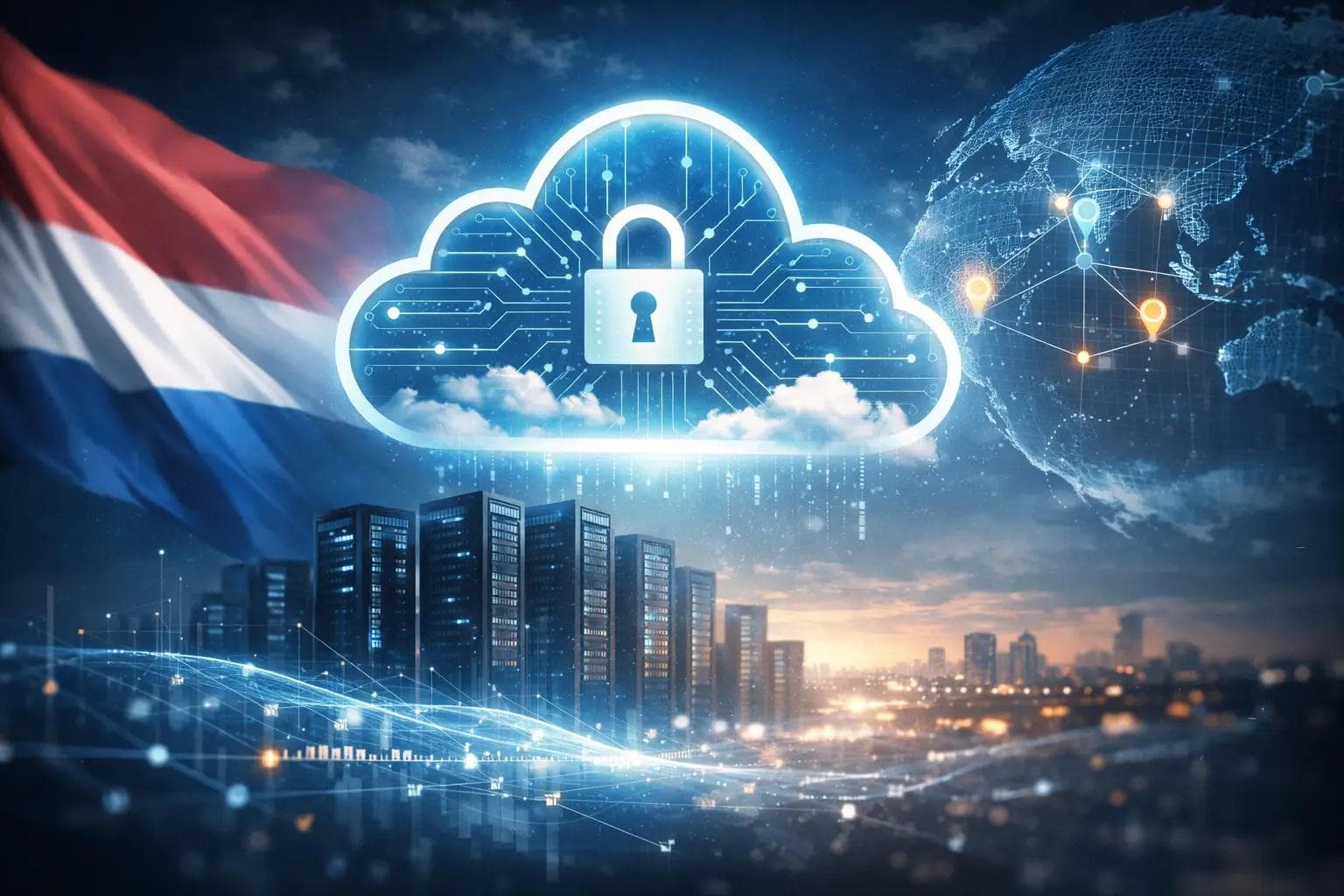
For nearly two decades, the technology industry operated under a single, overarching philosophy: move everything to the public cloud. The promise was simple. By centralizing data in massive, globally distributed data centers owned by a few hyperscale providers, businesses could unlock infinite scalability and slash their hardware costs.
However, the world has fundamentally changed. Today, the concept of a borderless, centralized internet has collided with the hard reality of geopolitical tension, strict privacy laws, and the explosive growth of proprietary intelligence. Data no longer just exists in the ether; data now has a passport, a nationality, and legal boundaries.
We have officially entered the era of Cloud 3.0, defined by a massive shift toward the "Sovereign Cloud." Organizations are realizing that where their data lives is just as important as how fast it can be accessed. They are strategically bringing critical workloads back home, a movement known as "geopatriation."
This guide breaks down exactly what Cloud 3.0 and sovereign cloud architectures mean, why they are dominating the enterprise technology landscape in 2026, and how they provide the ultimate foundation for secure innovation.
What Exactly is Cloud 3.0?
To understand where we are, it helps to look at where we started. Cloud 1.0 was all about basic infrastructure—renting server space and storage over the internet rather than buying physical hardware. Cloud 2.0 ushered in the era of Software-as-a-Service (SaaS) and scalable web applications, where the public cloud became the default operating model for almost every business.
Cloud 3.0 represents a drastic evolution. It is no longer just about storage and compute power. Cloud 3.0 is a living, intelligent ecosystem built on three core pillars: sovereignty, decentralization, and artificial intelligence integration.
In this new phase, the cloud acts as an active enabler rather than a passive warehouse. A Cloud 3.0 architecture seamlessly blends the infinite scale of public clouds with the localized, highly secure control of private, sovereign infrastructure.
Instead of relying on a "one-size-fits-all" approach, companies now use intent-driven provisioning. They route sensitive data to local, secure servers while sending heavy, non-sensitive processing tasks to public cloud environments, creating a highly customized digital backbone.
Understanding the Sovereign Cloud
At the heart of Cloud 3.0 is the sovereign cloud. But what makes a cloud "sovereign"?
A sovereign cloud ensures that all data, including its storage and processing, is entirely subject to the legal jurisdiction of the country where it resides. It is designed to prevent any foreign entity, government, or corporation from legally or technically accessing that information.
Many people confuse a private cloud with a sovereign cloud, but they are not the same. A private cloud gives you dedicated hardware isolated from other companies. However, if that private hardware is owned by a foreign company, your data might still be subject to foreign laws.
A true sovereign cloud requires three distinct layers of control:
- Geographical Control: The physical servers storing the data must be located within the specific national borders of the organization.
- Legal Control: The data must be governed exclusively by local privacy laws (such as the GDPR in Europe) and be entirely immune to extraterritorial laws like the US CLOUD Act.
- Operational Control: The administrative staff, technicians, and support teams who manage the servers must be local citizens with appropriate security clearances, ensuring no foreign workers have back-door access.
Why is Geopatriation Happening Now?
The sudden rush toward sovereign infrastructure is not a coincidence. Several colliding global trends have made digital independence a top priority for corporate boards and government leaders alike.
The Intelligence Explosion and Private Data
The rapid maturation of advanced language models and algorithmic intelligence requires massive amounts of data. However, companies quickly realized that feeding their proprietary trade secrets, customer data, and intellectual property into public models was a massive security risk.
Sovereign clouds allow companies to build "private superfactories." They can safely train advanced models on their own highly sensitive data without ever exposing that information to the public internet or a foreign vendor.
Strict Data Localization Laws
Governments worldwide are cracking down on how citizen data is handled. From the European Union’s rigorous data protection frameworks to regional privacy acts in Asia and North America, compliance is more complex than ever.=
Failing to comply with these regulations results in devastating financial penalties. Sovereign clouds solve this by ensuring data never crosses a restricted border, keeping organizations automatically compliant with their local government mandates.
Rising Geopolitical and Cyber Risks
Global tensions have exposed the vulnerability of relying entirely on foreign-owned infrastructure. If a trade war escalates or a physical conflict breaks out, a country or company could theoretically be cut off from its own critical data.
Furthermore, the threat of state-sponsored cyberattacks has never been higher. Sovereign clouds often utilize air-gapped networks (networks physically disconnected from the public internet) and local encryption keys, providing an incredibly difficult target for international hackers to breach.
The Tangible Benefits of a Sovereign Architecture
Transitioning to a Cloud 3.0 sovereign model requires investment, but the strategic advantages far outweigh the initial costs for most large organizations.
- Compliance by Design: Sovereign platforms embed regulatory compliance directly into their architecture. This means auditing becomes significantly easier, and companies can deploy new services without spending months reviewing legal risks.
- Absolute Operational Autonomy: Because the organization manages its own encryption keys domestically, even the cloud provider cannot decrypt or access the data. You hold the ultimate lock and key.
- Protection from Vendor Lock-in: Moving toward a distributed, sovereign model forces companies to adopt open standards and multi-cloud strategies. This prevents a single massive tech vendor from dictating pricing and operational terms.
- Enhanced Consumer Trust: Consumers are hyper-aware of digital privacy. Being able to publicly guarantee that user data stays within national borders and is immune to foreign surveillance is a massive competitive advantage.
Real-World Examples: Who is Using Sovereign Clouds?
Sovereign infrastructure is no longer just a theoretical concept. It is actively powering some of the most sensitive industries on the planet today.
Healthcare and Genomic Research
Hospitals and medical research facilities handle the most intimate data imaginable. A biotech firm developing personalized medicine based on human DNA cannot risk that genetic data leaving the country. Sovereign clouds allow these researchers to run complex, data-heavy algorithmic simulations while maintaining strict compliance with health privacy laws.
Financial Services and Banking
Banks are a prime target for both cybercriminals and international espionage. A regional bank utilizing a sovereign cloud ensures that its citizens' financial transactions, loan histories, and identity verification documents are processed safely on home soil. This protects the local economy from foreign interference and ensures immediate recovery capabilities during a crisis.
Aerospace, Defense, and Government
National security agencies and defense contractors are the earliest adopters of Cloud 3.0. When defense companies design next-generation aircraft or coordinate military logistics, that intellectual property represents a matter of national survival. Sovereign environments guarantee that this classified intelligence is handled exclusively by cleared, domestic personnel.
The Challenges of Implementing Cloud 3.0
While the benefits are clear, moving to a sovereign cloud architecture is not a simple "lift and shift" operation. Organizations face several hurdles during the transition.
The primary challenge is operational complexity. Managing a hybrid environment—where some workloads live on public hyperscalers and others live on local sovereign servers—requires highly advanced orchestration tools. IT teams must ensure seamless communication across these different environments without creating security loopholes.
Cost is another significant factor. Building or renting localized, highly secure sovereign infrastructure is generally more expensive than buying bulk storage from a global public provider. Companies must carefully audit their workloads to ensure they are only paying a premium for data that truly requires sovereign protection.
Finally, there is a distinct talent gap. Operating these distributed, highly secure environments requires specialized cloud architects who understand both advanced Kubernetes orchestration and complex international data law.
How to Prepare Your Organization for Cloud 3.0
Adapting to this new era requires a strategic, phased approach. Organizations should not attempt to move their entire infrastructure overnight.
Step 1: Classify Your Data Before making any infrastructure changes, you must understand your data. Categorize your digital assets into tiers. Public marketing assets can stay on cheap public clouds. Proprietary code, employee records, and sensitive customer data should be flagged for sovereign migration.
Step 2: Embrace Hybrid Orchestration Invest in cloud-agnostic management tools. You need a single unified dashboard that allows your engineering team to deploy applications across public, private, and sovereign environments without having to rewrite the core code for each specific platform.
Step 3: Evaluate Sovereign Providers carefully When choosing a sovereign cloud provider, look past the marketing. Ask hard questions about their supply chain. Ensure their hardware is audited, their staff is locally vetted, and that they allow you to "Bring Your Own Key" (BYOK) for encryption so that you maintain absolute cryptographic control.
Frequently Asked Questions (FAQ)
Does moving to a sovereign cloud mean abandoning the public cloud?
No. Cloud 3.0 is entirely about hybrid models. Most organizations will continue to use major public clouds for non-sensitive, high-volume workloads while reserving their sovereign cloud environments exclusively for critical, regulated data.
How does edge computing fit into Cloud 3.0?
Edge computing pushes processing power out of centralized data centers and into physical locations like cell towers, factories, and retail stores. In a Cloud 3.0 architecture, the edge works closely with the sovereign cloud. Sensitive data can be processed locally at the edge for sub-millisecond speeds, and then stored securely in a sovereign facility to maintain legal compliance.
Why can't a global hyperscaler just build a data center in my country?
Many global providers do build local data centers and call them "sovereign." However, if the parent company is headquartered in a foreign country, they may still be legally compelled by their home government to hand over data, regardless of where the physical server sits. True sovereignty requires legal and operational independence from foreign jurisdictions.
Is sovereign cloud only for government agencies?
While governments drove the initial demand, private enterprises are now the fastest-growing sector for sovereign cloud adoption. Any business dealing with healthcare, finance, critical infrastructure, or advanced proprietary research heavily benefits from this architecture.
Conclusion: The New Digital Foundation
The transition to Cloud 3.0 marks a profound maturity in how we approach digital infrastructure. The era of recklessly pushing all data into a centralized, borderless void has ended.
Today, resilience comes from controlled, deliberate architecture. The sovereign cloud provides the exact structural integrity businesses need to navigate an increasingly fragmented and regulated global landscape.
By embracing geopatriation and demanding absolute control over their digital assets, organizations are not taking a step backward. They are actively constructing the durable, secure, and intelligent foundation required to thrive in the next decade of technological innovation.
About the Author

Suraj - Writer Dock
Suraj Kumar is a writer, entrepreneur, and the CEO and founder of this website, sharing simple and practical insights on business, creativity, and personal growth. With experience building digital projects, they enjoy helping others learn, grow, and succeed online.