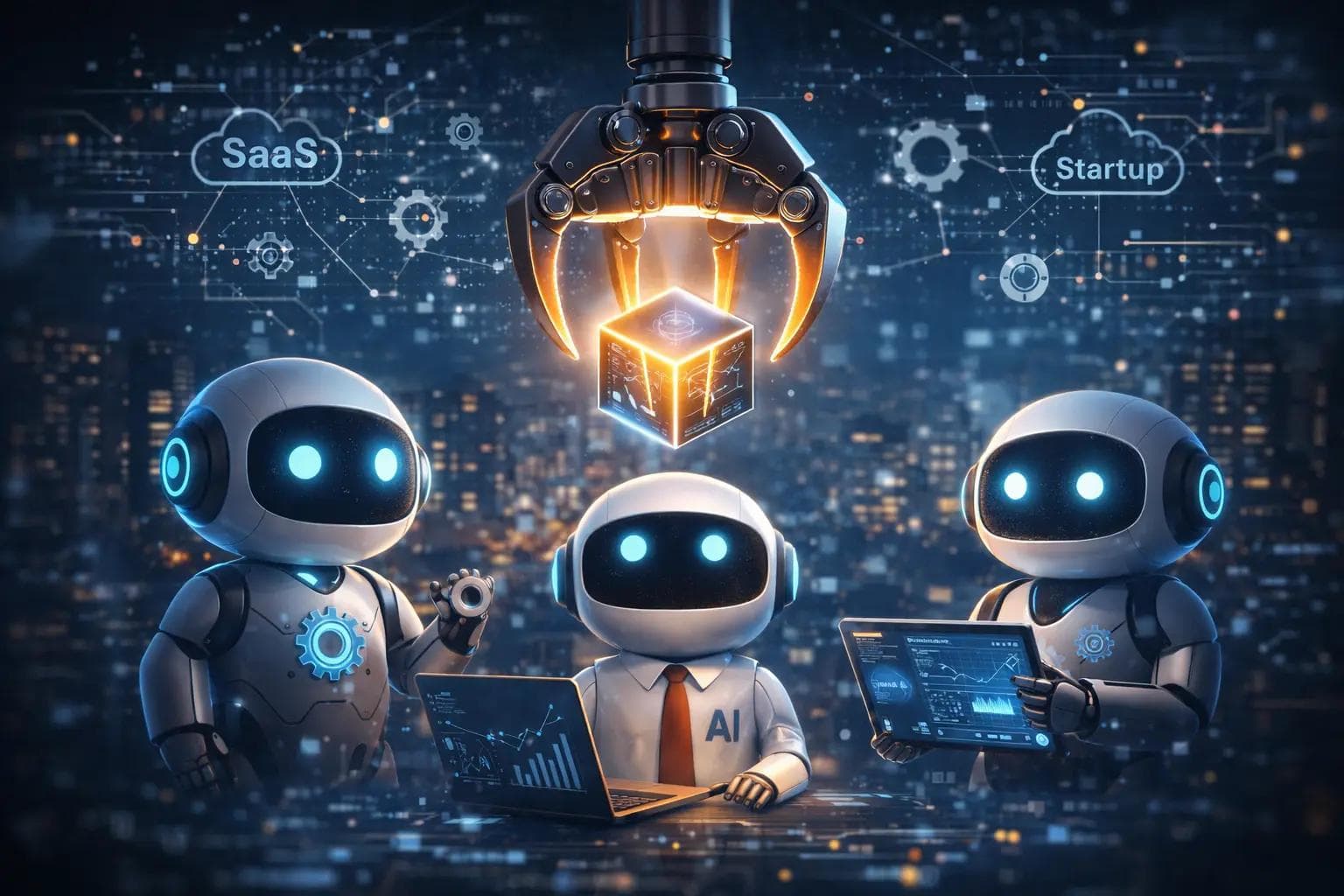
The technology world is currently experiencing a seismic shift, and it has a name: OpenClaw. Just a few months ago, the standard routine for any digital worker involved bouncing between dozens of different software applications. You opened one tab to check your calendar, another to read emails, and a third to update your customer database.
Today, that fragmented workflow is rapidly becoming obsolete. A new wave of open-source autonomous agents is completely changing how we interact with computers. Instead of requiring a human to click buttons and move data around, these smart systems do the heavy lifting for us.
This phenomenon is actively dismantling the traditional software-as-a-service (SaaS) business model. Industry leaders are already calling this the most significant leap forward since the invention of cloud computing.
If you run a startup, invest in software, or simply want to understand the future of digital productivity, you must understand the OpenClaw effect. This guide will break down exactly what these autonomous agents are, why they are causing widespread disruption, and how the startup ecosystem is scrambling to adapt.
What Exactly is OpenClaw?
To grasp the disruption, we first need to understand the tool causing it. OpenClaw is a free, open-source autonomous agent framework created by Austrian developer Peter Steinberger. It officially went viral in early 2026, amassing hundreds of thousands of followers on code-sharing platforms within weeks.
Unlike previous generations of passive chatbots, OpenClaw is not just a conversational tool. It is a highly capable digital worker. It runs locally on your own computer or a private server, maintaining constant access to your local files, browsers, and terminal commands.
You do not interact with it through a complex dashboard. Instead, you simply send a message through your favorite chat application, like WhatsApp, Telegram, or Discord.
You can type a simple command, such as, "Clean up my inbox, summarize the urgent messages, and block off time on my calendar to handle them." The agent will independently open your email, read the contents, make decisions, and update your calendar without any further human input.
The Shift: From Passive Tools to Active Workers
For the last decade, software development focused on building better tools for humans to use. A project management app helped you organize tasks, but you still had to log in and move the digital cards yourself.
Autonomous agents represent a fundamental shift from passive tools to active workers. These advanced language models are now capable of executing long-running, multi-step goals. They plan their own actions, recover from errors, and use standard software interfaces exactly like a human would.
This changes the entire value proposition of modern software. Users no longer want a slightly faster way to do their own chores. They want a system that takes the chore completely off their plate.
When a single autonomous agent can manage your schedule, execute trades, and update your company records simultaneously, the need for specialized, standalone software shrinks dramatically. The agent essentially becomes your personal operating system, handling all the background noise of daily digital life.
How the OpenClaw Effect is Nuking Traditional SaaS
The traditional SaaS ecosystem is built on the concept of walled gardens. Companies charge a monthly subscription fee for access to a specific, specialized platform. To get your data from one platform to another, you often have to pay for expensive integration tools.
The OpenClaw effect completely bypasses these walled gardens. Because these agents operate locally and can control web browsers directly, they do not need official integration partnerships to move data around.
If an agent needs to pull a report from your accounting software and paste it into a team messaging app, it simply logs in and does it. This renders many expensive "middleman" automation services obsolete overnight.
Furthermore, users are realizing they do not need to pay for premium dashboard features if they never actually look at the dashboard. If the autonomous agent handles all the data entry and retrieval via a simple WhatsApp text, the underlying software becomes a simple, commoditized database.
Startups that rely on charging high premiums for beautiful user interfaces are suddenly finding themselves highly vulnerable. Their customers are interacting with the agent, not the expensive software interface.
The Startup Pivot: Building Skills, Not Software
This massive shift is forcing founders to completely rethink their product strategies. Building another standalone web application is no longer a guaranteed path to success.
Instead, forward-thinking developers are pivoting to build "skills" for these autonomous ecosystems. In the OpenClaw framework, a skill is a lightweight script or extension that teaches the agent how to perform a highly specific task.
For example, instead of building a heavy travel booking website, a startup might build a specialized flight-booking skill. The user tells their agent they want to go to Tokyo, and the agent uses the startup's skill to quietly find and purchase the best tickets in the background.
This creates a new marketplace dynamic. Startups must now optimize their products to be discovered and utilized by machine algorithms, rather than marketing them directly to human consumers. The companies that make their services the easiest for an autonomous agent to access will win the next era of internet commerce.
The Hardware Rush: Why Everyone Wants a Dedicated Machine
An unexpected side effect of this software revolution is a massive surge in the computer hardware market. Running an always-on, autonomous agent requires significant, continuous processing power.
While the software is free to download, keeping it running on your primary work laptop can drain your battery and slow down your daily tasks. Furthermore, security-conscious users are hesitant to give a proactive agent full root access to their main personal computer.
As a result, there is a massive global rush to purchase secondary, power-efficient computers. In global tech hubs, the prices for used, high-efficiency laptops and mini desktop computers have skyrocketed.
Users are buying these machines specifically to act as dedicated "agent hosts." They plug the computer into a corner, install the open-source software, and let it run quietly 24 hours a day. This dedicated hardware trend highlights just how valuable users find having a tireless digital assistant at their disposal.
The Security Nightmare: Giving Algorithms the Keys
While the productivity gains are incredible, the OpenClaw effect has introduced severe security nightmares for corporate IT departments. Giving an autonomous system the keys to your digital life is inherently risky.
To be useful, these agents require broad permissions. They need access to your passwords, your secure private keys, and your confidential business documents. In the cybersecurity world, this is known as the "God Mode" fallacy.
If an employee installs an open-source agent on their work computer to help them sort spreadsheets, that agent inherits the employee's security clearance. If the agent makes a logical error, or if it interacts with a malicious file, it could accidentally leak sensitive corporate data at machine speed.
Major technology companies have already issued stern warnings, and some governments have banned the use of these open-source agents on state-owned devices. The enterprise market is now desperately searching for ways to implement these powerful tools safely.
This has led to the rapid rise of enterprise-grade spin-offs. New security companies are building complex network guardrails and privacy routers designed specifically to keep autonomous agents contained. They ensure the agents can do their jobs without accidentally wandering into classified payroll folders.
Frequently Asked Questions (FAQ)
What makes an autonomous agent different from a normal chatbot?
A standard chatbot is reactive. You ask it a question, and it types out an answer. An autonomous agent is proactive. You give it a high-level goal, and it independently navigates software, clicks buttons, and executes multiple steps over a long period of time to achieve that goal.
Do I need to know how to code to use these tools?
Currently, setting up open-source frameworks like OpenClaw requires a basic understanding of terminal commands and software installation. However, the community is rapidly developing user-friendly installers, and many managed services now allow you to deploy these agents with just a few clicks.
Why is this considered a threat to traditional software companies?
These agents consolidate the user experience. Instead of logging into five different software platforms to manage a project, a user simply texts their agent. The software companies lose their direct relationship with the user, making it harder for them to justify high subscription prices for their visual interfaces.
Are these open-source agents safe to use?
They come with significant risks. Because they require deep access to your files and online accounts to function, a misconfiguration or a malicious third-party plugin could compromise your personal data. Experts recommend running them in isolated environments or on dedicated secondary machines.
The Future is Multi-Agent
The rapid rise of OpenClaw and similar open-source frameworks proves that we are entering a new phase of digital interaction. The days of humans adapting their workflows to fit rigid software applications are coming to a close.
Instead, the software is adapting to us. We are moving toward a multi-agent future where every professional has a team of dedicated digital workers operating tirelessly in the background.
This transition will inevitably cause turbulence in the startup world. Conventional business models will collapse, and massive fortunes will be made by those who figure out how to build the infrastructure for this new autonomous reality.
The companies that survive the OpenClaw effect will not be the ones building the prettiest software dashboards. The winners will be the ones who learn to seamlessly integrate their services directly into the hands of our new, highly capable digital coworkers.
About the Author

Suraj - Writer Dock
Suraj Kumar is a writer, entrepreneur, and the CEO and founder of this website, sharing simple and practical insights on business, creativity, and personal growth. With experience building digital projects, they enjoy helping others learn, grow, and succeed online.