Walk into almost any established company, and you will find it: "The Binder."
It sits on a dusty shelf in the manager’s office, or perhaps it lives as a forgotten PDF buried deep within a shared drive folder. It contains the Standard Operating Procedures (SOPs)—the vital instructions that tell employees how to do their jobs safely and correctly.
There is just one problem. Nobody reads it.
For decades, SOPs have been static, one-way documents. They are written once, signed off by compliance, and then ignored until an audit happens. When an employee actually has a question, they don’t read the 40-page manual. They ask the person sitting next to them. If that person is wrong, the mistake spreads like a virus.
This broken system is coming to an end. We are entering the era of SOP 2.0.
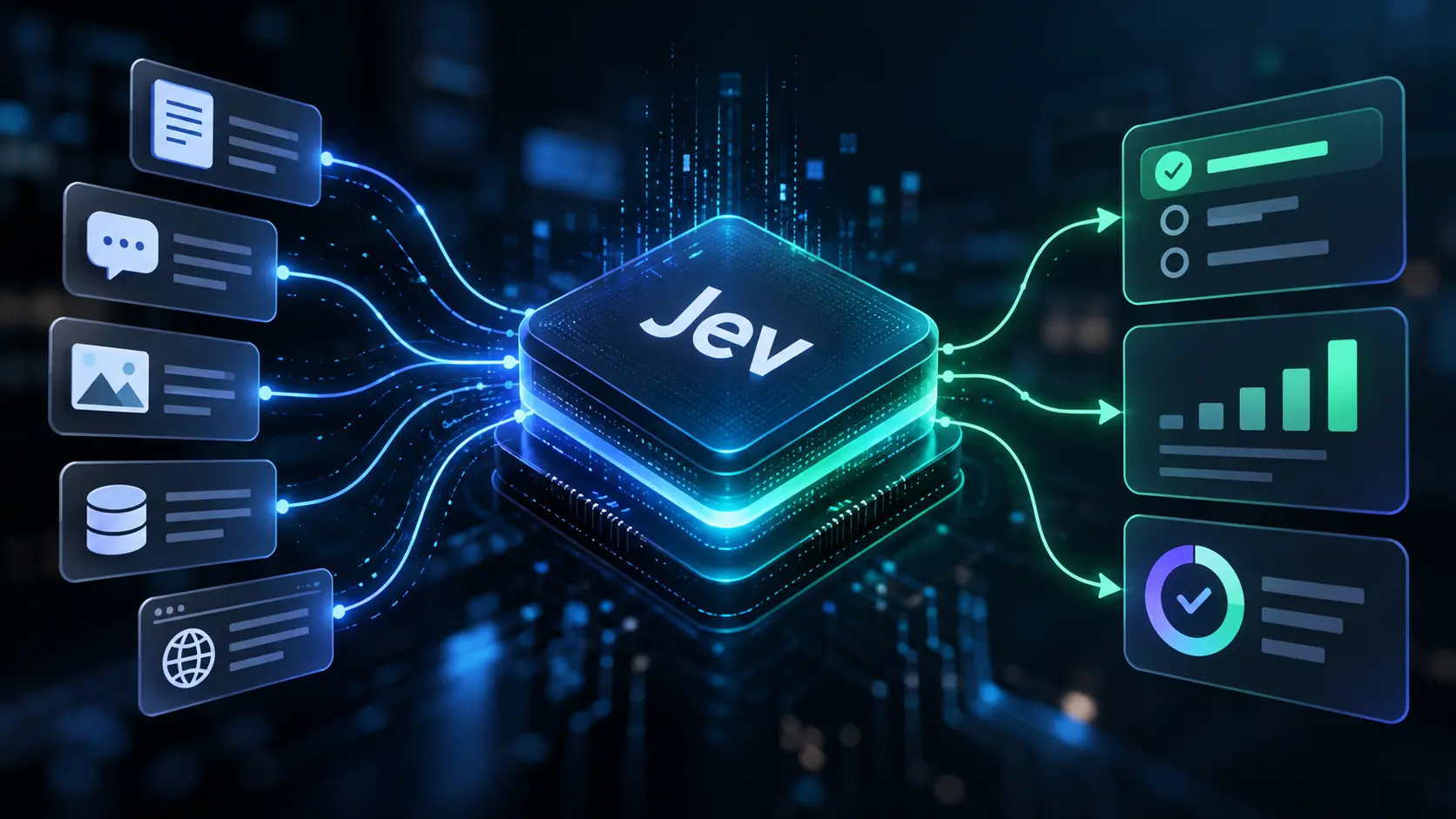
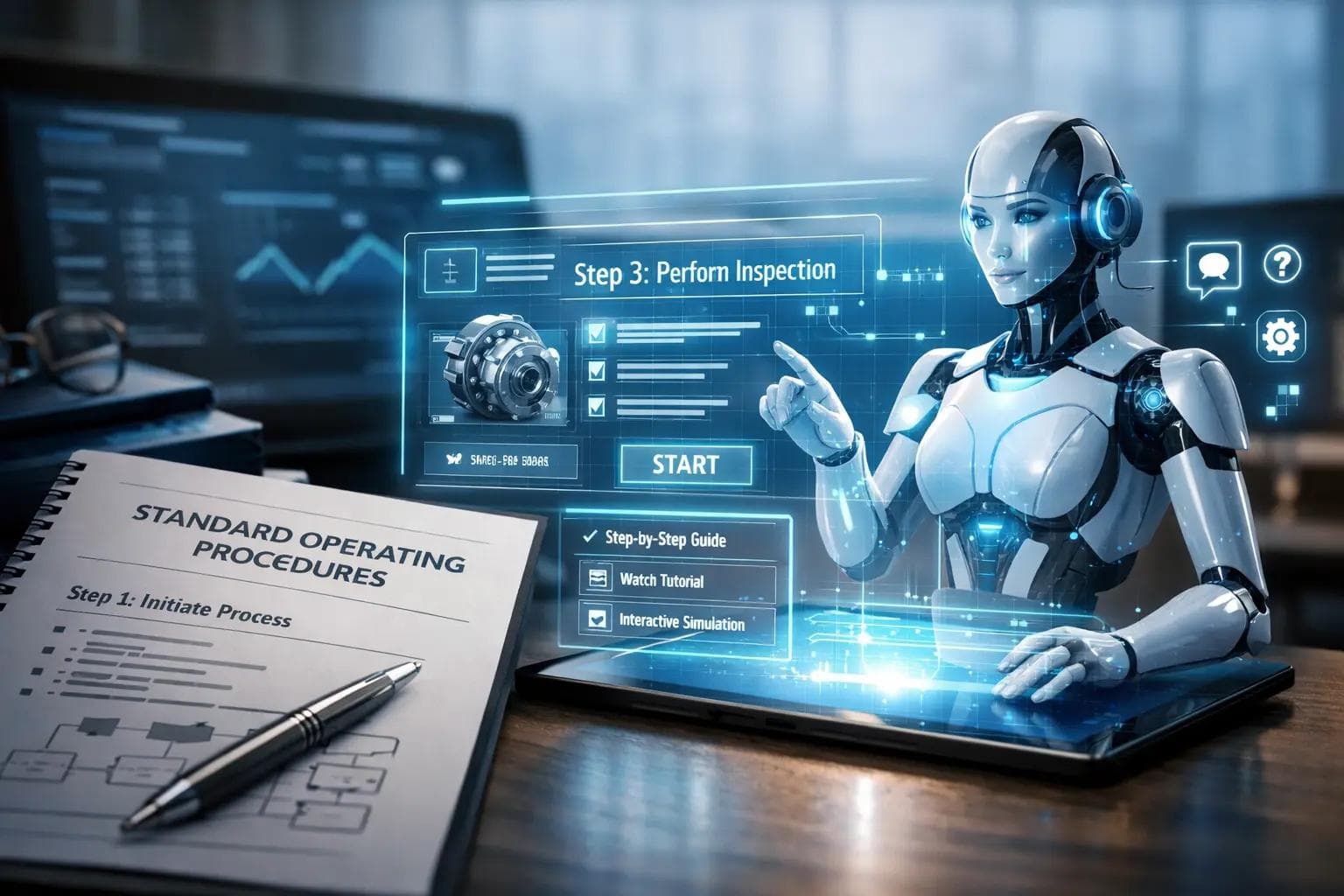
The new standard for operational documentation isn't a document at all. It is an interactive, intelligent system that talks back. By leveraging artificial intelligence, companies are turning static text into dynamic conversations, transforming how teams learn, execute, and maintain quality.
This guide explores the shift toward interactive AI manuals, why the old way is failing your team, and how you can implement a smarter system today.
The Death of the Static PDF
To understand why SOP 2.0 is necessary, we have to look at why the current model is failing. Traditional SOPs were designed for a different era—an era of stability where processes didn't change for years.
The "Search" Problem
Imagine a machine operator on a factory floor. A red warning light starts flashing on the conveyor belt. The operator knows the answer is in the manual.
In the old model, they have to:
- Stop work.
- Walk to a computer or find the physical binder.
- Scroll through the table of contents.
- Scan for keywords like "Warning Light" or "Red Flash."
- Read three pages of technical jargon to find the one specific reset procedure.
This process takes 15 minutes. In a high-pressure environment, that is 15 minutes of downtime.
The "Update" Lag
Business processes change fast. Software gets updated, safety regulations shift, and best practices evolve. Updating a traditional SOP is a nightmare. You have to edit the Word doc, convert it to PDF, email it to everyone, and hope they delete the old version.
In reality, most employees unwittingly use outdated versions for months because nobody told them the file in the shared folder was replaced.
The "Comprehension" Gap
SOPs are often written by technical experts or lawyers. They use dense, formal language to ensure legal coverage. But the person reading the SOP might be a junior associate or a non-native English speaker. If the instructions are hard to read, they won't be followed.
What is SOP 2.0?
SOP 2.0 is not a format; it is a behavior. It transforms the Standard Operating Procedure from a monologue (the manual telling you what to do) into a dialogue (you asking the manual for help).
At its core, an interactive AI manual uses a conversational interface—like a chatbot or voice assistant—layered on top of your company’s knowledge base.
Instead of handing a new hire a 100-page handbook, you give them access to an AI assistant trained on that handbook.
How It Works in Practice
Let’s go back to that factory operator with the flashing red light.
With SOP 2.0: The operator pulls out a tablet or uses a headset. Operator: "The conveyor belt has a red flashing light code 3. How do I fix it?" SOP System: "A Code 3 red light indicates a sensor misalignment. First, turn off the main power switch. Then, wipe the optical sensor on the left rail with a clean cloth. Do you need a diagram of where the sensor is?"
The answer is instant. It is context-aware. It cuts through the noise and gives the specific instruction needed to solve the immediate problem.
The Core Benefits of Interactive Manuals
Moving to an interactive system isn't just about using new technology. It drives measurable business results.
1. Drastic Reduction in Training Time
Onboarding is expensive. New employees typically spend weeks shadowing senior staff, asking repetitive questions.
With an interactive manual, the AI acts as the "always-available" mentor. New hires can ask "stupid questions" without fear of judgment. They can ask, "How do I file an expense report?" or "What is the protocol for a customer refund?" fifty times a day, and the system answers patiently every time. This frees up your senior staff to focus on high-value work instead of babysitting.
2. Single Source of Truth
In many companies, knowledge is tribal. Bob knows how to fix the printer, and Sarah knows how to handle the angry clients. If Bob leaves, that knowledge leaves with him.
SOP 2.0 centralizes this. When a process changes, you update the central database once. The next time anyone asks a question, the AI provides the new answer immediately. There are no "old versions" floating around in email inboxes.
3. Accessibility and Language Support
Modern workforces are diverse. A static PDF is usually written in one language. Interactive AI manuals can instantly translate instructions.
A supervisor can write a safety protocol in English, and a worker can query it in Spanish, French, or Vietnamese. The system bridges the communication gap, ensuring safety protocols are understood by 100% of the staff, regardless of their native language.
4. Active Feedback Loops
A PDF can't tell you if it's confusing. An interactive system can.
If the system notices that 50 employees are asking the same clarifying question about "Step 3" of the safety protocol, it flags this data. Management now knows that Step 3 is poorly written and needs to be clarified. The system helps you improve your processes by revealing what your team doesn't understand.
Real-World Use Cases
This isn't science fiction. Companies across various sectors are already deploying these systems to streamline operations.
Healthcare: Clinical Protocols
Nurses and doctors operate under high stress. They don't have time to flip through handbooks to check drug interactions or rare procedural steps.
Hospitals are testing voice-activated SOPs in sterile environments. A surgeon or nurse can ask, "What is the standard dosage of [Drug X] for a pediatric patient of 20kg?" and get an immediate, citation-backed answer without breaking sterility to touch a computer.
IT and Cybersecurity: Incident Response
When a server is hacked or a system goes down, panic sets in. The "Incident Response Plan" is usually a thick document that nobody remembers during a crisis.
SOP 2.0 turns this into a guided workflow. The AI asks the IT engineer: "What symptoms are you seeing?" Based on the answer, it guides them step-by-step through the containment process. "Isolate the infected machine first. Here is the command to run." It acts as a co-pilot during the emergency.
Retail and Hospitality: Frontline Support
Store managers often struggle with complex return policies or closing procedures. Instead of calling a regional manager, a store employee can simply type into the store iPad: "A customer wants to return a product bought 40 days ago without a receipt. Can I approve this?"
The system checks the policy (e.g., "Returns over 30 days require a receipt") and gives a definitive "No" or "Yes, with manager approval," empowering the employee to make decisions confidently.
How to Build Your Own SOP 2.0 System
You don't need to be a software giant to build an interactive manual. The technology has become accessible to mid-sized businesses. Here is the roadmap for implementation.
Phase 1: The Content Audit (Clean Up Your Mess)
AI is garbage in, garbage out. If your current SOPs are contradictory, outdated, or vague, an AI will just serve up bad advice faster.
Before you buy any tech, you must audit your documents.
- Delete anything older than 2 years that hasn't been reviewed.
- Consolidate duplicate files.
- Simplify the language. Break long paragraphs into bullet points.
Phase 2: Digitization and Structuring
You need to move your text out of "dead" formats. While modern AI can read PDFs, it works best with structured data.
Convert your manuals into a searchable Knowledge Base or a clean Wiki format. Use clear headings. Ensure that "Safety Procedures" are clearly separated from "HR Policies." The better your structure, the smarter the answers will be.
Phase 3: The Interface Layer
This is where the magic happens. You need a tool that can "index" your documents and allow users to chat with them.
There are two main approaches:
- Internal Knowledge Bots: specialized software designed for internal company use (like Slack bots or Teams integrations).
- Custom GPTs: Secure, private instances of large language models that are fed your specific documents.
Crucial Note on Security: Never put private company secrets into a public, free AI chatbot. Always use enterprise-grade tools that guarantee your data is not used to train the public model.
Phase 4: Testing and Verification (The "Red Teaming")
Before rolling it out to the whole company, pick a small group of users to test it. Encourage them to try to "break" the manual. Ask tricky questions.
Does the system give the right answer for a complex safety check? Does it hallucinate (make up facts) when it doesn't know the answer?
You must configure the system to say, "I don't know, please check with a supervisor" rather than guessing. This safety rail is critical for compliance.
Overcoming the Challenges
While the benefits are huge, the transition to SOP 2.0 comes with hurdles.
The "Hallucination" Risk
AI models can sound confident even when they are wrong. This is dangerous in high-stakes fields like manufacturing or healthcare.
The Fix: Use a method called RAG (Retrieval-Augmented Generation). This tech forces the AI to look up your specific document first and base its answer only on that text. It also forces the AI to cite its source. It should say, "According to Section 4.2 of the Safety Manual, you should..." This allows the human to verify the source.
The Human Resistance
Employees might feel like "management is replacing us with robots." Or, older employees might prefer the physical binder they have used for 20 years.
The Fix: Position the tool as an assistant, not an enforcer. Show them how it makes their life easier. "Hey, you know how much you hate looking up those error codes? This tool does it for you in two seconds." Focus on the pain points it solves for them.
Maintenance
An interactive manual is not a "set it and forget it" project. Someone needs to own it.
The Fix: Appoint a "Knowledge Manager." This person is responsible for reviewing the chat logs to see where the AI failed and updating the source documents accordingly.
The Future: Augmented Reality and Video
SOP 2.0 is just the beginning. We are already seeing the next evolution: SOP 3.0.
Imagine wearing smart glasses. You look at a complex engine part. The glasses recognize the part.
- You: "How do I replace this filter?"
- The System: It overlays a glowing green arrow on the real-world filter in your vision. A voice guides you: "Twist this cap counter-clockwise."
This blend of visual AI and procedural knowledge will completely eliminate the need to look away from the work. It will merge the manual with the physical world.
Furthermore, future manuals won't just be text. You will be able to ask, "Show me a video of how to do this," and the system will generate or retrieve a 30-second clip of the exact procedure.
FAQ: Interactive AI Manuals
Q: Are interactive manuals legally binding? A: The underlying text is what matters legally. The AI is just an interface. You still need a signed, approved "master document" for compliance audits. The AI helps people access that document, but the document itself remains the legal authority.
Q: Do I need a team of developers to build this? A: No. In 2024 and beyond, there are "no-code" platforms that allow you to upload your PDFs and create a chatbot in minutes. However, for a secure, enterprise-wide system, you will want IT support to handle security and access permissions.
Q: Can the AI suggest improvements to the SOPs? A: Yes! Advanced systems can analyze the queries. If users keep asking for clarification on a specific step, the AI can suggest rephrasing that section to make it clearer.
Q: Is my data safe? A: Only if you use enterprise tools. Free, public AI tools often use your data for training. Always pay for "private instances" or enterprise licenses where data privacy is contractually guaranteed.
Conclusion
The binder on the shelf is obsolete. In a world where speed and agility are the difference between success and failure, you cannot afford to have your company's knowledge locked inside static, unread documents.
Standard Operating Procedures 2.0 represent a fundamental shift in how we work. By turning manuals into interactive, responsive teammates, we empower employees to solve problems instantly. We reduce mistakes, speed up learning, and ensure that the "correct way" to do things is the easiest way to find.
The technology is ready. The question is, is your organization ready to close the binder and open the conversation?
Next Step: Start small. Pick one department—like Customer Support or IT—and digitize their most frequently used manual. See how much faster they work when the answers are just a question away.
About the Author

Suraj - Writer Dock
Suraj Kumar is a writer, entrepreneur, and the CEO and founder of this website, sharing simple and practical insights on business, creativity, and personal growth. With experience building digital projects, they enjoy helping others learn, grow, and succeed online.