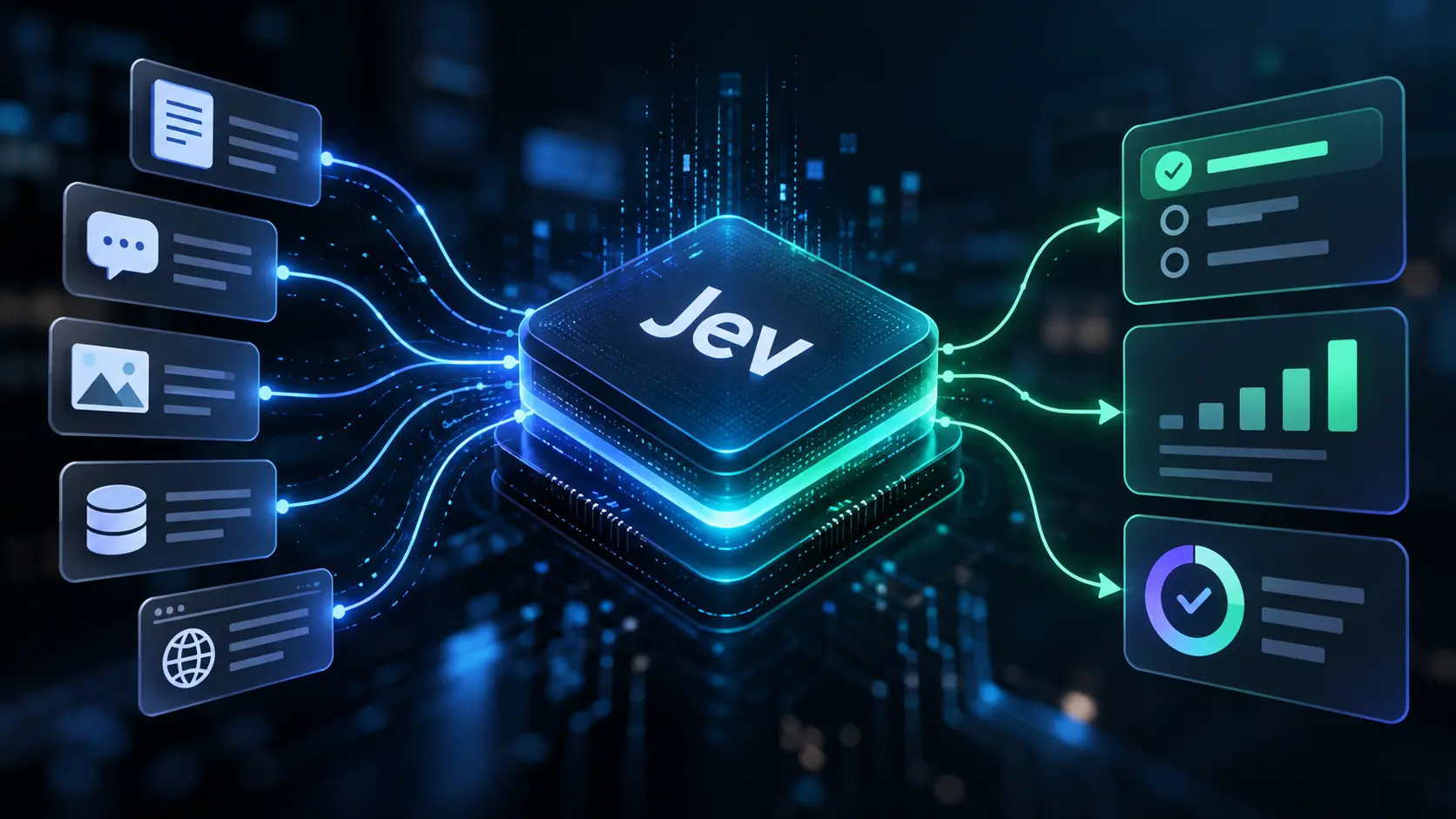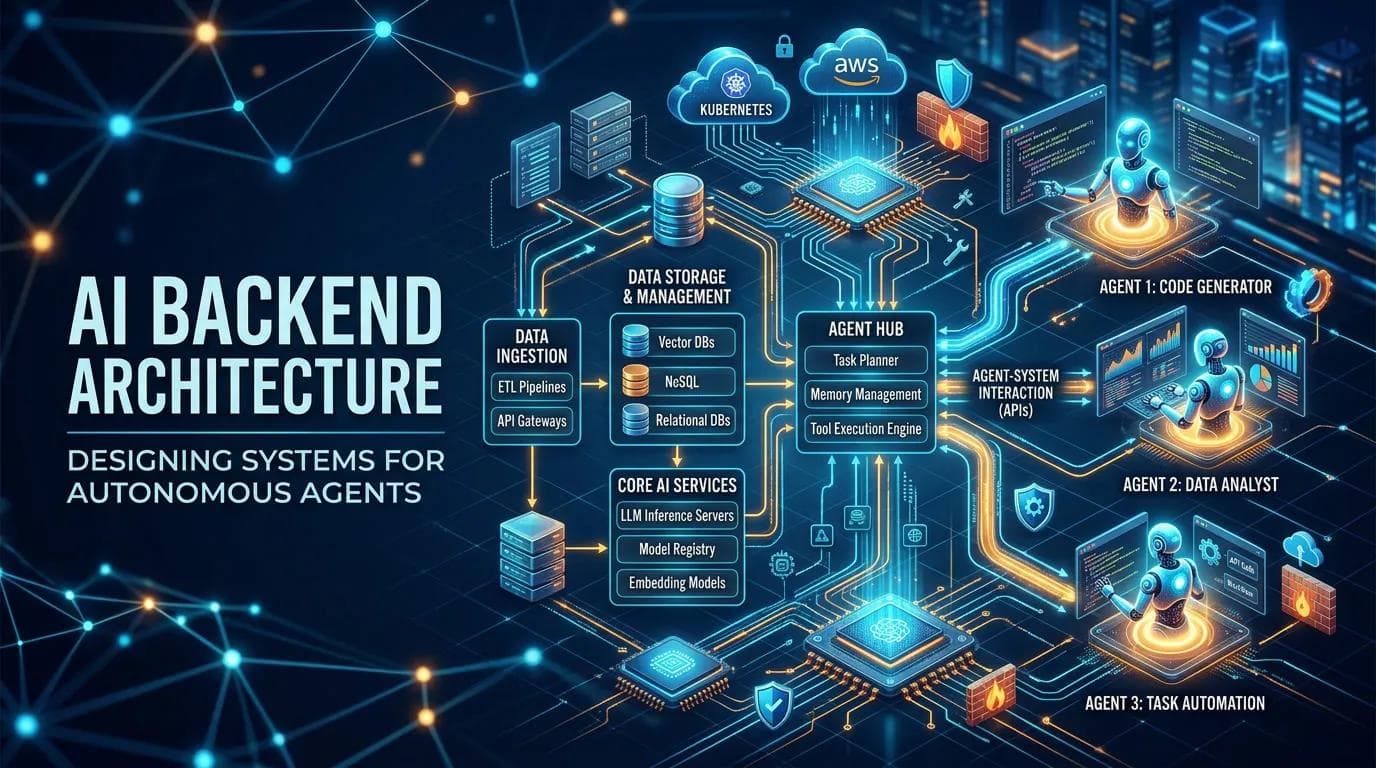
Modern software development is shifting toward AI backend architecture as the primary foundation for the next generation of autonomous agents. If you are building platforms that prioritize machine decision-making and continuous learning over simple CRUD operations, you need to understand how to move beyond legacy monolithic patterns. This article explores how to design, scale, and maintain intelligent systems that treat artificial intelligence as a core service rather than an external plugin. By rethinking the backend as a cognitive orchestration layer, developers can create robust environments that support the complex requirements of autonomous workflows.
What is AI Backend Architecture?
AI backend architecture is the structural design of systems optimized for running, scaling, and orchestrating autonomous agents and machine learning models. Unlike traditional backends that focus on request-response cycles for human users, this architecture prioritizes low-latency model inference, state management for agent memory, and seamless integration with vector databases. It serves as the cognitive engine for applications, managing high-throughput data pipelines, long-term memory retrieval, and the complex orchestration required for multi-step reasoning tasks.
Core Characteristics of AI-Native Systems
- Event-driven communication for real-time agent coordination.
- Deep integration of vector databases for semantic memory retrieval.
- Model-agnostic interfaces that allow for hot-swapping or optimizing model performance.
- Automated feedback loops for continuous improvement of model outputs.
- Specialized MLOps infrastructure for versioning, monitoring, and debugging agent behavior.
How AI Backend Architecture Works (Step-by-Step)
Designing an intelligent system requires a departure from traditional patterns. The following steps outline how a modern AI-native backend functions in production environments.
- Input Orchestration: The system receives tasks, often from autonomous agents or API calls, and normalizes these requests for multi-modal processing.
- Context Retrieval: The backend queries specialized vector databases to fetch relevant historical data, documents, or logs, ensuring the agent has necessary context to act.
- Reasoning and Logic Layer: Using frameworks like LangChain, the backend routes the request to the appropriate model, handling chains of thought and conditional logic.
- Action Execution: The backend acts as the bridge between the model's decision and the real-world state, executing code, updating databases, or triggering third-party APIs.
- Continuous Learning Loop: Feedback from the action execution is captured, vectorized, and stored back into the system to refine future reasoning cycles.
Benefits of AI Backend Architecture
Transitioning to an AI-native approach offers significant advantages for businesses looking to scale autonomous agents. By decoupling the reasoning engine from the data layer, you gain modularity and performance.
- Scalability: Intelligent backend development allows for predictive scaling, where the infrastructure reacts to the computational demands of heavy inference workloads.
- Reliability: Better observability tools allow developers to trace agent reasoning chains, making it easier to debug "black box" decisions.
- Reduced Latency: By colocation of data and inference nodes, the backend minimizes the time between request and agent action.
- Enhanced Adaptability: Using a modular AI backend architecture makes it simpler to swap outdated models for more efficient, newer versions without rewriting core business logic.
Real-World Examples of AI Backend Architecture
Consider a supply chain management platform that uses autonomous agents to handle logistics. In this scenario, the backend acts as a central nervous system. When a shipment is delayed, the agent automatically consults a vector database containing historical delay patterns and vendor contracts. The AI backend architecture ensures that the agent is empowered to suggest rerouting options to human supervisors, or in high-confidence cases, execute the change autonomously.
Similarly, in software engineering platforms, AI code generation backends are revolutionizing development cycles. These systems provide the context (existing repositories) to models, evaluate code safety in a sandbox environment, and then push commits, effectively managing the agentic workflow from ideation to deployment.
AI Backend Architecture vs Traditional Systems
Traditional backends are designed for predictable, deterministic outcomes. A user asks for data; the database returns it. In contrast, backend for AI agents must handle non-deterministic inputs and "reasoning drift."
Feature Traditional Backend AI-Native Backend Logic Type Deterministic/Hard-coded Probabilistic/Adaptive Memory Relational DBs Vector DBs & Graph stores Throughput Request-based Event-stream & Reasoning-based Error Handling Try/Catch blocks Probability thresholds & Human-in-the-loop
MLOps Trends 2026: Preparing for the Future
As we look toward 2026, MLOps trends point toward a move away from manual model management. We are seeing a shift toward "agentic observability," where the system monitors not just CPU or memory usage, but the quality of reasoning and the coherence of the agent’s memory storage. The rise of Python AI backend frameworks like FastAPI continues to dominate due to their asynchronous capabilities, which are essential for handling the high concurrency needed by autonomous agents.
Machine experience backend design will become the new standard. This focuses on optimizing the "machine-to-machine" latency, ensuring that agents can communicate, exchange data, and negotiate resources with minimal overhead. Furthermore, we expect to see greater adoption of edge-native AI, where parts of the backend intelligence move closer to the user to reduce reliance on centralized cloud clusters.
Challenges and Risks in Intelligent Backend Development
Implementing an intelligent backend is not without its hurdles. One of the primary risks is "model hallucination propagation," where an agent makes a decision based on faulty data fetched from a vector database. To mitigate this, developers must implement robust data validation layers and retrieval-augmented generation (RAG) quality checks.
Another significant challenge is cost management. Inference is computationally expensive. Architects must design their backends to intelligently cache common agent reasoning paths to prevent redundant model calls. Furthermore, security is paramount; granting an autonomous agent access to backend systems requires strict role-based access control (RBAC) to ensure that the agent only performs authorized actions within a sandbox.
Key Takeaways
- AI backend architecture is essential for supporting the unique needs of autonomous agents.
- Moving to an AI-native approach requires moving from relational thinking to vector-based, adaptive workflows.
- Python and FastAPI combined with LangChain provide the most flexible foundation for current intelligent backend development.
- Observability and cost management are the primary operational challenges that architects must solve.
- Future developments will focus on machine experience, low-latency reasoning, and automated MLOps.
FAQ Section
What makes a backend "AI-native" versus "AI-enabled"?
An AI-enabled system uses AI as a service, usually via external APIs. An AI-native system embeds reasoning, memory management, and model orchestration into the core business logic, treating the agent as a primary user of the platform.
Why are vector databases critical for AI backend architecture?
Vector databases are essential because they store data in high-dimensional space, allowing the backend to retrieve contextually relevant information for agents, which is vital for effective reasoning and RAG workflows.
How does FastAPI support AI backend development?
FastAPI is preferred for its native support for asynchronous programming, which is crucial for handling the long-running, non-blocking requests common in agentic reasoning loops and large-scale model inference.
What are the main MLOps trends to watch in 2026?
The focus will shift toward autonomous monitoring, where systems self-detect drift in agent behavior and trigger re-training or prompt-tuning pipelines without human intervention.
Conclusion
Adopting an AI backend architecture is no longer optional for organizations building autonomous, agent-led platforms. By focusing on modularity, efficient memory retrieval through vector databases, and high-performance asynchronous frameworks, developers can build systems that truly harness the potential of modern machine learning. As the landscape continues to evolve, the distinction between human-centric and machine-centric design will define the next wave of high-performing, intelligent software.
About the Author

Suraj - Writer Dock
Suraj Kumar is a writer, entrepreneur, and the CEO and founder of this website, sharing simple and practical insights on business, creativity, and personal growth. With experience building digital projects, they enjoy helping others learn, grow, and succeed online.