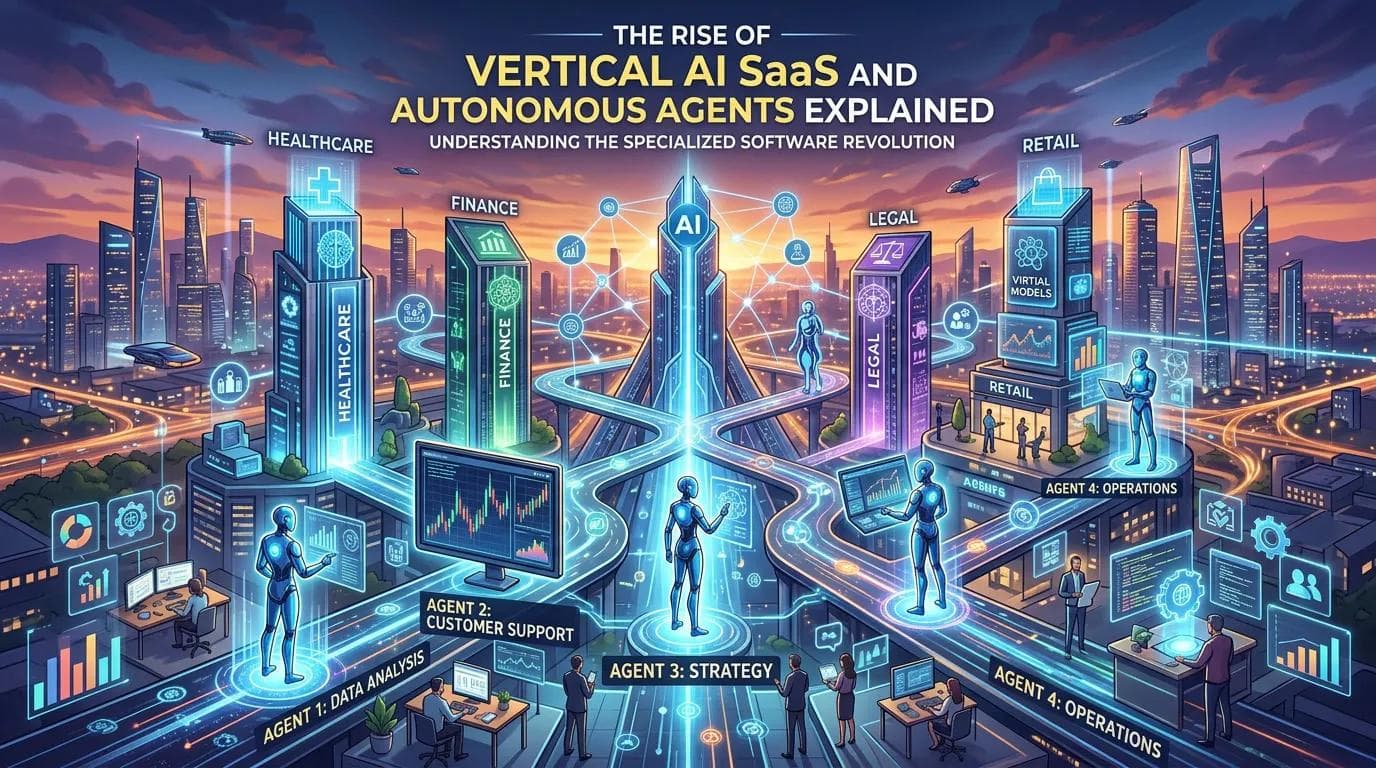
The emergence of vertical AI SaaS represents a fundamental shift in how modern enterprises handle complex, domain-specific operations. By moving beyond the limitations of horizontal tools, these platforms leverage proprietary data and deep industry integration to solve high-value problems that generic software has failed to address for decades. This article explores how industry-specific AI solutions and autonomous agents are reshaping the professional landscape, moving beyond simple task management toward true workflow autonomy.
What is Vertical AI SaaS?
Vertical AI SaaS refers to software-as-a-service platforms engineered specifically for a single industry or niche, embedding intelligence at the core of the product rather than treating it as an auxiliary feature. Unlike horizontal SaaS, which provides broad tools for general business functions, vertical AI utilizes industry-specific data architectures to perform complex, specialized tasks autonomously. These platforms are designed to solve end-to-end workflows, effectively replacing manual processes and traditional software stacks with intelligent, data-driven systems.
The Shift from Feature to Workflow
Many businesses initially adopted AI as a layer on top of legacy software—essentially a 'wrapper' that improved user interfaces or provided basic summarization. Vertical AI SaaS takes a different approach: it is built from the ground up to be an AI-native platform. By focusing on niche SaaS AI, these providers can integrate deep into the specific regulatory, operational, and data requirements of sectors like legal tech, insurance, or specialized manufacturing. This transition ensures that the technology understands the nuance of the industry rather than providing a generic output that requires manual human oversight.
How Vertical AI SaaS Works (Step-by-Step)
Understanding the mechanics of vertical AI requires looking at how these systems ingest data and execute tasks. The architecture is built for precision and deep, specialized context.
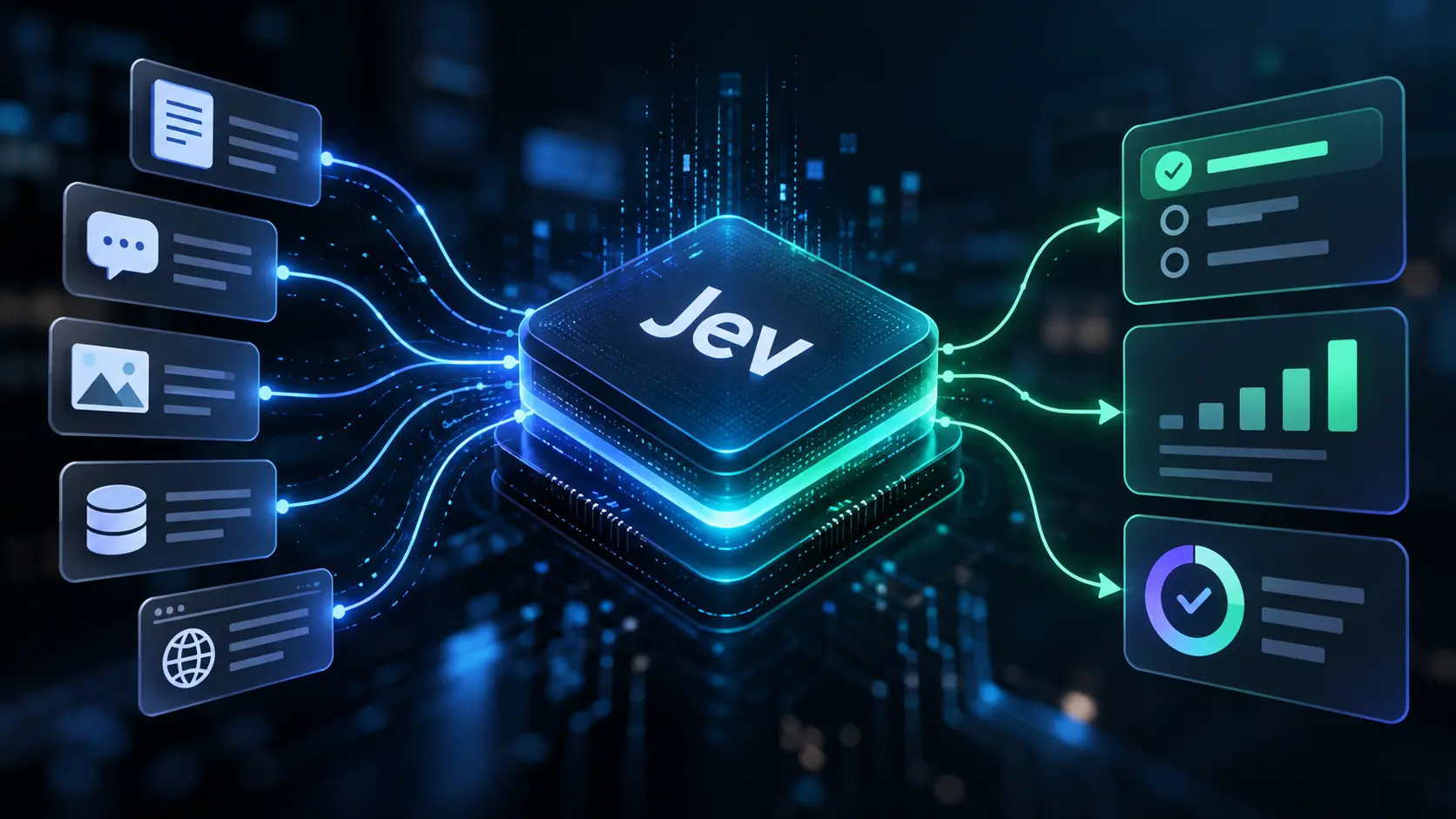
- Data Acquisition and Curation: The platform ingests proprietary industry datasets, such as case law archives for legal firms or clinical trial records for pharmaceutical companies. This creates a domain-specific knowledge base.
- Intelligent Context Mapping: The software maps this data to specific industry workflows, identifying which tasks are repetitive, error-prone, or high-volume.
- Autonomous Agent Deployment: The system deploys specialized AI autonomous agents that act on behalf of the user, executing multi-step processes such as data reconciliation, contract analysis, or supply chain adjustments without needing constant human prompts.
- Integration into Existing Stacks: These tools connect directly to industry-standard APIs and databases, ensuring that the AI has the authority to read from and write to existing enterprise systems.
- Continuous Learning Loops: As the agents perform tasks, they capture outcomes, refining their decision-making process based on the unique operational feedback of the specific company.
Benefits of Vertical AI SaaS
Adopting an industry-specific approach offers measurable advantages that horizontal providers simply cannot match. Organizations that pivot toward these solutions often experience significant impacts on their labor and operational budgets.
- Enhanced Accuracy: Because the models are trained on narrow, high-quality industry data, they are far less prone to the hallucinations associated with broad-scale language models.
- Workforce Optimization: These platforms target labor budgets by automating complex sequences of tasks that previously required human cognitive effort, allowing staff to focus on high-level strategy.
- Rapid Integration: Industry-specific AI solutions are often 'pre-configured' for common workflows, drastically reducing the implementation timeline compared to custom software development.
- Competitive Moat: For SaaS startup funding AI projects, the combination of proprietary data and deep workflow integration creates a powerful competitive barrier that generic platforms struggle to overcome.
Real-World Examples of Vertical AI SaaS
Vertical AI is already making waves in sectors where the cost of human error is high and the complexity of data is immense.
Legal Tech and Contract Lifecycle Management
In the legal sector, autonomous agents now scan thousands of pages of discovery documents to flag relevant evidence or identify clauses that deviate from company policy. These agents do not just summarize; they execute tasks such as cross-referencing state-specific laws and generating draft responses.
Healthcare Administration and Diagnostics
Vertical AI platforms in healthcare go beyond simple patient scheduling. They act as autonomous agents that process insurance claims, predict administrative bottlenecks, and assist in clinical documentation by integrating directly into Electronic Health Records (EHR) to ensure compliance and accuracy in real-time.
Manufacturing and Supply Chain
In manufacturing, these systems monitor predictive maintenance logs and real-time sensor data from factory equipment. Instead of just alerting a technician, the autonomous agent can generate work orders, check inventory for necessary parts, and adjust production schedules to account for downtime.
Vertical AI SaaS vs Traditional Systems
When comparing vertical AI to traditional legacy systems, the difference lies in the level of agency. Traditional software serves as a passive 'system of record'—users enter data, and the software stores it. In contrast, vertical AI acts as a 'system of action.' It does not wait for a user to initiate every single step. If a traditional ERP (Enterprise Resource Planning) system tracks inventory, a vertical AI agent actively predicts supply chain shortages and executes procurement orders based on vendor historical reliability.
Challenges or Risks
Despite the clear advantages, the rapid adoption of vertical AI is not without hurdles. Organizations must navigate several critical risks:
- Data Privacy and Security: Because these platforms require deep access to proprietary and sensitive industry data, firms must ensure that the AI providers maintain rigorous data sovereignty and encryption standards.
- Skill Gaps: Managing and configuring intelligent agents requires a new set of skills. IT departments must shift from maintaining databases to overseeing AI governance and agent reliability.
- Integration Complexity: Even within niche sectors, legacy systems often lack modern API endpoints. Retrofitting older databases to support autonomous agents can be technically taxing.
Future of Vertical AI SaaS
As we look ahead, the trajectory for vertical AI SaaS points toward greater autonomy and deeper enterprise penetration. We expect to see the rise of 'Agentic Ecosystems'—where different vertical AI agents communicate with each other to orchestrate entire supply chains or enterprise operations automatically.
Investors are shifting their focus away from general-purpose tools and toward SaaS startup funding AI ventures that demonstrate clear, measurable ROI within a specific vertical. The future will favor platforms that can prove they are not just assistants, but autonomous drivers of organizational efficiency.
Key Takeaways
- Vertical AI SaaS is built on domain-specific data, offering higher accuracy than generic AI tools.
- Autonomous agents are the core engine, capable of performing entire workflows rather than just assisting with individual tasks.
- By shifting focus from feature-based improvements to complete workflow automation, companies can significantly impact their bottom-line labor costs.
- The barrier to entry for competitors is higher in vertical markets due to the importance of proprietary data and deep API integrations.
- The future of enterprise AI lies in interconnected, agent-driven ecosystems that handle the heavy lifting of complex industry operations.
FAQ
What makes vertical AI SaaS different from generic AI?
Vertical AI SaaS is pre-trained on specialized industry data and built to understand specific operational workflows, whereas generic AI is designed for broad-purpose, general task assistance.
Why are investors favoring vertical AI platforms right now?
Investors value vertical AI because of its defensive competitive moat, higher customer retention, and clear ability to solve expensive, niche business problems that generic solutions cannot reach.
Can autonomous agents replace human workers?
Rather than full replacement, autonomous agents augment workflows by handling high-volume, repetitive tasks, allowing human talent to focus on decision-making and strategic creative work.
Is vertical AI secure for enterprise use?
When implemented correctly with proprietary data architectures, vertical AI can be highly secure, provided the platform adheres to industry-standard data protection and privacy compliance regulations.
Conclusion
The ascent of vertical AI SaaS marks a decisive moment in enterprise technology. By embracing industry-specific AI solutions, businesses can transcend the limitations of manual, fragmented processes and step into an era of true workflow autonomy. These AI-native platforms are not just incremental improvements; they are foundational shifts in how industries function, providing the intelligent infrastructure necessary for the next generation of professional enterprise workflows.
About the Author

Suraj - Writer Dock
Suraj Kumar is a writer, entrepreneur, and the CEO and founder of this website, sharing simple and practical insights on business, creativity, and personal growth. With experience building digital projects, they enjoy helping others learn, grow, and succeed online.