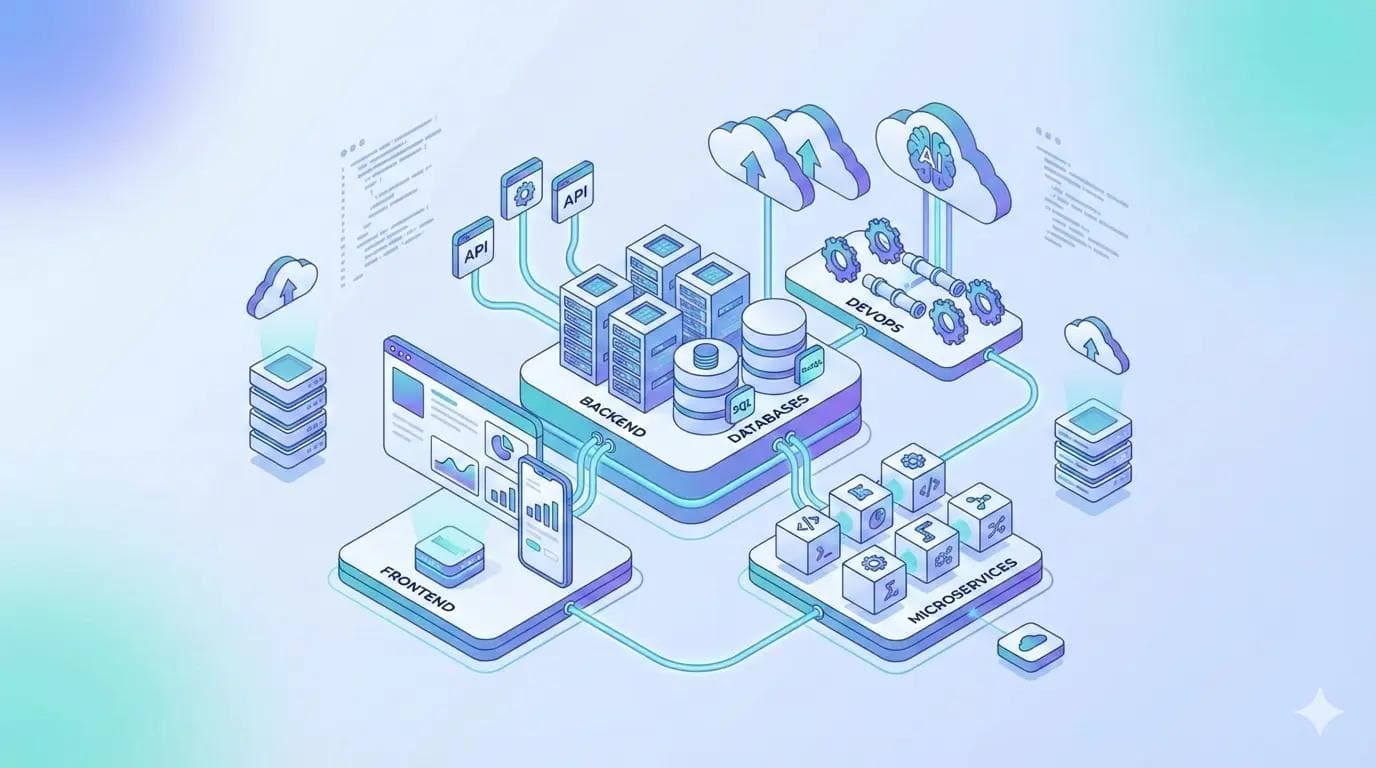
Choosing the right technology stack is one of the most critical decisions a founder or CTO will make. It is the digital foundation of your entire business. If you build your house on sand, it will collapse when the storm comes. Similarly, if you build your Software as a Service (SaaS) product on the wrong tech stack, you might face slow performance, high costs, or the inability to hire developers.
But with hundreds of programming languages, frameworks, and database options available, the choice can feel paralyzing. Should you go with the trendy new framework everyone is tweeting about? Or should you stick to the boring, battle-tested technologies that have been around for decades?
This guide cuts through the noise. We will break down exactly what a tech stack is, the best options available for modern applications, and how to choose the right one for your specific goals.
What is a Tech Stack?
Before we look at specific tools, let’s define what a tech stack actually is. In simple terms, a tech stack is the combination of programming languages, frameworks, and tools used to build a web or mobile application.
You can think of it as a layer cake. Each layer has a specific job, and they all need to work together seamlessly.
1. The Frontend (Client-Side)
This is everything the user interacts with. When you click a button, scroll through a feed, or fill out a form, you are dealing with the frontend. It covers the design, layout, and interactivity of the website.
2. The Backend (Server-Side)
This is the "brain" of the application. It runs behind the scenes, processing data, handling logic, and ensuring that everything works. Users never see the backend, but the app wouldn't exist without it.
3. The Database
This is where your data lives. Every user account, password, product listing, and comment needs to be stored somewhere secure and accessible.
4. The Infrastructure
This includes the servers and cloud platforms that host your application, allowing it to be accessed by people all over the world.
Criteria for Choosing the Right Stack
There is no single "perfect" stack. The best stack for a simple to-do list app is different from the best stack for a high-frequency trading platform. When evaluating your options, consider these four factors:
Speed to Market
For a new SaaS, speed is life. You need to build a Minimum Viable Product (MVP) and get it into the hands of users quickly. Some frameworks are designed for rapid development, while others require more boilerplate code and setup time.
Scalability
Will your app handle ten users or ten million? If you plan for massive growth, you need a stack that can handle heavy traffic without crashing. However, be careful not to "over-optimize" too early. You don't need Google-level infrastructure if you don't have customers yet.
Talent Pool
This is often overlooked. You might find a cool new programming language that is technically superior, but if you can't find developers who know how to use it, your business will stall. Sticking to popular languages ensures you can easily hire engineers.
Community and Ecosystem
Popular technologies have massive communities. This means if you run into a bug, someone else has likely already solved it and posted the answer online. A strong ecosystem also means plenty of pre-built libraries and plugins, saving you from writing code from scratch.
The Frontend Contenders: What Users See
The frontend landscape has stabilized in recent years. While there are many options, a few major players dominate the market.
React.js (The Market Leader)
Created by Facebook (Meta), React is currently the most popular frontend library in the world. It is used by companies like Netflix, Airbnb, and Uber.
- Pros: Huge ecosystem, massive talent pool, highly flexible.
- Cons: Can be complex for beginners; requires learning additional tools to build a full app.
- Best For: Almost any SaaS application, especially those with complex, interactive user interfaces.
Vue.js (The Friendly Alternative)
Vue is known for being easier to learn than React while offering similar power. It is a favorite among solo developers and small teams because it is intuitive and lightweight.
- Pros: Easy to learn, clean documentation, very fast.
- Cons: Smaller job market compared to React; fewer corporate backers.
- Best For: Solo founders and teams who want to move fast without a steep learning curve.
Angular (The Enterprise Choice)
Maintained by Google, Angular is a full-featured framework. Unlike React, which focuses mostly on the view layer, Angular provides everything out of the box.
- Pros: deeply structured, strict conventions, great for large corporate teams.
- Cons: Heavy, steep learning curve, can feel bloated for small startups.
- Best For: Large-scale enterprise applications where strict structure is needed.
Svelte (The Performance King)
Svelte is the new kid on the block. It shifts the work from the browser to the compile step, resulting in incredibly fast and lightweight applications.
- Pros: blazing fast performance, very little code required.
- Cons: Smaller ecosystem and fewer libraries available.
- Best For: Performance-critical apps and developers who want the "next big thing."
The Backend Engines: Powering the Logic
The backend is where your business logic lives. Your choice here often dictates who you hire and how fast you can build.
Node.js (JavaScript Everywhere)
Node.js allows you to run JavaScript on the server. This is a game-changer because it allows you to use the same language (JavaScript) for both the frontend and the backend.
- Why choose it: It simplifies hiring. A "Full Stack" developer only needs to know one language. It is also excellent for real-time apps like chat or collaboration tools.
Python (Django / Flask)
Python is famous for being easy to read and write. It is the language of choice for Data Science and Artificial Intelligence.
- Why choose it: If your SaaS involves machine learning, AI, or heavy data processing, Python is the obvious winner. Frameworks like Django come with "batteries included," meaning they have built-in tools for user authentication and security.
Ruby on Rails (The MVP Champion)
Although it has lost some hype, Ruby on Rails is still one of the fastest ways to build a web application. It was used to build the initial versions of Airbnb, GitHub, and Shopify.
- Why choose it: It prioritizes "convention over configuration." You spend less time setting up and more time building features.
Go (Golang)
Created by Google, Go is designed for speed and efficiency. It is a statically typed language that compiles very fast.
- Why choose it: If you are building a system that requires extreme performance and handles massive concurrency (like a server for a multiplayer game), Go is a top choice.
Database Decisions: SQL vs. NoSQL
Data storage is often a debate between Structure (SQL) and Flexibility (NoSQL).
PostgreSQL (The SQL Standard)
PostgreSQL is an open-source relational database. It stores data in tables with rows and columns.
- Pros: extremely reliable, ensures data integrity, supports complex queries.
- Best For: SaaS apps dealing with financial transactions, user relationships, and structured business data.
MongoDB (The NoSQL Flexible Option)
MongoDB stores data in JSON-like documents. It doesn't require a strict schema, meaning you can change the data structure on the fly without breaking the database.
- Pros: fast development, easy to scale horizontally, flexible.
- Best For: Content management systems, real-time analytics, or apps where data structures change frequently.
The Top Stack Combinations for 2026
Now that we know the components, let’s look at the most popular combinations ("Stacks") used by modern SaaS companies.
1. The MERN Stack (MongoDB, Express, React, Node)
This is arguably the most popular stack for startups today. It is entirely JavaScript-based.
- Why it works: You get a unified development experience. Developers can switch between frontend and backend easily. The community support is endless.
- Verdict: Great for most general-purpose SaaS startups.
2. The T3 Stack (TypeScript, Tailwind, tRPC)
This is a modern evolution of the JavaScript stack. It focuses on type safety (using TypeScript) to prevent bugs before they happen.
- Why it works: It provides an incredible developer experience. "tRPC" allows your frontend and backend to talk to each other without writing complex API code.
- Verdict: The best choice for developers who value code quality and long-term maintainability.
3. The LAMP Stack (Linux, Apache, MySQL, PHP/Laravel)
"PHP is dead" is a common myth. With modern frameworks like Laravel, PHP is thriving.
- Why it works: Laravel is arguably the most elegant backend framework in existence. It makes features like billing, email, and authentication incredibly easy to implement.
- Verdict: Excellent for solo founders who want to ship a complete product fast without getting bogged down in complexity.
4. The Python Stack (React + Django/FastAPI)
This combines the interactive power of React on the frontend with the data-crunching power of Python on the backend.
- Why it works: Perfect for the modern wave of "AI Wrapper" startups. You can easily integrate OpenAI or other machine learning libraries on the backend while keeping a slick UI.
- Verdict: Essential for AI and Data-focused SaaS.
Hosting and Infrastructure: Where Your App Lives
Gone are the days of buying physical servers. Today, "Serverless" and cloud platforms rule the world.
Vercel / Netlify
These platforms are designed for frontend-heavy frameworks like Next.js (React). They handle all the complexity of deployment. You simply push your code to GitHub, and Vercel automatically deploys it to a global network.
- Experience: It feels like magic. It is the easiest way to get an app online.
AWS (Amazon Web Services)
The giant of the industry. AWS offers every service imaginable, from file storage (S3) to databases (RDS).
- Experience: Powerful but complex. It has a steep learning curve and can be overkill for a small startup just validating an idea.
Supabase / Firebase
These are "Backend-as-a-Service" (BaaS) platforms. They provide a database, authentication, and file storage out of the box, so you don't have to write backend code.
- Experience: Massive time-saver. Supabase (an open-source alternative to Firebase) is particularly popular right now because it is built on top of PostgreSQL.
Real-World Case Studies
To understand how this applies to you, let’s look at how successful companies started.
Case Study: Facebook Facebook started with the LAMP stack (PHP and MySQL). Why? Because it was easy to iterate fast. Over time, they invented React to solve their frontend complexity issues.
- Lesson: Start simple. You can invent complex tech later when you have the money.
Case Study: Uber Uber needed to handle thousands of real-time location updates every second. They chose Node.js and Go because these technologies handle "concurrency" (doing many things at once) very well.
- Lesson: Choose a stack that matches your specific technical challenge.
Case Study: Instagram Instagram built their backend with Python (Django). Even when they scaled to hundreds of millions of users, they stuck with Python because it was simple and effective.
- Lesson: Boring technology scales just fine.
Common Mistakes to Avoid
1. Resume-Driven Development
This happens when developers choose a tech stack not because it is good for the project, but because they want to learn it to improve their resume. As a founder, you want proven technology, not an experiment.
2. Over-Engineering
Do not build microservices with Kubernetes clusters for an app that has zero users. A "monolith" (where all code is in one place) is perfectly fine—and often better—for the first few years of a business.
3. Ignoring the Ecosystem
Don't choose a niche programming language that only 500 people in the world use. When you inevitably need to hire a senior developer or find a library for payment processing, you will regret it.
FAQ: Frequently Asked Questions
Is PHP dead?
No. Modern PHP (specifically with the Laravel framework) is robust, secure, and fast. It powers a huge portion of the web and is a viable choice for SaaS.
Should I use TypeScript or JavaScript?
For any serious project, use TypeScript. It is essentially JavaScript with "types" (rules). It catches bugs while you are writing code rather than after you launch. It saves countless hours of debugging in the long run.
What is the cheapest stack to host?
A "JAMstack" approach (JavaScript, APIs, Markup) hosted on Vercel or Netlify is often free for small projects. You only start paying when you get significant traffic.
Can I change my tech stack later?
Yes, but it is expensive and painful. It is often called a "rewrite." It is better to pick a versatile stack (like React/Node or React/Python) that can grow with you so you don't have to rewrite everything in year two.
Conclusion: The "Best" Stack is the One You Know
After analyzing the pros and cons of every major language and framework, we come to a simple truth: The success of your SaaS depends more on your product and marketing than your code.
Users do not care if your backend is written in Rust or Ruby. They care if the application solves their problem.
However, if you are starting from scratch in 2026 and want a recommendation that balances speed, scalability, and hiring ease, here is the "Golden Standard":
- Frontend: React (specifically the Next.js framework)
- Language: TypeScript
- Backend: Node.js (via Next.js API routes) or Python (if AI is needed)
- Database: PostgreSQL (hosted on Supabase or Neon)
- Hosting: Vercel
This stack gives you the best of all worlds. It is modern, widely supported, and capable of scaling from your first user to your first million.
Don't let analysis paralysis stop you. Pick a stack, stick to it, and start building.
About the Author

Suraj - Writer Dock
Suraj Kumar is a writer, entrepreneur, and the CEO and founder of this website, sharing simple and practical insights on business, creativity, and personal growth. With experience building digital projects, they enjoy helping others learn, grow, and succeed online.