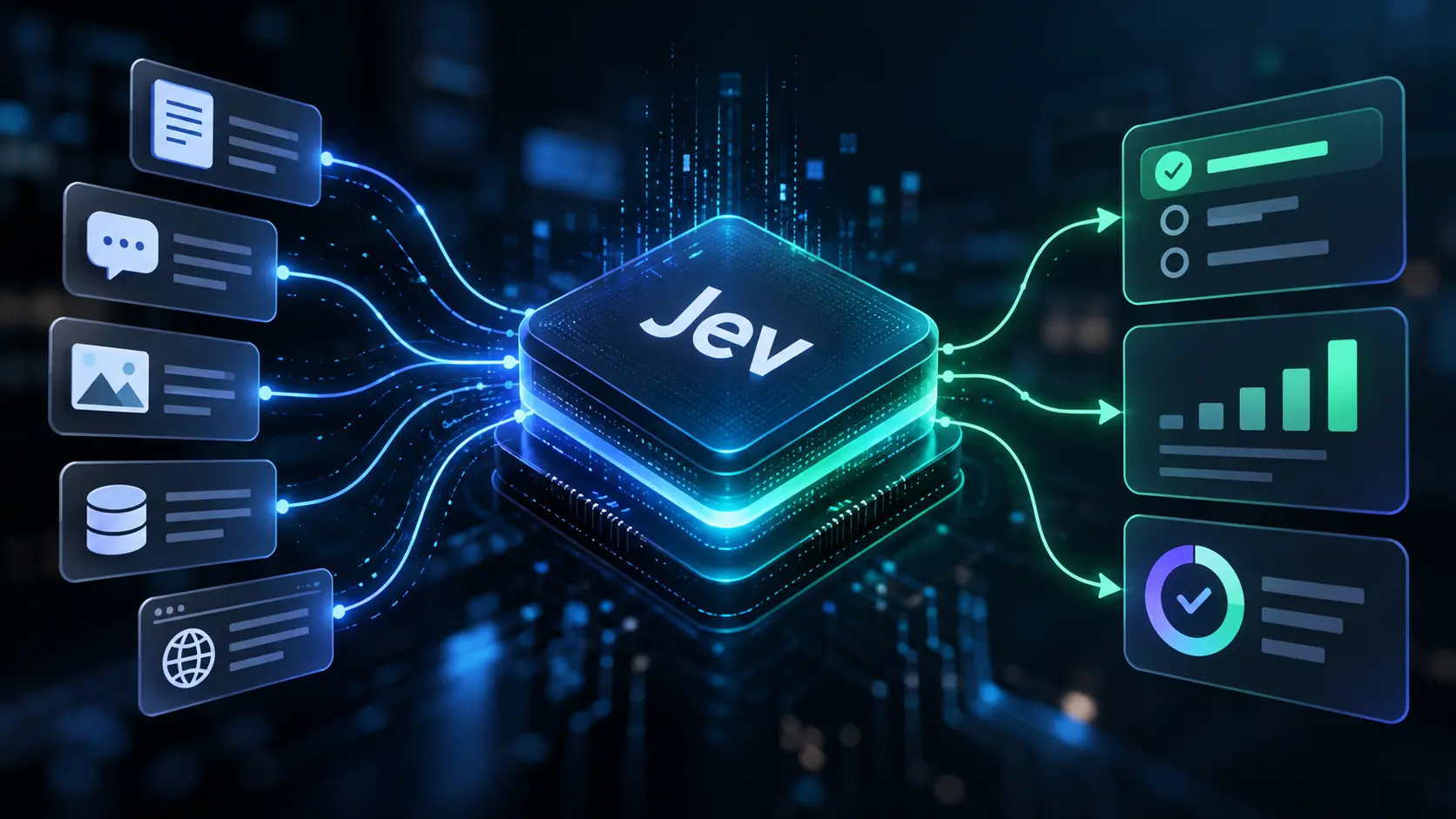
The digital world is currently crossing a bridge. For the past few years, we have been fascinated by systems that can write poems, draft emails, and create stunning visuals from a simple sentence. This era was defined by creation. However, as we look toward 2026, the focus is shifting. We are moving away from tools that simply talk and toward systems that actually do the work.
This shift marks the transition from Generative AI to Agentic AI. While the names might sound similar, the difference in how they function—and the value they provide—is massive. If 2024 was about learning to prompt a machine, 2026 will be about managing a digital workforce.
In this guide, we will break down the fundamental differences between these two technologies and explain why the coming year is the official "Year of the Agent."
Understanding the Creative Phase: What is Generative AI?
To understand where we are going, we have to look at where we have been. Generative technology is built to create. It uses massive datasets to predict the next word in a sentence or the next pixel in an image. When you ask it a question, it searches its "knowledge" and synthesizes a response.
The Reactive Nature of Creation
The most important thing to remember about these systems is that they are reactive. They sit quietly and wait for a human to give them a command. Without a prompt, they do nothing. Think of it like a very talented intern who is excellent at drafting reports but will only start working once you hand them a specific set of instructions.
The Limitations of "Just Chatting"
While these models are impressive, they have a "glass ceiling." They excel at single-turn interactions. You ask a question, and you get an answer. If you want the system to do something else, you have to ask again. It does not have a memory of its own goals, and it certainly cannot go into your calendar, book a flight, and then update your spreadsheet without you watching over its shoulder.
The Rise of the Doers: What is Agentic AI?
Agentic systems are a different breed. Instead of just generating text or images, these systems are designed to pursue goals. An agent does not just "know" things; it "acts" on things.
From Prompts to Goals
When you interact with an agentic system, you don't just give it a prompt; you give it an objective. For example, instead of asking it to "write an email to a vendor," you might say, "Find a more affordable sustainable packaging vendor and set up a trial order."
To finish this task, the system has to:
- Search the internet for vendors.
- Compare prices and sustainability ratings.
- Draft an inquiry.
- Handle the back-and-forth communication.
- Notify you when the order is ready for final approval.
Proactive Autonomy
Unlike its predecessors, an agent is proactive. It can break a large goal into smaller steps. It can reason about what it needs to do next. If it hits a wall, it doesn't just stop and wait for a new prompt; it looks for a different path to reach the goal.
Key Differences: Brains vs. Hands
The best way to visualize the difference is to think of Generative systems as the "Brain" and Agentic systems as the "Hands."
1. Reaction vs. Action
Generative models respond to what you say. Agentic models act on what you need. One provides information; the other provides an outcome. In a business setting, this is the difference between a tool that tells you your sales are down and a tool that creates a new discount campaign, updates the website, and emails your top customers to fix the problem.
2. Linear vs. Iterative
A typical generative interaction is a straight line: Prompt -> Response. An agentic interaction is a loop. The agent takes an action, looks at the result, learns from it, and takes the next step. It "reflects" on its own work. If it generates a piece of code that doesn't work, it sees the error and tries to fix it itself before ever showing it to the human user.
3. Isolated vs. Integrated
Most creation-focused models live inside a chat box. They are isolated from the rest of your tools. Agentic systems are designed to use "tools" themselves. They can connect to your CRM, your email, your project management software, and even external web browsers. They act as a bridge between your various digital platforms.
Why 2026 is the Inflection Point
Many people ask why this is happening now. We have had automation for years, so what makes 2026 special? Several factors have converged to make this the perfect year for autonomous agents.
The Cost of "Thinking" Has Dropped
Running complex reasoning loops used to be incredibly expensive. To have a system "think" through fifty different steps to solve a problem required massive amounts of computing power. In late 2025, the cost of this "inference" dropped significantly. It is now financially viable for companies to let their systems run in the background for hours to solve a single complex task.
Longer Memory and Better Context
Earlier models were like goldfishes—they forgot what they were doing if the conversation got too long. New systems in 2026 have massive "context windows." They can hold your entire company's handbook, past three years of emails, and current project goals in their active memory all at once. This allows them to act with a level of nuance that was previously impossible.
The Shift to "AgenticOps"
Businesses are no longer just buying software; they are building agentic ecosystems. We are seeing the rise of "AgenticOps," which is a set of practices for managing, monitoring, and securing these digital workers. Just as you manage a human team, companies are now setting up guardrails and performance reviews for their autonomous agents.
Real-World Impact: How Industries Are Changing
The impact of this shift is being felt across every sector. Here is how autonomous agents are transforming the landscape in 2026.
1. Cybersecurity: The Year of the Defender
In the past, hackers used automation to find vulnerabilities faster than humans could patch them. Now, agentic systems act as 24/7 digital security guards. They don't just alert a human to a breach; they autonomously isolate the infected part of the network, block the attacker's IP address, and begin repairing the damage instantly.
2. B2B Procurement and Logistics
In 2026, many supply chain managers don't spend their days calling vendors. Instead, they manage "procurement agents." These agents monitor global news for potential shipping delays. If a port in Asia is closed due to a storm, the agent autonomously reroutes the shipment and finds a temporary supplier in Europe to ensure the factory doesn't stop running.
3. Personalized Healthcare Triage
Healthcare systems are using agents to handle the initial interaction with patients. An agent can ask about symptoms, check the patient's medical history, and look at real-time data from their wearable devices. It then decides whether the person needs an emergency appointment or if they can be managed with a simple prescription, which it then drafts for a doctor's signature.
4. Software Development
The days of writing every line of code by hand are fading. Developers now act as architects. They describe the goal of the software, and a swarm of agents works together to build it. One agent writes the code, another tests it for bugs, and a third ensures the security is airtight. This has accelerated software production by ten times in some industries.
The New Way of Working: From Prompting to Architecting
As we enter this new era, the skills required of humans are changing. For the last two years, we focused on "prompt engineering"—the art of writing the perfect sentence to get a good result. In 2026, the key skill is "Workflow Architecture."
Instead of thinking about what words to use, you need to think about how a process should work. You become a manager of agents. You set the policy, define the guardrails, and determine the final goals.
Practical Tips for the Transition
- Focus on Data Hygiene: An agent is only as good as the information it can access. If your company's data is messy, your agents will make mistakes.
- Start Small: Don't try to automate your whole company at once. Pick one repetitive process, like invoice reconciliation or meeting scheduling, and build an agent for that.
- Keep Humans in the Loop: Always design your agentic workflows so that a human has to approve major decisions, especially those involving money or external communications.
Frequently Asked Questions
What is the biggest difference between Agentic and Generative systems?
The biggest difference is autonomy. Generative systems create content when prompted. Agentic systems pursue goals by taking actions, using tools, and making decisions with minimal human intervention.
Will these agents replace human jobs in 2026?
They are more likely to replace the "mechanics" of a job. They handle the repetitive tasks like data entry, scheduling, and basic research. This allows humans to focus on the "soul" of the work—strategy, empathy, and high-level creativity.
Is it safe to let a machine take actions on my behalf?
Safety depends on the guardrails. In 2026, most agentic platforms include "Policy Layers" where you can strictly define what an agent is allowed to do. For example, you can give an agent permission to "draft" a payment but never "send" it without your fingerprint or password.
Can I build my own agent without being a programmer?
Yes. 2026 has seen the rise of "low-code" agent platforms. These tools allow you to use a visual interface to connect different apps and tell the agent what its goals are. If you can draw a flowchart, you can build an agent.
How do agents learn from their mistakes?
Modern agents use "self-reflection" loops. After completing a task, they evaluate whether the outcome met the goal. If it didn't, they analyze what went wrong and update their internal "playbook" so they don't make the same mistake next time.
Conclusion: Embracing the Era of Autonomy
The transition from 2025 to 2026 marks the end of the "chatbot" era. We are no longer impressed by machines that can simply talk. We are looking for machines that can help us carry the load.
Agentic systems represent a move toward a more productive, efficient, and integrated world. By delegating the routine and the complex to autonomous agents, we free ourselves to do what humans do best: lead, innovate, and connect.
As we move through 2026, the question is no longer "What can this tool write for me?" but "What can this agent do for me?" The companies and individuals who learn to architect these workflows today will be the leaders of the economy tomorrow.
About the Author

Suraj - Writer Dock
Suraj Kumar is a writer, entrepreneur, and the CEO and founder of this website, sharing simple and practical insights on business, creativity, and personal growth. With experience building digital projects, they enjoy helping others learn, grow, and succeed online.