In the traditional world of software sales, the process was often slow and painful. You would see an advertisement, request a demo, wait for a sales representative to call you, and sit through a presentation before you ever got to touch the product.
Today, that model is flipping upside down. We are living in the era of the end-user. People want to try software before they buy it. They want to experience the value immediately, without talking to a human salesperson.
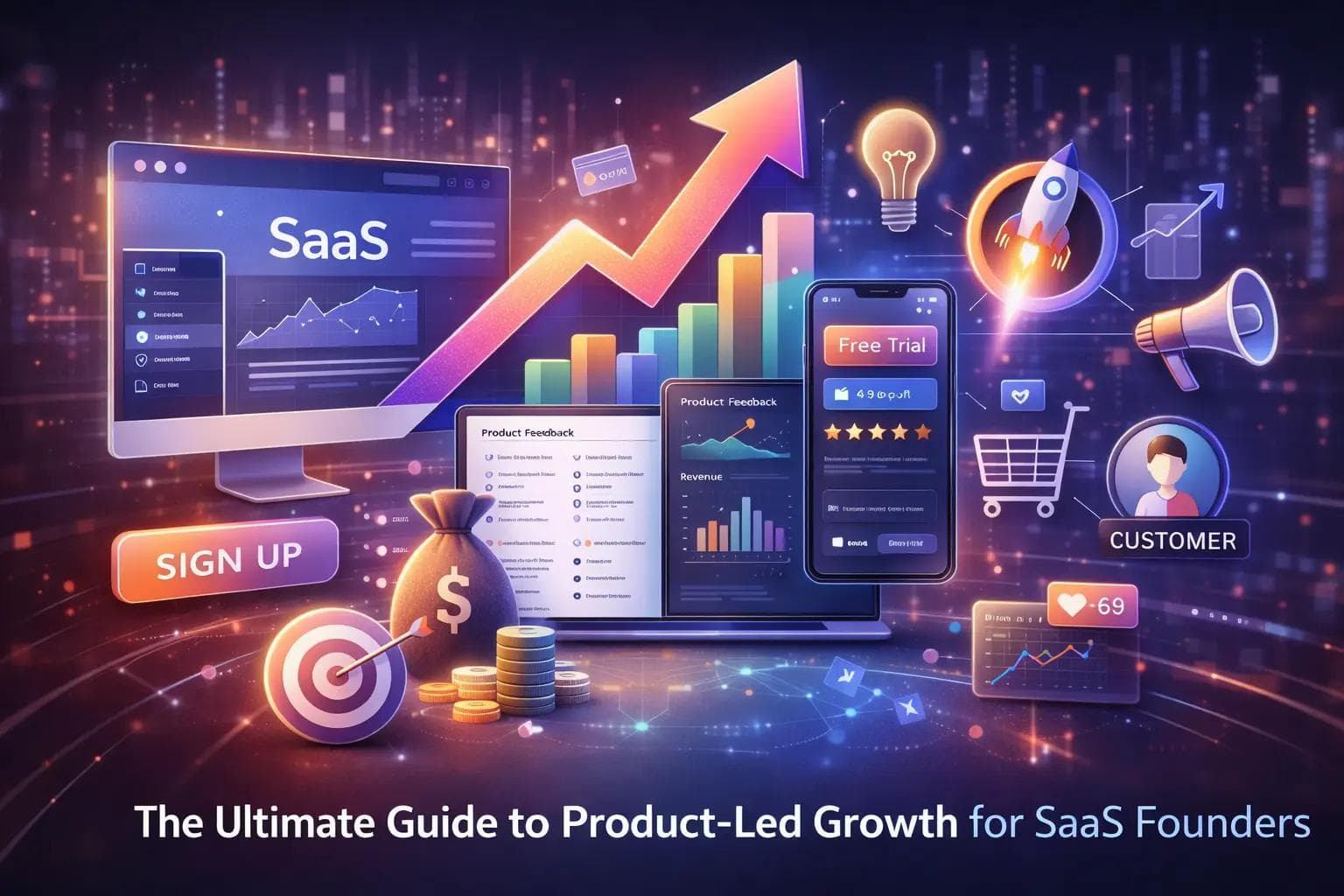
This new methodology is called Product-Led Growth (PLG).
If you have ever used Slack, Zoom, or Dropbox, you have participated in a PLG model. These companies didn’t convince you to sign up with a flashy sales pitch. They let the product do the talking.
This guide will explore exactly what Product-Led Growth is, why it is taking over the SaaS (Software as a Service) industry, and real-world examples of companies that mastered this strategy to build billion-dollar empires.
What is Product-Led Growth?
Product-Led Growth is a business strategy where the product itself is the primary driver of acquisition, conversion, and retention.
In a Sales-Led model, the goal is to capture a lead and have a salesperson close the deal. In a Product-Led model, the goal is to get the user into the product as fast as possible. The product demonstrates its own value, leading the user to upgrade to a paid plan naturally.
The Shift from "Tell Me" to "Show Me"
Modern buyers are skeptical of marketing promises. They prefer to research and test solutions on their own terms. PLG caters to this behavior by lowering the barrier to entry.
Here is a simple comparison:
- Sales-Led: "Trust us, our software will solve your problem. Sign this contract to find out."
- Product-Led: "Here is the free version. Go solve your problem right now. Pay us when you need more power."
By removing friction, PLG companies open the floodgates to a much wider audience. This creates a larger funnel of potential customers who are already educated on how the product works.
The Core Pillars of a Successful PLG Strategy
Before looking at specific examples, it is important to understand the mechanics that make this strategy work. You cannot simply offer a free trial and call it Product-Led Growth.
1. Frictionless Entry
The sign-up process must be effortless. If you ask for a credit card upfront or require a phone number for "verification," you are adding friction. The best PLG companies let you start with just an email address or a Google login.
2. Immediate Time-to-Value (TTV)
Time-to-Value is the amount of time it takes for a new user to realize the "Aha!" moment—the moment they understand why your product is useful. In a PLG model, this needs to happen in minutes, not days.
3. Virality and Network Effects
The best PLG products get better when more people use them. If I use a project management tool, I need to invite my team. If I use a scheduling tool, I need to send a link to a client. This built-in sharing turns every user into a salesperson.
Real-World PLG Examples: The Giants
The best way to learn PLG is to study the companies that defined the category. These examples highlight different mechanisms of growth, from viral loops to bottom-up adoption.
1. Slack: The Bottom-Up Revolution
Slack is perhaps the most famous example of Product-Led Growth. Before Slack, enterprise communication software was bought by the Chief Information Officer (CIO) and forced upon employees. Slack did the opposite.
How They Did It: Slack focused on the end-user experience. They made the product fun, colorful, and easy to use. Instead of selling to executives, they targeted individual teams.
A few engineers at a company would start using the free version of Slack to organize their project. Then, the marketing team would see it and join. Eventually, the entire company was using it.
The PLG Mechanism:
- Freemium Model: Users could use Slack for free indefinitely, but with a limit on message history.
- The "Hook": Once a team relied on Slack, losing their message history became a pain point. This naturally pushed them to upgrade to the paid plan.
- Outcome: By the time the bill reached the executive's desk, the software was already embedded in the company's workflow. The sale was already made.
2. Zoom: Frictionless Virality
Zoom conquered the video conferencing market not because it had the most features, but because it simply worked. Competitors like Skype or WebEx often required heavy downloads or account creation to join a call.
How They Did It: Zoom removed the friction of joining a meeting. You did not need a login to attend; you only needed a link.
The PLG Mechanism:
- The Viral Loop: Every time a user hosts a Zoom meeting, they are exposing the product to participants who may not be users yet. If the experience is good, those participants are likely to use Zoom for their next meeting.
- The 40-Minute Limit: Zoom’s free plan allows for unlimited 1-on-1 meetings but caps group meetings at 40 minutes. This is a brilliant psychological trigger. It is enough time to experience the value, but short enough to be inconvenient for business use, prompting an upgrade.
3. Dropbox: The Referral Engine
Dropbox proved that you don’t need a complex social product to go viral. They turned cloud storage—a relatively boring utility—into a growth machine.
How They Did It: Dropbox struggled with paid advertising because the cost to acquire a customer was too high. They pivoted to a referral program that incentivized users to invite friends.
The PLG Mechanism:
- Incentivized Sharing: The offer was simple: "Invite a friend, and you both get 500MB of extra space for free."
- Gamification: They made the process of earning more space feel like a game. Users could earn space by connecting social media accounts or taking a product tour.
- Outcome: This strategy caused their user base to explode from 100,000 to 4 million users in just 15 months, permanently changing how SaaS companies view referrals.
4. Calendly: The Visible Product
Calendly is a scheduling tool that eliminates the back-and-forth emails of finding a meeting time. It is a prime example of a product that markets itself through usage.
How They Did It: To use Calendly, you have to send your link to someone else. There is no other way to derive value from the tool.
The PLG Mechanism:
- Inherent Virality: Every time a user sends a scheduling link, the recipient sees the Calendly branding. They experience the ease of booking a slot and think, "I need this for myself."
- Brand Awareness: The "Powered by Calendly" badge on the free booking page acts as a subtle billboard.
- Outcome: One user naturally spawns more users without the company spending money on direct advertising to the second group.
5. Canva: Democratizing Design
Before Canva, graphic design was the domain of professionals using expensive, complex software like Adobe Photoshop. Canva opened this world to everyone.
How They Did It: Canva reduced the learning curve to zero. They provided thousands of templates so that a user could create a professional-looking graphic in five minutes.
The PLG Mechanism:
- Template Library: New users don't have to start from a blank page. This speeds up the Time-to-Value significantly.
- Assets as Upsells: The core tool is free, but premium stock photos and specific design assets cost money (or require a subscription). Users can build their design for free, but they encounter "paywalls" only when they want to make the design better. This feels like a choice rather than a restriction.
Technical Mechanisms: Freemium vs. Free Trial
When implementing a Product-Led Growth strategy, you generally have two choices for giving users access: Freemium or Free Trial. Understanding the difference is vital.
The Freemium Model
In a freemium model, the user gets access to a limited version of the product forever.
- Best for: Products that need a large user base to work (like social networks or marketplaces) or products with low variable costs.
- Pros: It is a powerful lead magnet. Users can take their time to learn the product without the pressure of a ticking clock.
- Cons: You may end up supporting a massive number of free users who never pay.
The Free Trial Model
In a free trial, the user gets access to the full product but only for a limited time (e.g., 14 days).
- Best for: Complex products that show their value quickly but are expensive to maintain.
- Pros: It creates urgency. Users know they have to evaluate the software now.
- Cons: If the user doesn't find the value within the time limit, they are gone forever.
The "Reverse Trial" Hybrid
A modern trend is the reverse trial. New users are automatically signed up for a limited-time trial of the Premium features. When the time runs out, instead of locking them out, they are downgraded to a Freemium plan.
This gives users a taste of the best features (hooking them) while ensuring you don't lose them completely if they aren't ready to buy immediately.
How to Optimize Your Product for Growth
If you decide to go the PLG route, you need to shift your focus from "selling" to "helping." Here are practical tips to optimize your product.
Invest in Self-Service Onboarding
Your product needs to teach the user how to use it. Use tooltips, checklists, and interactive walkthroughs. The goal is to guide the user to their first "win" without them ever needing to read a manual.
transparent Pricing
In a PLG model, pricing should be public and easy to understand. If a user loves the free version but has to "Contact Sales" to find out the price of the upgrade, you have introduced friction that will kill the conversion.
Usage-Based Analytics
You need to track everything. Which features are free users using most? At what point do they drop off? Data is your new salesperson. If you see that users who invite a colleague are 50% more likely to upgrade, your product should aggressively encourage inviting colleagues.
Common Mistakes in Product-Led Growth
Even with a great product, companies often stumble when executing PLG. Avoid these common traps.
Hiding the Free Plan
Some companies say they are PLG, but they bury the free option at the bottom of the page or make it hard to find. If you are going to do PLG, embrace it. Make the "Get Started for Free" button the hero of your homepage.
Focusing on Features Instead of Value
Don't just dump users into a dashboard full of buttons. Guide them to solve a problem. Users don't care about your "advanced reporting module"; they care about "saving 3 hours on weekly reports."
Neglecting Customer Support
Just because you don't have sales reps doesn't mean you don't need human support. In fact, support becomes sales in a PLG model. When a free user has a question, a helpful support interaction can be the nudge they need to trust your company and upgrade.
Frequently Asked Questions (FAQ)
Can B2B companies use Product-Led Growth?
Yes, absolutely. Slack and Atlassian (Jira) are B2B companies. The key is to target the employee (the end-user) rather than the decision-maker. If the employees love the tool, they will advocate for the company to buy it.
Is PLG cheaper than Sales-Led Growth?
In the long run, yes. You save money on sales commissions and headcount. However, in the beginning, PLG requires significant investment in product development, design, and hosting costs for free users.
Can I combine PLG with a sales team?
Yes. This is called "Product-Led Sales." You use the product to generate leads. Once a free account hits a certain usage threshold (e.g., 50 users), your sales team reaches out to discuss an enterprise contract. This is how companies like HubSpot operate.
What is a good conversion rate for Freemium?
Conversion rates vary by industry, but generally, a conversion rate of 2% to 5% from free to paid is considered healthy for a SaaS business.
Conclusion: The Future is User-Centric
Product-Led Growth is more than just a pricing model or a marketing tactic. It is a fundamental shift in how we build and deliver software. It forces companies to be honest. You cannot hide a bad product behind a good salesperson anymore.
In a PLG world, the product must deliver on its promise every single day.
By focusing on user experience, removing friction, and delivering immediate value, you earn the trust of your customers. And when you earn their trust, you don't have to "sell" them anything. They will be happy to buy.
Whether you are a startup founder or a product manager, looking at your business through the lens of PLG can uncover new opportunities for growth. Ask yourself: How can I get out of the way and let my product shine? The answer to that question might just be your key to scaling.
About the Author

Suraj - Writer Dock
Suraj Kumar is a writer, entrepreneur, and the CEO and founder of this website, sharing simple and practical insights on business, creativity, and personal growth. With experience building digital projects, they enjoy helping others learn, grow, and succeed online.