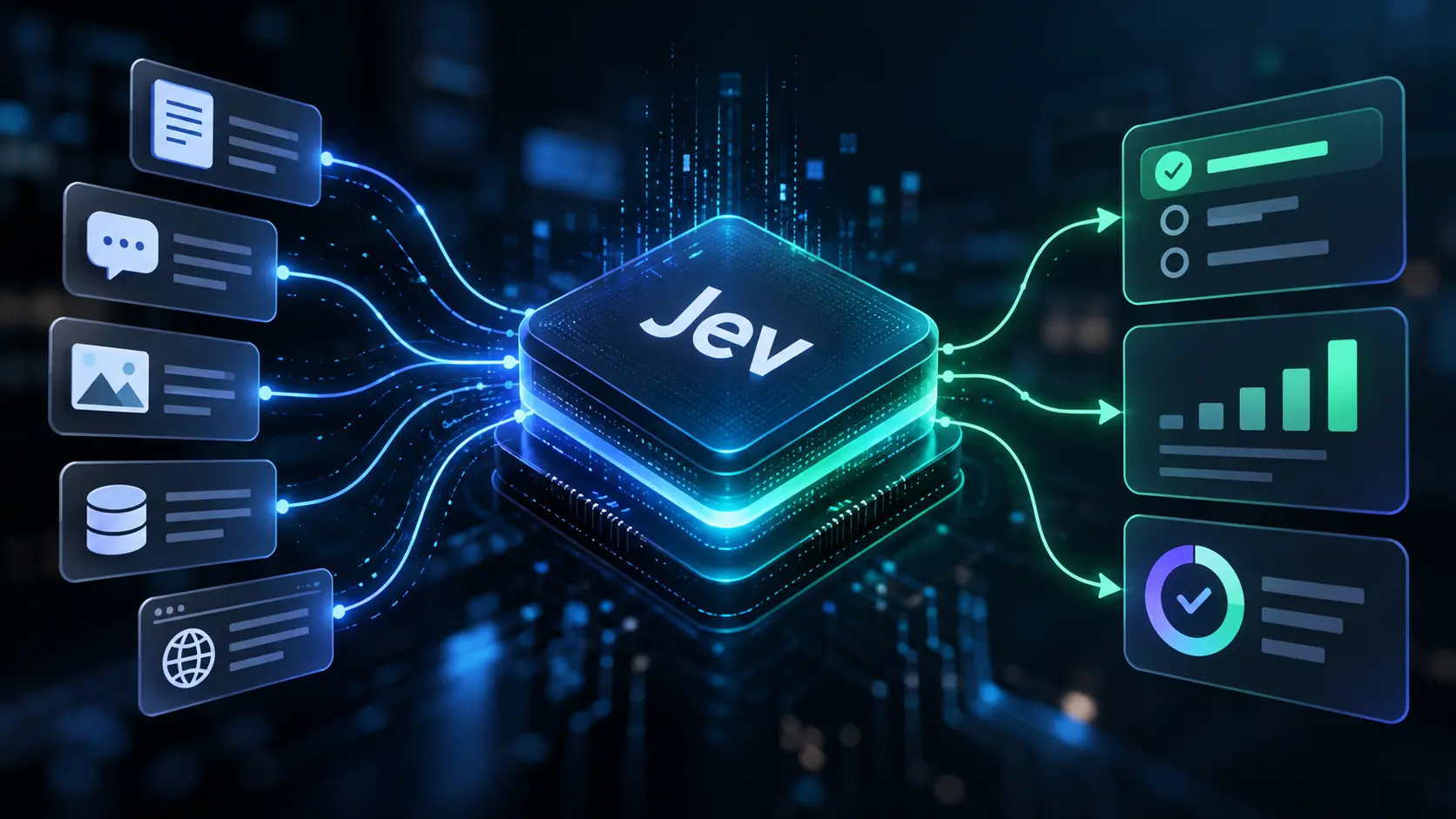
The automation landscape has shifted. For years, "automation" meant connecting App A to App B: If a new lead arrives in Typeform, send a message to Slack. This was linear, predictable, and rigid.
Today, we are entering the era of Autonomous Agents. These are not simple data pipes; they are decision-makers. They can reason, use tools, search the web, and correct their own mistakes.
While Python frameworks like LangChain or AutoGen are powerful, they require significant coding expertise to deploy and maintain. Enter n8n (nodemation). It is the only workflow automation tool that successfully bridges the gap between low-code simplicity and the raw power of LLMs (Large Language Models).
In this guide, we will walk through how to use n8n to build production-grade AI agents—systems that are reliable, scalable, and ready for real-world business use.
Why n8n is the "Secret Weapon" for AI Development
Most "no-code" AI builders are essentially toys. They look good in a demo but break the moment you throw complex logic at them. n8n is different because it is source-available and node-based.
1. Visual LangChain Orchestration
n8n has integrated LangChain directly into its core. You don't need to write Python code to chain an LLM to a calculator or a Google Search tool. You simply drag and drop the "AI Agent" node and connect it to a "Tool" node. It makes the abstract concepts of agentic workflows visual and understandable.
2. Control vs. Chaos
Pure LLMs can hallucinate. Hard-coded scripts are too rigid. n8n sits in the middle. You can build "Guardrails" using standard If/Else nodes or Switch nodes to ensure your AI agent stays within the boundaries you define.
3. Data Privacy and Self-Hosting
This is the killer feature for production environments. Unlike cloud-only tools (like Zapier or Make), you can self-host n8n on your own servers (AWS, DigitalOcean, or even a local Docker container). This means your sensitive customer data and API keys never leave your infrastructure—a requirement for many enterprise applications.
Phase 1: Designing Your Agent (The Blueprint)
Before you drag a single node onto the canvas, you must design the agent's architecture. A production-grade agent requires four specific components.
The Core Components
- The Brain (LLM): The reasoning engine. Will you use GPT-4o for complex reasoning, or a faster, cheaper model like GPT-4o-mini or Claude Haiku for simple tasks?
- The Memory (Context): How much does the agent remember? Does it need "Short-Term Memory" (the current conversation) or "Long-Term Memory" (a Vector Database like Pinecone)?
- The Tools (Capabilities): What can the agent do? Can it query your SQL database? Can it scrape a website? Can it send an email?
- The Trigger (Input): How does the user talk to it? Is it a Slack bot, a webhook from a website form, or an email watcher?
Phase 2: Developing the Agent (The Build)
Let's build a practical example: a "Lead Qualification & Research Agent." Goal: When a new lead comes in, the agent visits their website, summarizes their business, determines if they are a fit, and drafts a personalized email.
Step 1: The Trigger
Start with a Webhook Node or a Form Trigger. This receives the initial input (e.g., a company URL: www.example.com).
Step 2: The AI Agent Node
Drag the AI Agent node onto the canvas. This is the heart of the operation. n8n allows you to select the type of agent. For most production cases, choose "Tools Agent" (formerly OpenAI Functions Agent). This model is specifically fine-tuned to know when to use a tool and when to just talk.
Step 3: Connecting the Brain
Attach a Chat Model node to the Agent.
- Recommendation: Use OpenAI Chat Model with gpt-4o for the highest reliability in following instructions.
- Budget Option: Use Ollama Chat Model if you want to run open-source models (like Llama 3) locally for free.
Step 4: Equipping Tools
This is where the magic happens. You need to give the agent eyes.
- Connect a "HTTP Request" tool or a specific "Web Scraper" tool.
- Configuration: In the tool description, write clearly: "Use this tool to visit the lead's website and extract the text content."
- Pro Tip: The description is actually a prompt. The better you describe the tool, the better the AI knows when to use it.
Step 5: The System Prompt
In the AI Agent node, you will see a "System Message" field. This is your agent's personality and rulebook.
"You are a Senior Sales Engineer. Your goal is to analyze companies. You must always use the Web Scraper tool to read the provided URL. Once you have the data, summarize the company's value proposition in 3 bullet points."
Phase 3: Moving to Production (Deployment)
A workflow that runs on your laptop is a prototype. A workflow that runs 24/7 without crashing is production. Here is how to cross that bridge.
1. Error Handling (Try/Catch)
LLMs are probabilistic, meaning they sometimes fail or return bad data. In n8n, wrap your critical logic in an Error Trigger.
- How to do it: Create a separate workflow that acts as an error handler. If your main agent fails (e.g., the website is down), the error handler catches it and alerts you via Slack instead of silently crashing the whole process.
2. Human-in-the-Loop
For high-stakes actions (like sending an email to a client), never let the AI auto-send.
- Use n8n's "Wait for Logic" node.
- The Agent drafts the email -> Sends a draft to your Slack -> You click "Approve" button -> n8n resumes the workflow and sends the email.
- This creates a "Cyborg" workflow where the AI does the heavy lifting, but you maintain final control.
3. Persistent Memory with Databases
The standard "Window Buffer Memory" is stored in the browser/session and disappears when the execution ends. For a production agent that remembers a user returning weeks later, you need Vector Memory.
- Connect a Pinecone or Supabase vector store node.
- This allows your agent to "RAG" (Retrieval Augmented Generation)—searching through thousands of past PDF documents or chat logs to find relevant answers before responding.
4. Managing API Costs
An agent that gets stuck in a loop can drain your bank account.
- Max Iterations: In the AI Agent node settings, set a "Max Iterations" limit (e.g., 10). This prevents the agent from getting confused and trying to use a tool 500 times in a row.
Advanced: Building Multi-Agent Systems
Once you master the single agent, you can start building Agent Swarms. This is where one "Manager Agent" breaks a complex task down and delegates it to "Worker Agents."
In n8n, you achieve this by using the "Execute Workflow" tool.
- Manager Agent: Receives the user request ("Write a blog post about crypto").
- Worker A (Researcher): The Manager calls a sub-workflow designed solely for web searching.
- Worker B (Writer): The Manager takes the research and sends it to a second sub-workflow designed for writing.
This "Modular Architecture" is much easier to debug than one giant prompt trying to do everything.
FAQ: Common Questions on n8n AI
Q: Do I need to know Python or Javascript? No, but it helps. You can build 95% of agents visually. However, n8n has a "Code Node" where you can write custom Javascript to parse complex data if the standard nodes aren't enough.
Q: Is n8n free? The source-available version is free to self-host for personal use or internal business use (check their fair-code license). They also offer a hosted cloud version if you don't want to manage servers.
Q: Can I use local LLMs with n8n? Yes. You can use Ollama or LocalAI. You simply install Ollama on your server, pull a model (like llama3), and connect the "Ollama Chat Model" node in n8n. This allows for completely offline, free, and private AI agents.
Conclusion: Start Building Today
The barrier to entry for building powerful AI tools has never been lower. n8n offers the perfect balance of ease and power, allowing you to design agents that are not just chatty, but functional.
By following the roadmap of Design (Blueprint), Develop (Nodes), and Deploy (Error Handling), you can move from a simple tinkerer to a developer of production-grade automated systems.
The best way to learn is to build. Start with a simple "PDF Chat" agent or a "Gmail Summarizer" and work your way up. The nodes are waiting.
About the Author

Suraj - Writer Dock
Suraj Kumar is a writer, entrepreneur, and the CEO and founder of this website, sharing simple and practical insights on business, creativity, and personal growth. With experience building digital projects, they enjoy helping others learn, grow, and succeed online.